

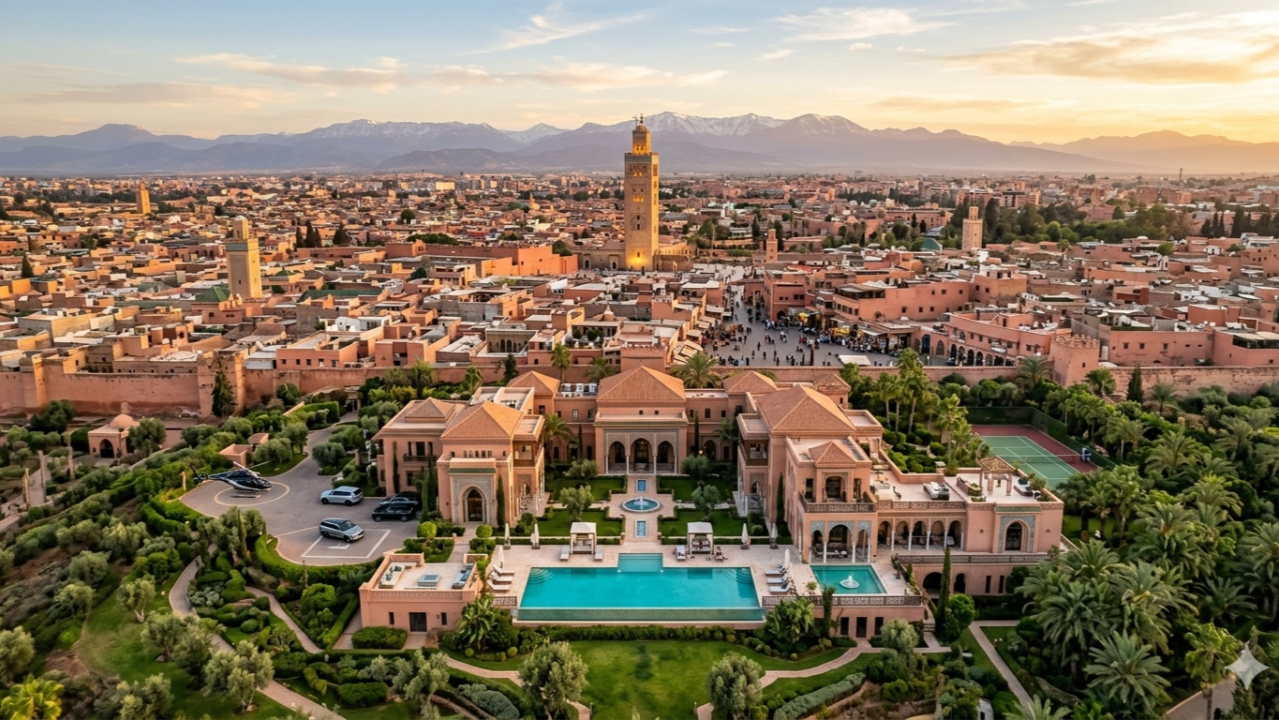
Morocco’s real estate market is not short of property.
It is short of institutional-grade inventory.
That distinction is becoming one of the defining features of the country’s prime property market in 2026.
Foreign buyers, diaspora investors, local high-net-worth families and professional capital are increasingly competing for assets that combine location, legal clarity, build quality, rental depth and exit liquidity.
The result is not a broad national property boom.
It is a selective quality squeeze.
In Casablanca, demand concentrates around liquidity and corporate depth. In Rabat, buyers seek defensive residential stability. In Marrakech, international lifestyle demand supports premium villas, riads and professionally managed rental assets. In Tangier, infrastructure and proximity to Europe are pushing investor interest into selected coastal and urban districts.
The investment question is shifting.
It is no longer simply whether Morocco’s property market offers opportunity.
It is whether investors can access the right asset with clean title, durable yield and a credible exit route.
The Institutional Inventory Constraint
For professional investors, prime property is not defined only by price or appearance.
It is defined by risk reduction.
A true prime asset usually needs to meet several conditions at once:
clean Titre Foncier
strong location
legal conformity
modern construction or verified renovation quality
parking where relevant
professional co-ownership management
credible rental demand
resale liquidity
clear foreign-currency repatriation trail
That combination is scarce.
A property can be well located but legally complex. It can be modern but overpriced. It can offer rental demand but weak resale liquidity. It can look premium but suffer from poor building management or incomplete permitting.
That is where the shortage appears.
Morocco does not lack listings.
It lacks enough investable prime stock.
For institutional and high-net-worth buyers, that changes the underwriting process. The asset must be assessed not only by price per square metre, but by yield, liquidity, legal status, management quality and exit optionality.
The Cap-Rate Layer: Why Morocco Still Screens Attractive
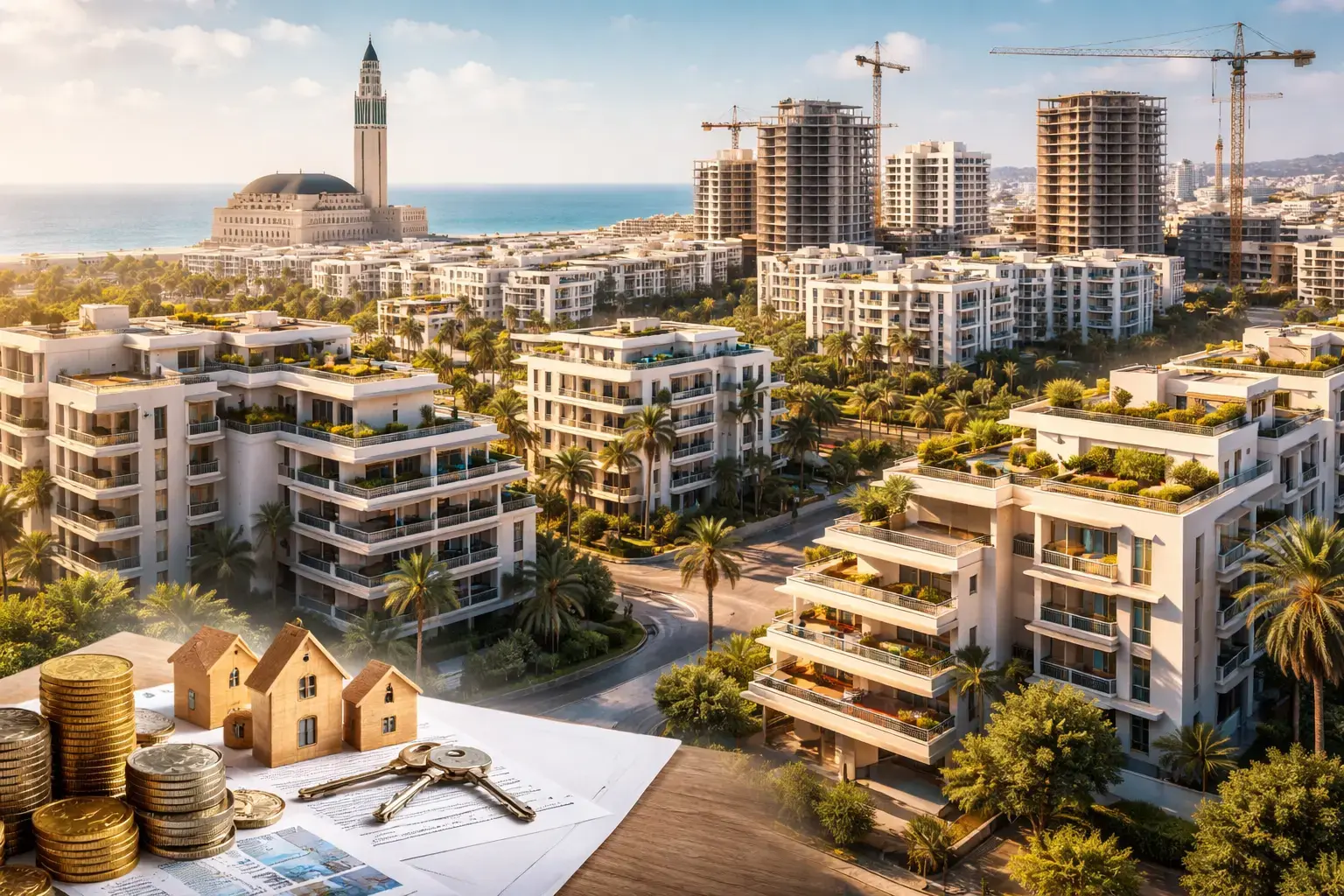
Professional capital does not only buy square metres.
It buys yield.
In Morocco’s prime urban markets, the strongest assets are increasingly judged by their ability to produce stable rental income while preserving long-term capital value.
Specialist market data indicates that gross rental yields in Casablanca often range from around 5% to 7% depending on district and asset type, with some secondary or higher-risk zones offering more. Prime areas such as Anfa and Ain Diab tend to show lower gross yields, while business-linked districts such as Maarif, Gauthier, CIL, Palmier and selected CFC-adjacent areas can offer stronger yield profiles. Net yields are typically lower once vacancy, taxes, maintenance, co-ownership charges and management fees are deducted.
That yield spread matters.
In many mature Mediterranean markets, prime urban yields have compressed significantly, especially in cities such as Lisbon, Madrid or parts of southern Europe where high asset prices limit cash-flow returns.
Morocco’s appeal lies in the spread.
A well-selected Moroccan asset can offer a higher income profile than many European prime markets, while still benefiting from urban growth, diaspora demand, infrastructure investment and currency diversification.
The key is net yield discipline.
A property advertising 7% gross yield may produce materially less after tax, vacancy, maintenance and management costs. Serious investors therefore focus on stabilised net income, not headline rental claims.
The Official Data Layer: Why ANCFCC Matters
Real estate analysis in Morocco often suffers from fragmented market data.
Online listings can be inflated. Broker commentary can be inconsistent. Asking prices do not always reflect completed transactions.
That makes official transaction data important.
The key institutional reference is the Agence Nationale de la Conservation Foncière, du Cadastre et de la Cartographie, or ANCFCC, which publishes the real estate asset price index jointly with Bank Al-Maghrib. The index gives investors a more reliable framework for reading property-price movements and transaction trends across the market.
For investors, this matters because prime-market scarcity can be hidden inside national averages.
A national index may show moderate price movement, while specific high-quality districts remain supply-constrained.
That is why Morocco must be analysed city by city and district by district.
The institutional investor is not buying “Morocco real estate.”
The investor is buying a specific title, in a specific building, in a specific district, with a specific rental and resale profile.
Casablanca: Liquidity, Corporate Demand and Yield Discipline

Casablanca remains Morocco’s deepest urban property market.
Its role as the country’s economic capital creates demand from professionals, executives, companies, families and investors seeking access to business districts, schools, hospitals and corporate services.
The investment logic is liquidity.
Good assets in strong districts can benefit from demand generated by corporate activity, executive housing, long-term rentals and family living.
Market guides tracking Casablanca in 2026 place the city’s real estate market across three broad strata: premium districts such as Anfa, Ain Diab and high-end villa zones; standard urban districts such as Racine, Gauthier, Bourgogne and Maarif; and more accessible peripheral areas such as Sidi Maarouf, Aïn Sebaâ and Mohammedia. Premium pricing can be materially higher, but yields are not always superior.
That is the key point for investors.
Casablanca offers liquidity, but not automatic value.
The most expensive districts are not always the best yield markets. The most attractive assets are often those that balance tenant demand, resale liquidity, building quality and entry price.
For institutional capital, Casablanca is less a speculative market than a cash-flow and liquidity market.
Rabat: Defensive Residential Demand
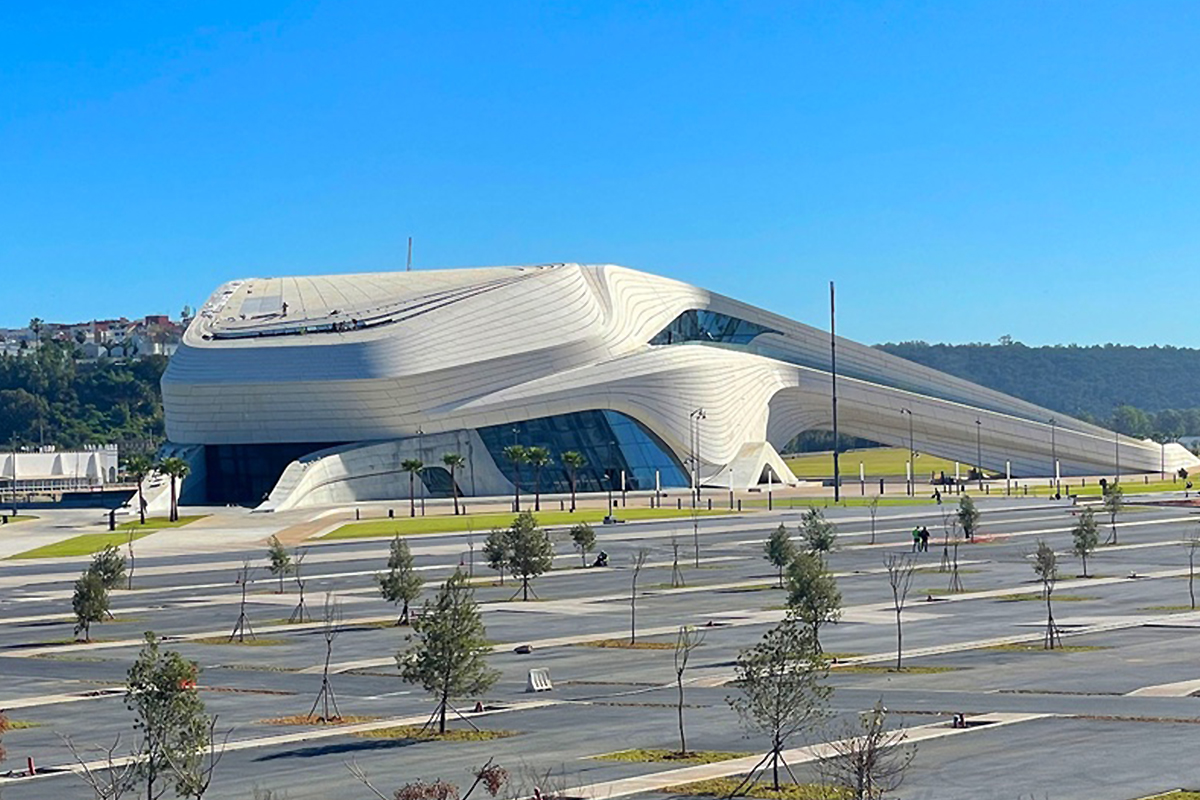
Rabat operates differently from Casablanca.
The capital is not Morocco’s largest business market, but it offers institutional stability, strong residential demand and a high quality-of-life profile.
Prime demand is supported by embassies, ministries, international organisations, senior civil servants, diplomats, schools and long-term family buyers.
This makes Rabat a defensive property market.
It is less speculative than Marrakech and less commercially intense than Casablanca. Buyers often prioritise security, schools, neighbourhood quality and stability.
The constraint is supply.
Prime districts such as Souissi, Hay Riad, Agdal and selected central residential zones are limited, and the best assets are often tightly held. Specialist market commentary on Rabat points to more stable demand and lower volatility than Casablanca, with prime neighbourhoods benefiting from institutional depth and limited quality stock.
For investors, Rabat’s value lies in capital preservation and tenant quality rather than aggressive upside.
The market rewards patience, legal clarity and location precision.
Marrakech: Lifestyle Liquidity and Operating Risk
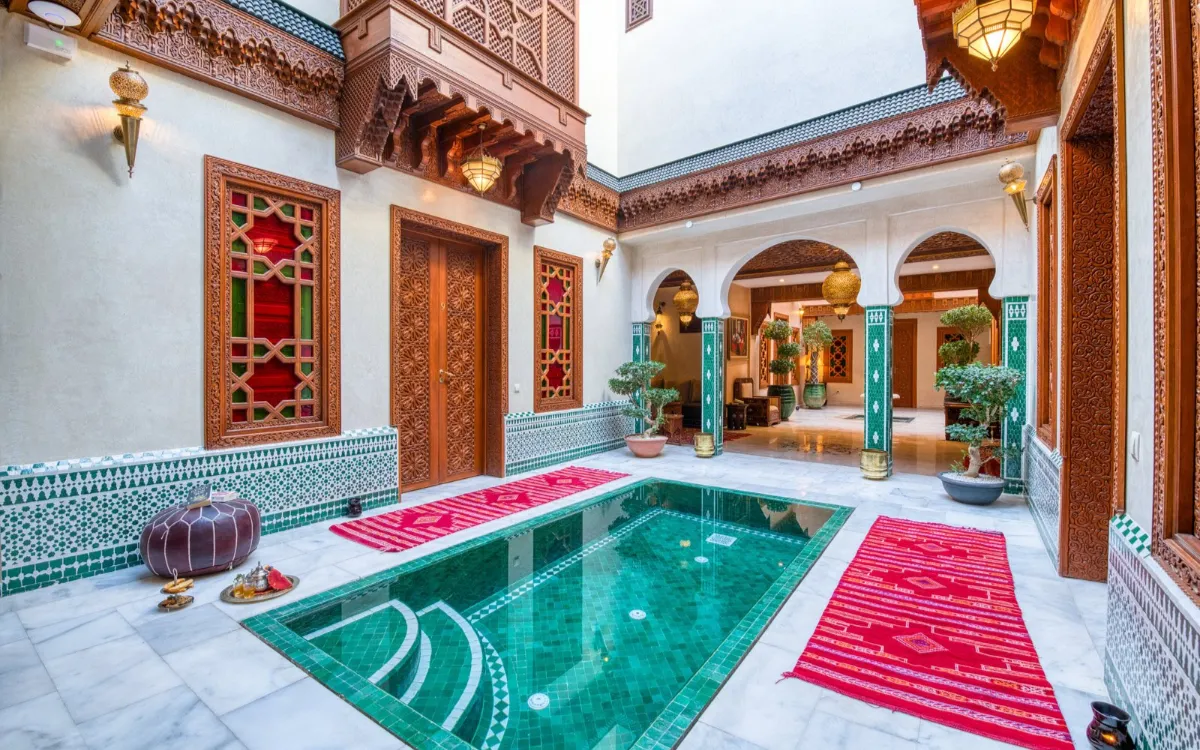
Marrakech is Morocco’s most internationally visible lifestyle property market.
It attracts foreign buyers, second-home owners, Gulf buyers, wealthy Moroccan families, hospitality investors and short-stay rental operators.
The city’s strengths are clear: brand value, climate, culture, tourism depth and international recognition.
But Marrakech is also one of Morocco’s most segmented property markets.
A prime villa in the right district, a professionally restored riad or a well-managed hospitality-linked asset is not the same investment as a poorly located property priced on tourism optimism.
In Marrakech, the challenge is not demand.
It is operating quality.
Investors must underwrite occupancy, management fees, maintenance, licensing, seasonality, staff costs, guest acquisition and resale depth.
A lifestyle asset becomes institutional only when the rental path is legal, the management model is professional and the exit market is credible.
Marrakech can generate strong returns.
But it punishes weak underwriting.
Tangier: Infrastructure Momentum and Rising Entry Prices
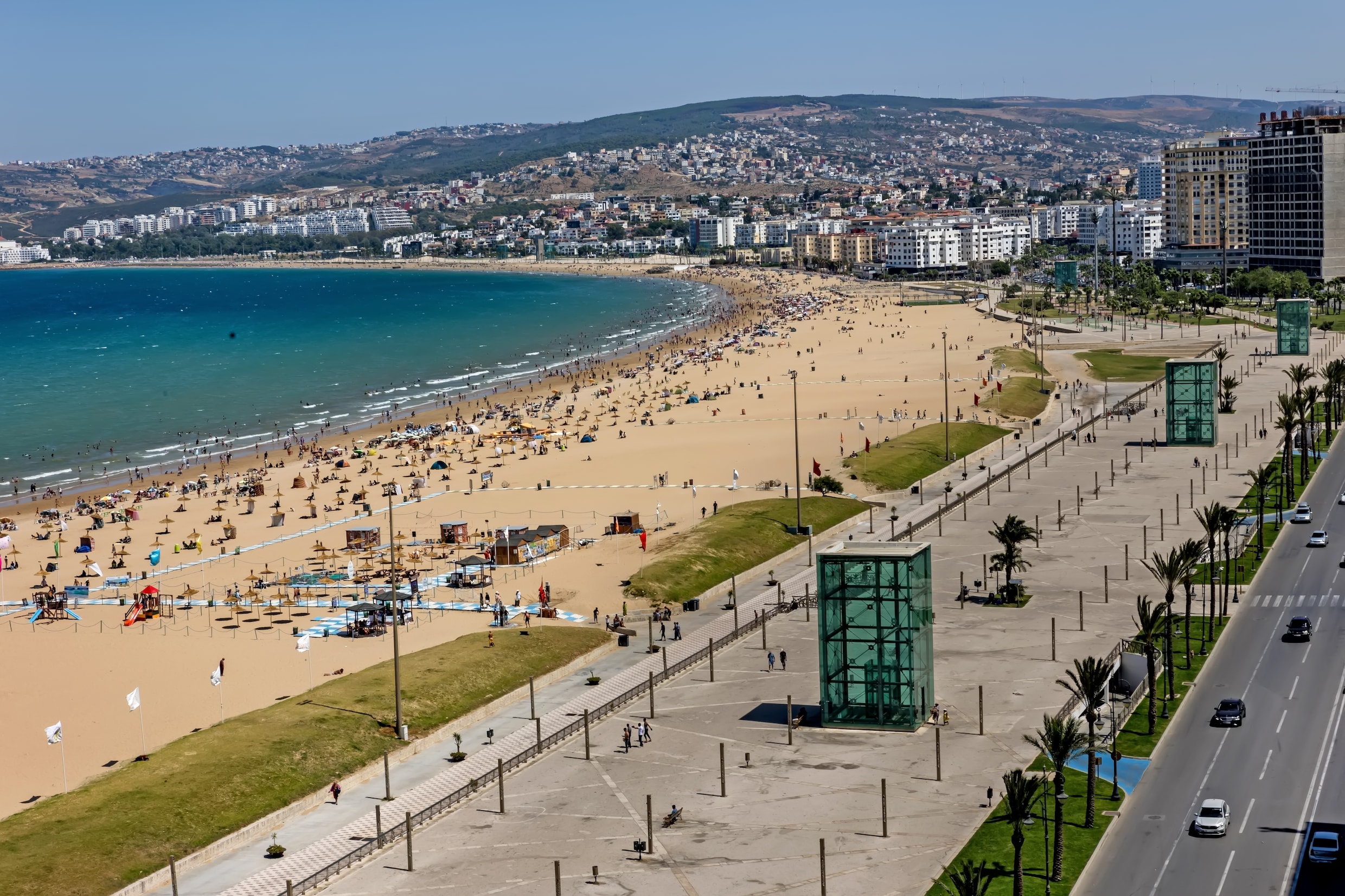
Tangier is one of Morocco’s most dynamic real estate markets.
Its appeal comes from infrastructure, coastal positioning, high-speed rail access, proximity to Europe and the wider economic momentum of northern Morocco.
The city benefits from a strong narrative: international access, port-linked growth, diaspora demand, lifestyle appeal and rising investor attention.
Rental-yield guides place Tangier among Morocco’s stronger yield markets, with some estimates pointing to gross yields near the upper end of the national range. But as with all markets, net returns depend on asset quality, management, vacancy, taxes and district-level liquidity.
For investors, Tangier offers growth potential.
But growth also raises the risk of overpaying.
Not every coastal apartment is prime. Not every new-build project has resale depth. Not every district benefits equally from infrastructure-led demand.
The best Tangier investments are tied to real services, transport access, year-round rental demand and urban quality.
The World Cup 2030 Demand Layer
The 2030 World Cup is adding another demand layer to Morocco’s real estate market.
Airport expansion, rail upgrades, urban improvements, tourism capacity and global visibility are all feeding investor attention.
This supports the prime property story, but it also increases speculative risk.
The strongest assets will be those that remain useful after the tournament.
That means:
liquid urban homes
well-managed rental properties
hospitality-linked assets with operating discipline
districts connected to transport and services
properties with clean legal status
World Cup visibility may lift attention.
It will not rescue weak underwriting.
Investors should treat 2030 as a demand accelerator, not as an excuse to ignore asset fundamentals.
How Institutional Capital Bypasses the Inventory Problem
The shortage of clean existing inventory is changing deal structure.
Institutional investors and private capital are not always waiting for finished buildings to appear on the market.
In stronger cases, they are moving earlier in the cycle.
This is where forward-funding and build-to-suit structures become relevant.
Instead of buying completed assets in the secondary market, investors may partner directly with tier-one Moroccan developers at the architectural or early-construction stage.
The objective is to secure:
clean land title
defined permitting
development control
preferred specifications
pre-agreed delivery standards
stronger legal protection
better entry pricing
This structure can reduce exposure to secondary-market friction, title uncertainty and fragmented ownership.
It also shifts risk.
Investors must underwrite the developer, construction timeline, permits, cost inflation and delivery quality.
Forward-funding is not automatically safer.
But for serious capital, it can be a disciplined way to access quality inventory before it becomes scarce, overpriced or legally complicated.
The Legal and Management Filter
Foreign investors often focus first on price and location.
In Morocco, that is not enough.
Prime status depends on legal and operational clarity.
Investors should verify:
Titre Foncier
ANCFCC registration status
building permits
urban planning conformity
co-ownership management
rental legality
structural condition
tax exposure
foreign-currency transfer trail
resale process
For villas, riads and renovated properties, additional checks may be required.
A beautiful asset with unresolved legal or permitting issues is not prime.
It is a risk asset.
The strongest properties are those that pass both the emotional test and the institutional test.
MMO Prime Property Matrix: 2026
Casablanca
Market signal: Morocco’s deepest and most liquid urban property market, with corporate demand and stronger rental depth.
Investor value: liquidity, executive tenants and a wider resale pool.
Institutional test: stabilised net yield after vacancy, tax, maintenance and management costs.
Rabat
Market signal: defensive capital-city demand supported by institutions, embassies, schools and family buyers.
Investor value: stability, tenant quality and capital preservation.
Institutional test: access to limited prime supply in Souissi, Hay Riad, Agdal and selected central districts.
Marrakech
Market signal: international lifestyle demand, tourism depth and second-home appeal.
Investor value: villas, riads, hospitality-linked assets and short-stay rental potential.
Institutional test: legal rental path, professional management, occupancy resilience and exit liquidity.
Tangier
Market signal: infrastructure-led growth, Europe proximity and rising diaspora/international demand.
Investor value: growth potential and strong lifestyle positioning.
Institutional test: avoiding secondary locations priced as prime and verifying real year-round rental demand.
Forward-funding / build-to-suit
Market signal: limited clean existing inventory is pushing professional capital earlier into the development cycle.
Investor value: access to controlled specifications, clean title and better entry terms.
Institutional test: developer quality, permit certainty, delivery timeline and construction-cost discipline.
What Investors Should Watch Next
Investors should monitor five signals in Morocco’s prime property market.
First, whether ANCFCC transaction data confirms continued resilience in prime districts despite broader market moderation.
Second, whether gross yields can survive realistic deductions for vacancy, tax, maintenance and management.
Third, whether World Cup 2030 expectations begin pushing pricing beyond rental fundamentals.
Fourth, whether forward-funded projects deliver the legal clarity and construction quality they promise.
Fifth, whether foreign-buyer demand continues to concentrate around clean title, professional management and liquid districts.
These signals will determine whether Morocco’s prime property market remains disciplined or moves into overheated pricing.
Final Outlook
Morocco’s prime property market is entering a more selective phase.
Demand is rising, but professional investors are becoming more disciplined.
The strongest competition is not for property in general. It is for assets that combine clean title, strong location, yield visibility, management quality and exit liquidity.
That is why limited quality inventory matters.
Morocco’s real estate opportunity remains strong, but the market cannot be read through broad national averages.
It must be analysed city by city, district by district and asset by asset.
In 2026, the real premium is not only on location.
It is on quality, legality, yield and execution.