

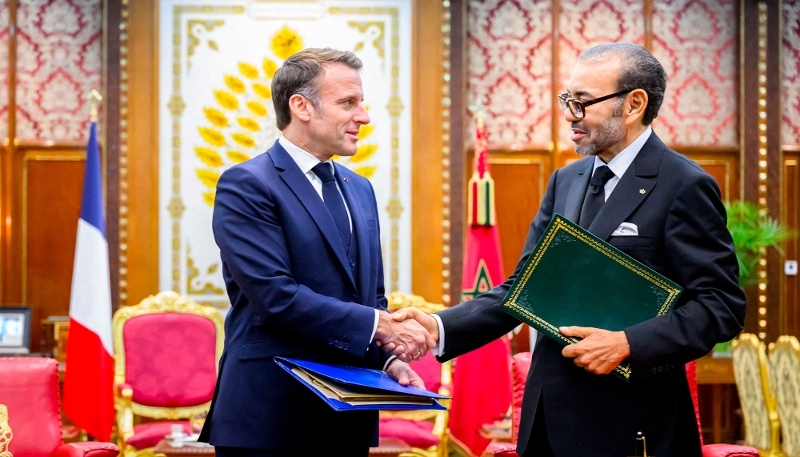
France and Morocco are preparing a bilateral treaty that could formalise the strongest reset in relations between Rabat and Paris in years, turning diplomatic recovery into a structured framework for capital, industry and Africa-facing cooperation.
The agreement is expected during an upcoming state visit by King Mohammed VI to France. Moroccan Foreign Minister Nasser Bourita has said it would be the first treaty Morocco signs with a European country, while French officials have described it as France’s first such treaty with a non-European country.
The framework is expected to cover strategic areas including defence industry, security and aeronautics.
The timing matters.
France’s 2024 recognition of Moroccan sovereignty over Western Sahara helped unlock a political reset after years of friction. The treaty now seeks to institutionalise that shift, creating a more durable platform for economic cooperation, industrial nearshoring and Franco-Moroccan coordination across African markets.
For Morocco, the value is not symbolic.
The agreement could strengthen the country’s role as France’s key African industrial and investment platform at a time when European companies are recalibrating supply chains, energy exposure and regional growth strategies.
The Baseline: Mapping the €14.1 Billion Trade Architecture
The France-Morocco relationship is already one of the most developed economic relationships between Europe and Africa.
Morocco is France’s leading commercial partner in Africa, with bilateral trade reaching €14.1 billion in 2023. France is also Morocco’s second-largest supplier and second-largest customer.
The investment relationship is even more strategic.
France remains one of Morocco’s leading foreign investors, with more than 900 subsidiaries of French companiesoperating in the country. French Treasury data cites France as the largest foreign investor by capital stock, accounting for 30.8% of Morocco’s FDI stock.
That makes the planned treaty economically significant.
It is not creating a relationship from scratch. It is standardising an already deep capital, trade and industrial architecture.
The key question is whether the treaty can convert historical ties into a modern operating framework built around aerospace, energy, infrastructure, security and African expansion.
The Sahara Pivot: Reducing De-Risking Barriers for Institutional FDI

The treaty comes after a period in which Franco-Moroccan relations moved from tension to strategic repair.
The turning point was France’s 2024 position on Western Sahara, which improved the diplomatic climate and created space for deeper cooperation.
That political shift has commercial consequences.
Companies do not invest only on geography, cost or market access. They also look at diplomatic stability, bilateral predictability, regulatory confidence and long-term state alignment.
A treaty can reduce uncertainty by signalling that both governments are prepared to anchor cooperation through formal channels.
For French companies, Morocco offers a stable base close to Europe with industrial zones, ports, aerospace clusters and an expanding role in African markets.
For Morocco, the treaty could reinforce its positioning as a Europe-linked production and investment platform with regional reach.
Aerospace as the Industrial Test Case
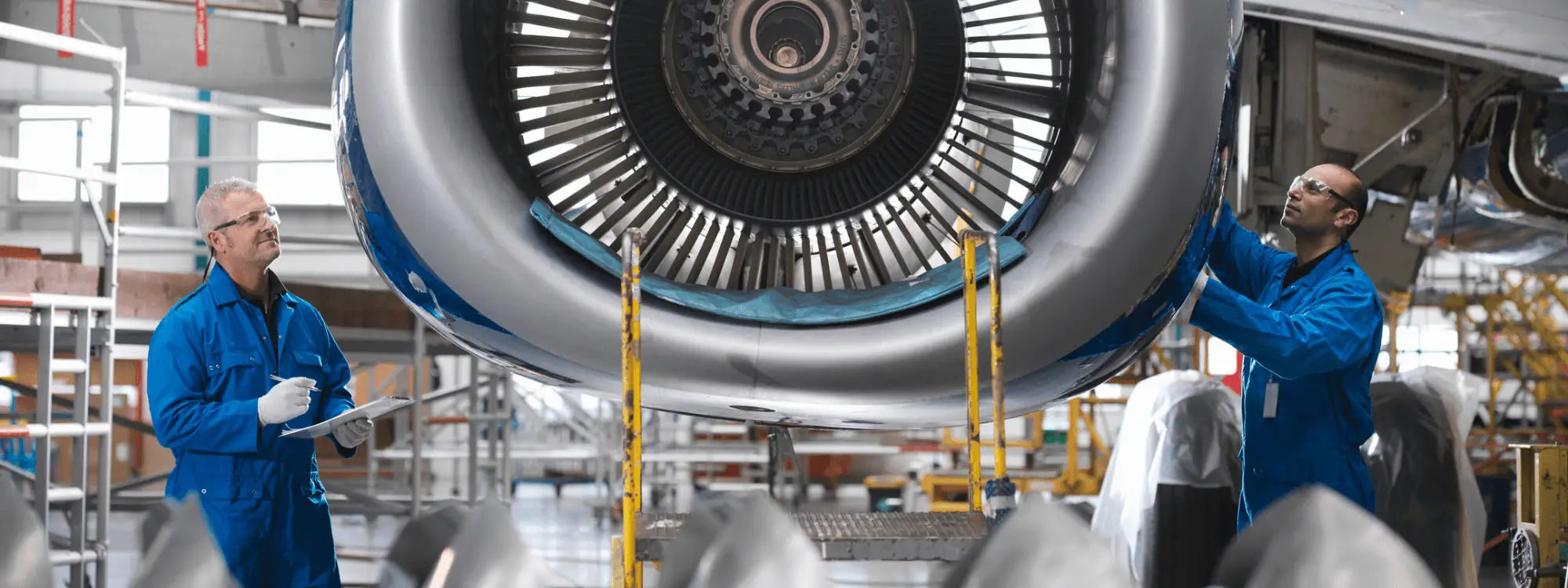
Aerospace is likely to be one of the clearest sectors where the treaty’s economic logic becomes visible.
Morocco has spent years building an aerospace base around Casablanca and Nouaceur. The sector has moved beyond basic assembly toward higher-value manufacturing, maintenance and specialised industrial activity.
Safran’s recent commitments show the depth of that shift.
The French aerospace group signed deals in 2025 to establish a new Airbus engine assembly line and maintenance facility near Casablanca. The company committed €200 million to the assembly line, which will supply 25% of Safran’s Airbus-related output, or 350 LEAP-1A engines annually.
The facility will be Safran’s only assembly line outside France and is expected to be ready in 2028.
In February 2026, Safran Landing Systems also signed a deal to establish a €280 million landing gear plant near Casablanca to supply the Airbus A320.
Morocco’s aerospace exports reached 29 billion dirhams in 2025, up from 26.4 billion dirhams a year earlier.
This is the industrial architecture behind the treaty.
France is not only engaging Morocco diplomatically. French industrial capital is embedding deeper into Morocco’s aerospace supply chain.
The strategic value is clear: Morocco offers proximity, cost competitiveness, industrial discipline and a supply-chain hedge at a time when aerospace manufacturers are under pressure to diversify capacity and reduce bottlenecks.
Africa as the Strategic Multiplier
The treaty also matters because Morocco is increasingly relevant to France’s African strategy.
French Foreign Minister Jean-Noël Barrot has framed Morocco as France’s leading economic partner in Africa and as a logistical and financial platform into parts of the continent.
That framing matters.
France has been recalibrating its position in parts of West Africa and the Sahel, while Morocco has expanded its African footprint through banking, telecoms, construction, fertilisers, logistics and corporate services.
This gives the treaty a triangular logic.
France brings capital, industrial technology and European market access. Morocco brings stability, regional networks and African operating experience. African markets offer long-term growth in infrastructure, finance, food security, energy and urban development.
If structured well, the treaty could support joint projects where French and Moroccan firms cooperate across African markets.
That would make the agreement more than a bilateral diplomatic document.
It would become a potential operating platform for Africa-facing investment.
Energy and Green Industry as the Next Capital Layer
Aerospace is the most visible industrial pillar, but energy is likely to become another major area of Franco-Moroccan cooperation.
French energy and industrial groups have shown increasing interest in Morocco’s renewable energy and green industry pipeline.
Engie’s partnership with OCP, valued at nearly €15 billion, is one of the most significant clean-energy and industrial decarbonisation frameworks linked to the renewed France-Morocco relationship.
That aligns with Morocco’s broader strategy.
The country is positioning itself around renewable energy, green hydrogen, desalination, industrial decarbonisation and Europe-linked export competitiveness.
For French companies, Morocco can serve as both a production base and an energy-transition partner.
The treaty could help structure these flows more predictably.
The key issue is bankability.
Energy and green industry projects require land, grid access, water, financing, offtake agreements and long-term regulation. Political alignment can open the door, but commercial execution determines project value.
Security and Defence Industry Add Strategic Depth
The reported inclusion of defence industry and security cooperation gives the treaty a wider strategic dimension.
Morocco is a stable actor in North Africa, the Atlantic space and the western Mediterranean.
For France and Europe, this matters across migration management, maritime routes, counterterrorism, regional stability and defence industry cooperation.
A formal treaty could create a stronger framework for coordination in these areas.
For Morocco, the strategic benefit is the reinforcement of its role as a reliable partner with expanding industrial, logistical and security relevance.
For France, the treaty offers a structured relationship with one of the continent’s most strategically positioned states.
The Market Impact
The practical impact of the treaty will depend on whether it produces measurable capital commitments.
The areas to watch are clear.
Aerospace investment could deepen around Nouaceur and Casablanca. Energy projects could accelerate around renewables, green hydrogen and industrial decarbonisation. Infrastructure and logistics firms may use Morocco as a platform for African expansion. Financial institutions may strengthen Morocco’s role as a capital bridge into the continent.
For investors, the treaty’s value lies in the predictability it can create.
Political alignment lowers perceived risk. Industrial integration improves project quality. Regional cooperation expands addressable markets.
But none of these effects are automatic.
The treaty must translate into contracts, project finance, factory output, training programmes, export capacity and African-market execution.
MMO Franco-Moroccan Treaty Matrix: 2026
Aerospace and industrial manufacturing
Market signal: Safran’s €200 million engine line, €280 million landing gear plant and Morocco’s 29 billion dirhams in aerospace exports in 2025.
Execution test: supplier depth, localised engineering talent and export velocity from the Casablanca-Nouaceur cluster.
Energy and green technology
Market signal: Engie-OCP clean-energy and industrial decarbonisation framework valued at nearly €15 billion.
Execution test: bankable offtake agreements, grid access, water planning and long-term regulatory stability.
Capital and FDI flows
Market signal: France accounts for 30.8% of Morocco’s FDI stock, with bilateral trade at €14.1 billion.
Execution test: conversion of high-level political alignment into hard corporate capital expenditure.
Africa-facing strategy
Market signal: Morocco is positioned by Paris as a financial and logistical gateway into African markets.
Execution test: successful joint ventures across African markets with real sovereign, private and institutional backing.
Security and defence industry
Market signal: treaty discussions include security, defence industry and strategic cooperation.
Execution test: institutional cooperation that strengthens regional stability and industrial capability.
Final Outlook
The planned France-Morocco treaty is best understood as a framework for standardising a relationship that has already become economically dense.
The trade base is above €14 billion. French companies are deeply embedded in Morocco’s industrial ecosystem. Aerospace investment is accelerating. Morocco’s African networks are becoming more valuable as France recalibrates its regional presence.
The treaty will not matter because it is ceremonial.
It will matter if it converts diplomatic alignment into capital flows, industrial output and joint regional execution.
That is the real benchmark for the next phase of the Rabat-Paris axis.