


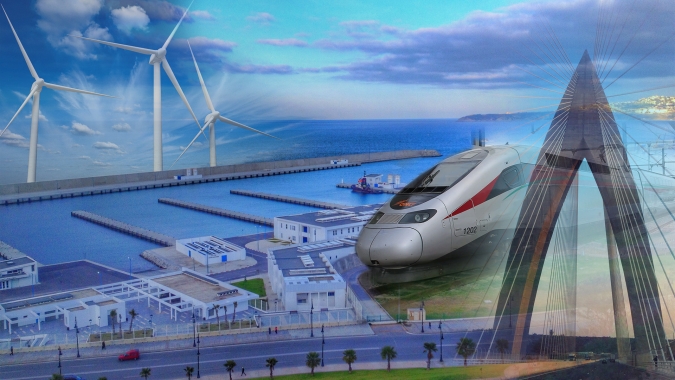
Morocco has spent years being described as a bridge between Europe and Africa. In 2026, that description is no longer enough.
The country is trying to convert geographic advantage into something more valuable: an operating platform for trade, manufacturing, logistics and regional expansion.
That shift matters because Morocco’s economic role is no longer defined only by where it sits on the map. It is increasingly defined by whether it can integrate ports, industrial zones, energy capacity, supply chains and African market access into a single investment proposition.
For investors, the question is not whether Morocco is well positioned. It is whether the country can turn that position into durable economic leverage.
The Hub Thesis Has Moved Beyond Geography
Morocco’s location has always been its simplest selling point.
The country sits across the Strait of Gibraltar from Spain, close to European markets and along major maritime routes linking the Atlantic, the Mediterranean, Africa and global shipping networks.
But location alone does not create an economic hub.
Many countries sit along important trade routes. Far fewer convert that position into industrial depth, export capacity and logistics reliability.
Morocco’s hub strategy depends on whether it can combine three layers:
The access layer: proximity to Europe, Africa and Atlantic-Mediterranean trade routes.
The infrastructure layer: ports, highways, rail links, logistics zones and industrial platforms.
The production layer: automotive, aerospace, batteries, agribusiness, textiles, renewable energy components and export-oriented manufacturing.
The investment case becomes stronger when all three layers work together.
Tanger Med Is the Anchor Asset
Tanger Med remains the clearest proof that Morocco’s hub strategy is more than branding.
The port complex handled more than 11.1 million TEUs in 2025, up 8.4% from 2024, reinforcing its position as the leading container port in Africa and the Mediterranean.
That scale matters.
Tanger Med is not only a maritime gateway. It is an industrial and logistics ecosystem that connects container terminals, manufacturing zones, customs processes, export platforms and road links into one operating base.
For companies serving Europe, Africa and the Mediterranean, this gives Morocco an advantage that many regional markets do not have: a logistics platform tied directly to production capacity.
The investment implication is clear. Morocco’s strongest hub opportunities are not in transit alone. They are in activities that sit around the port ecosystem: warehousing, automotive components, cold-chain logistics, export processing, customs-linked services and supplier networks.
From Transit Hub to Production Platform
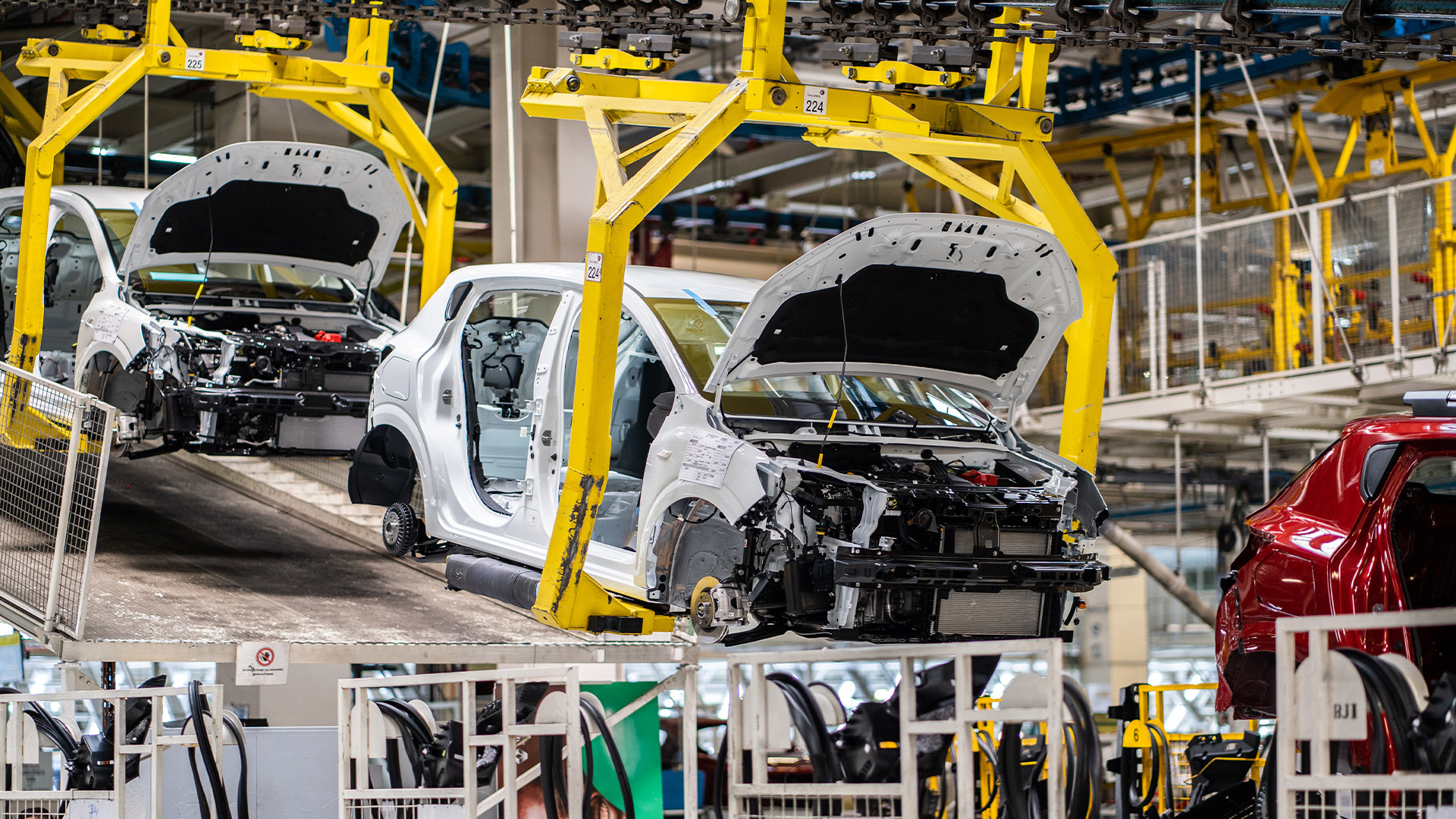
The bigger shift is that Morocco is not only moving goods. It is increasingly producing them.
Automotive is the most visible example. Stellantis plans to more than double production capacity at its Kenitra plant to 535,000 vehicles annually, while Moroccan officials said the expansion would help the country exceed 1 million vehicles in production capacity.
Morocco’s automotive sector also reached 157.6 billion dirhams in exports in 2024, maintaining its position as the country’s top export sector.
That changes the hub narrative.
A transit hub earns value from movement. A production hub earns value from manufacturing, suppliers, labour, logistics and export integration.
Morocco is trying to move further into the second category.
The country’s push into EV batteries strengthens that transition. China’s Gotion High-Tech signed a $1.3 billion agreement for a battery plant in Kenitra, with production expected in 2026 and potential expansion toward a much larger battery platform.
For investors, the strategic question is whether Morocco can build enough supplier depth, technical talent and utility readiness around these projects to make the hub model self-reinforcing.
Europe Is the Demand Anchor

Morocco’s economic hub strategy is deeply tied to Europe.
The country benefits from proximity to European consumers, manufacturers and supply chains. That is especially important as companies reassess production footprints, carbon exposure and supply-chain resilience.
For European businesses, Morocco offers a nearby alternative to more distant production bases.
But the relationship is no longer only about cost. It is increasingly about speed, resilience and compliance.
The European Union’s Carbon Border Adjustment Mechanism makes carbon exposure more important for exporters into Europe. For Morocco, that creates both opportunity and pressure.
The opportunity is to position itself as a lower-carbon nearshoring platform. The pressure is that industrial sites need reliable energy, emissions reporting and utility systems that can satisfy future supply-chain scrutiny.
That is where Morocco’s renewable energy ambitions and industrial infrastructure become directly relevant to trade competitiveness.
Africa Is the Expansion Layer
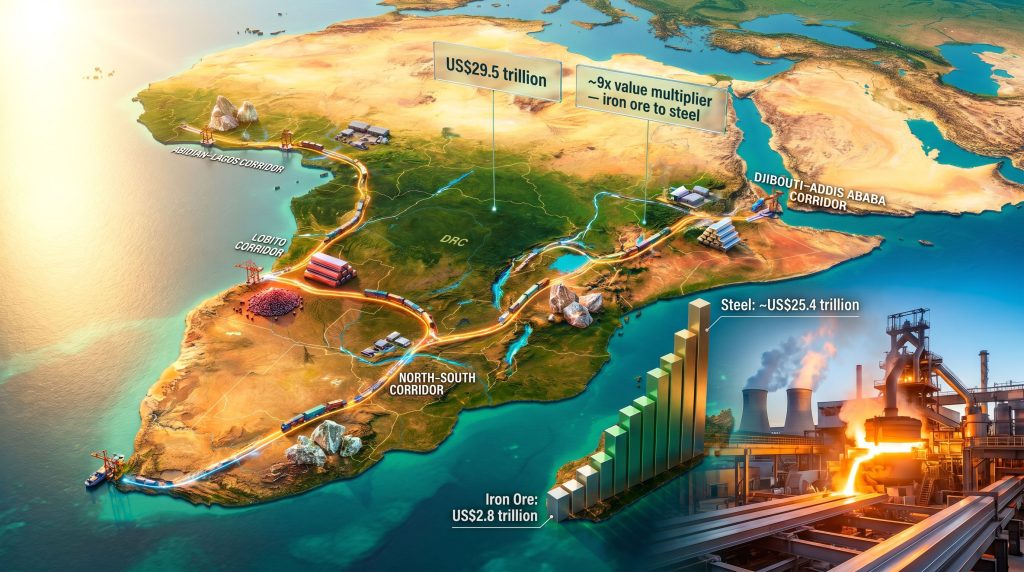
If Europe is the demand anchor, Africa is the expansion layer.
Morocco’s companies, banks and industrial groups have increased their presence across West and Central Africa over the past decade. The country’s positioning is no longer limited to serving European markets from North Africa.
It is also trying to operate as a platform into African growth markets.
The African Continental Free Trade Area adds a regulatory layer to that hub strategy. Under AfCFTA rules, goods that meet rules-of-origin requirements can qualify for preferential tariff treatment, making origin, local value added and production structure commercially important.
For manufacturers, the question is not only whether Morocco offers access to Africa. It is whether production in Morocco can help meet origin requirements and support more competitive entry into African markets as AfCFTA implementation deepens.
That could increase the structural value of Morocco’s hub model.
For foreign companies, Morocco can therefore serve two functions:
A nearshoring base for Europe.
A regional platform for African expansion.
The combination is powerful, but it is not automatic. African expansion requires local networks, regulatory understanding, financing depth and regional execution capacity.
Morocco’s advantage is that some of these networks already exist. The investor test is whether they can be converted into scalable commercial operations.
The Industrial Corridors That Matter
The phrase “between Europe and Africa” is useful, but too broad for serious investors.
The real question is where the operating corridors are.
Tangier-Tetouan-Al Hoceima — The Heavy Export Artery
Strategic focus: premium port connectivity, export manufacturing, automotive suppliers, customs integration and direct access to Tanger Med.
Investor relevance: best suited for logistics-heavy businesses, supplier networks, warehousing, export processing, cold-chain infrastructure and manufacturing models that require fast port access.
Execution test: availability of serviced land, customs efficiency, labour depth and road connectivity to the port ecosystem.
Rabat-Sale-Kenitra — The Electric Mobility Hub
Strategic focus: automotive production, EV batteries, electric mobility and supplier ecosystems anchored by Kenitra’s Atlantic Free Zone and the Stellantis industrial base.
Investor relevance: attractive for component manufacturers, battery suppliers, industrial services, automation providers and companies exposed to Europe-linked automotive value chains.
Execution test: specialised technical talent, utility readiness, supplier depth and the ability to scale around major anchor projects such as Stellantis and Gotion High-Tech.
Casablanca-Nouaceur — The Aerospace and Corporate Platform
Strategic focus: aerospace suppliers, finance, corporate headquarters, services, logistics and higher-value industrial activity.
Investor relevance: best suited for companies needing proximity to decision-makers, business services, aviation-related suppliers, finance and skilled labour pools.
Execution test: land cost, access to qualified talent, administrative coordination and competition for prime industrial and office locations.
Rabat-Casablanca Axis — The Institutional and Services Corridor
Strategic focus: administration, finance, education, digital services, public-sector interfaces and professional services.
Investor relevance: relevant for companies requiring regulatory access, talent pipelines, institutional proximity and service-sector growth.
Execution test: hiring, regulatory navigation, cost discipline and ability to localise services to Moroccan demand.
Why Investors Are Paying Attention
Morocco’s hub ambition is attractive because it sits at the intersection of several investment themes.
Nearshoring: European companies are looking for production closer to core markets.
Supply-chain diversification: companies want alternatives to overconcentrated production networks.
Industrial policy: Morocco is using incentives, industrial zones and strategic projects to attract higher-value manufacturing.
Energy transition: renewable energy and green hydrogen ambitions could support lower-carbon industrial activity.
AfCFTA optionality: rules-of-origin and tariff preferences can make Morocco more relevant as a production base for African market entry if products qualify under the agreement.
World Cup 2030: infrastructure, tourism and transport investment are likely to accelerate ahead of the tournament.
The country’s advantage is that these themes reinforce each other.
The risk is that investors overestimate the macro story and underestimate the execution layer.
MMO Hub Risk Assessment
Morocco’s hub strategy is credible, but it still needs to be tested through operational risk.
Industrial land speculation
Risk level: High in prime corridors such as Tangier, Kenitra and Nouaceur.
Core underwriting test: Investors should verify whether the plot has serviced utilities, zoning clarity, expansion rights and a mapped CRI or Wilaya approval path.
Grid capacity and green baseload
Risk level: Moderate to high for export-facing industry.
Core underwriting test: Investors should assess electricity sourcing, PPA eligibility, emissions profile and resilience against future carbon-related trade rules.
Specialised human capital
Risk level: High in advanced sectors.
Core underwriting test: Investors should evaluate access to engineers, BMS specialists, automation technicians, aerospace skills and training pipelines.
Customs and logistics execution
Risk level: Moderate.
Core underwriting test: Investors should test clearance times, port access, transport reliability and integration with export documentation.
AfCFTA rules-of-origin qualification
Risk level: Moderate but strategically important.
Core underwriting test: Investors should determine whether Moroccan production meets origin criteria and can benefit from preferential African market access.
Local administrative delivery
Risk level: Moderate to high depending on region.
Core underwriting test: Investors should map which approvals sit with CRIs, local authorities, Wilaya-level administration and national bodies.
What This Means for Investors
Morocco should not be viewed simply as a domestic market.
Its strongest investment proposition is as a platform: a place where companies can combine production, logistics, export access and regional reach.
But the best opportunities will not be spread evenly across the country.
They will cluster around corridors where infrastructure, labour, utilities, land and approvals align.
That means investors should underwrite Morocco at the corridor level, not only the country level.
The most important questions are practical:
Can the site connect to the port or export corridor efficiently?
Is serviced land actually available?
Are utilities secured?
Is the labour pool deep enough?
Does the project benefit from policy support or investment incentives?
Can the output serve Europe, Africa or both?
Can the product qualify for preferential access under relevant trade rules?
That is the difference between investing in Morocco’s hub narrative and investing in Morocco’s hub reality.
Final Perspective
Morocco is no longer just a country with a strategic location.
It is trying to build an economic function around that location.
Tanger Med gives the country a world-class logistics anchor. Automotive and EV battery investments add industrial depth. European demand creates a nearshoring opportunity. African expansion gives the model regional reach.
But the next phase will depend on execution.
Location creates access. Infrastructure creates capacity. Execution creates relevance.
That is the real test of Morocco’s economic hub ambition in 2026.