


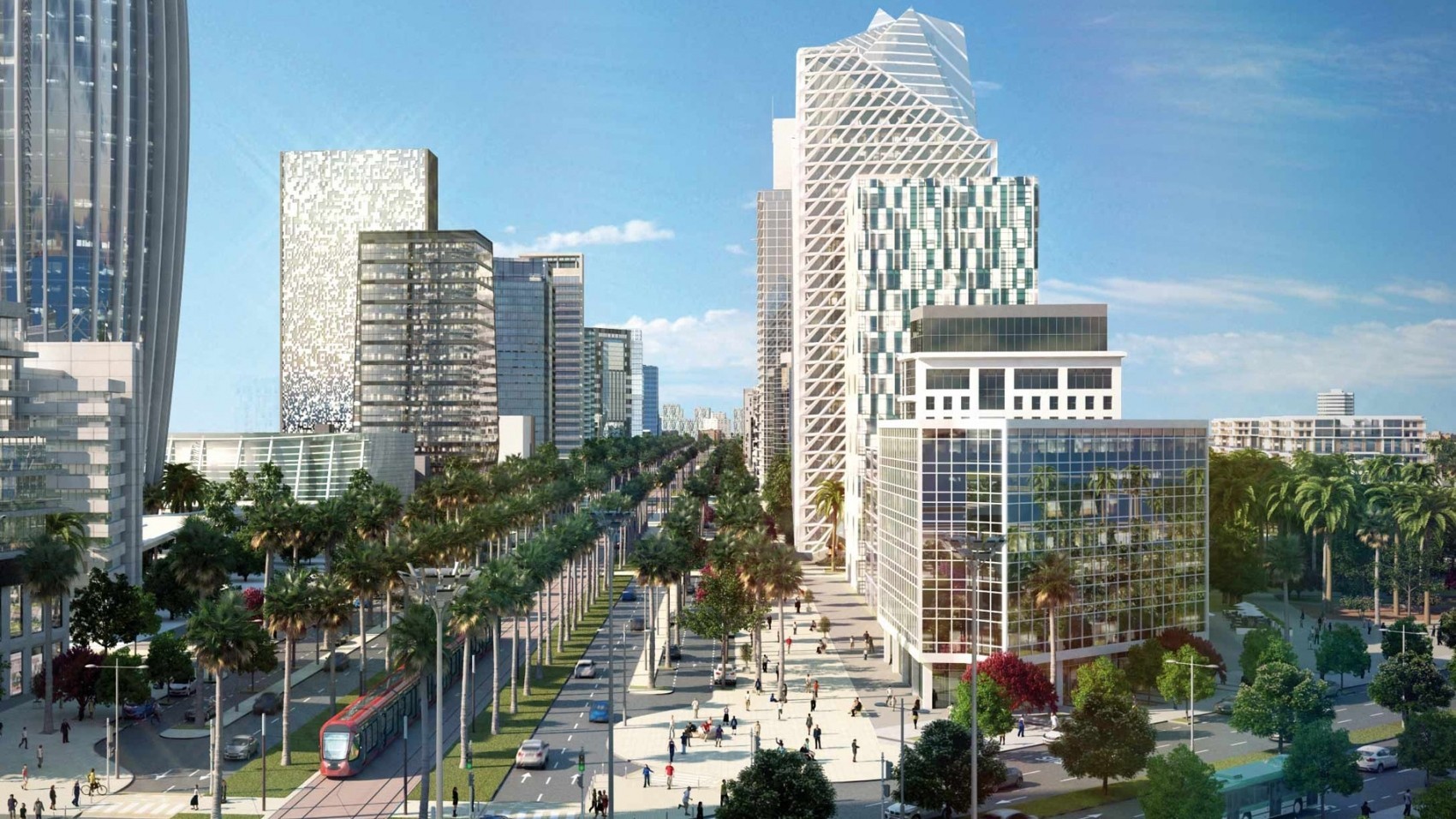
Morocco has made it easier for foreign companies to enter the market. The harder question in 2026 is whether they can operate efficiently once they are inside.
The country offers political stability, improving infrastructure, proximity to Europe and a more structured investment framework than many emerging markets. For exporters, manufacturers, service providers and regional operators, that gives Morocco real appeal.
But doing business in Morocco is no longer only about company formation, market access or headline incentives.
The real test is execution: securing approvals, finding serviced land, connecting utilities, hiring technical talent, managing currency exposure and navigating local administrative layers without losing momentum.
That is where the business case is won or weakened.
Access Has Improved — But Execution Remains Local
Morocco has strengthened its investment framework in recent years.
The new Investment Charter provides a more formal incentive structure, with total grants able to reach up to 30% of eligible investment depending on criteria such as sector, location, employment, sustainability and local integration. That gives investors a clearer route to state support, but it also raises the importance of understanding whether a project actually qualifies.
Institutionally, the market has also become more organised. Morocco’s Regional Investment Centers, known as CRIs, were reformed to support investment at the regional level and now form a central interface between investors and local administration.
At the national level, large investment files may also move through the National Investment Commission, which plays a central role in validating major investment agreements under the Investment Charter.
That structure matters. It gives foreign investors a clearer institutional map than before.
But the critical bottleneck often does not sit in headline policy. It sits in execution: local clearances, land access, utility connections, permitting, regional coordination and Wilaya-level administrative delivery.
For companies entering Morocco, the gap between theoretical access and operational reality is the real market-entry risk.
The 2026 Business Environment Is More Demanding
Morocco’s business environment is being reshaped by several forces at once.
The first is supply-chain realignment. European companies continue to look for production bases closer to home, especially as global logistics remain vulnerable to disruption.
The second is carbon regulation. The European Union’s Carbon Border Adjustment Mechanism entered its definitive phase in 2026 after a transitional period from 2023 to 2025, making carbon reporting and lower-emission production more important for exporters supplying Europe.
The third is Morocco’s industrial upgrade. The country is moving beyond basic assembly into higher-value manufacturing, including automotive components, aerospace, batteries and advanced industrial services.
The fourth is capital discipline. Investors are no longer judging markets only by incentives or macro stability. They are looking at execution capacity, site readiness, labour depth, FX management and operational reliability.
That is why Morocco’s opportunity is real — but increasingly selective.
Where Capital Is Likely to Go
Morocco’s strongest business opportunities in 2026 sit where policy support, infrastructure and global demand overlap.
Advanced Manufacturing
Automotive, aerospace and EV battery ecosystems remain among the strongest opportunities.
The lever: direct proximity to European value chains, export-oriented industrial zones and investment incentives linked to CapEx, employment and local integration.
The hurdle: sourcing specialised talent fast enough, particularly in battery management systems, industrial automation and advanced manufacturing supervision.
Logistics and Trade Services
Tanger Med and Morocco’s transport infrastructure support opportunities in warehousing, distribution, cold-chain logistics, customs-linked services and supply-chain operations.
The lever: Morocco’s position between Europe and Africa, supported by port, highway and logistics infrastructure.
The hurdle: securing the right site with utilities, road access, labour availability and customs efficiency already in place.
Tourism and Hospitality
Tourism remains a major sector, with additional momentum from the 2030 World Cup cycle.
The lever: rising international visibility, destination upgrades and growing demand for hotels, serviced apartments and experience-based tourism.
The hurdle: avoiding projects priced on event-cycle hype rather than long-term demand, operating quality and post-event occupancy.
Domestic Services
Urban growth is creating opportunities in healthcare, education, retail, finance, professional services and digital platforms.
The lever: expanding urban demand and changing consumer behaviour in major cities.
The hurdle: localising products, pricing and distribution to Moroccan purchasing power rather than importing foreign assumptions.
Green Compliance and Industrial Services
Carbon standards are becoming part of trade, especially for exporters into Europe.
The lever: demand for energy efficiency, ESG reporting, environmental services and lower-carbon production systems.
The hurdle: proving that a site’s electricity, water and emissions profile can support export-facing compliance.
Theoretical Access vs. Operational Reality
For many foreign companies, Morocco looks straightforward at the entry stage.
Company formation is possible. Investment incentives exist. CRIs provide a clearer regional interface. The National Investment Commission offers a framework for large projects. Banking, legal and notarial systems are recognisable to international investors.
That is the theoretical access layer.
The operational reality is different.
Companies still need land that is not only available, but serviced. They need permits that move through local administrative layers. They need power, water, road access and telecoms. They need contractors who deliver. They need managers and technicians who can operate at industrial standards. They need clarity on foreign-exchange rules and dividend repatriation.
In Morocco, market entry has become easier. Market execution still requires discipline.
The Friction Points Foreign Companies Should Expect

Morocco is not an unusually difficult market, but companies that treat access as simplicity can misprice the risk.
Wilaya-level administrative friction. National reforms may simplify the investment framework, but local clearances can still determine timelines. Permits, land-use approvals, construction authorisations and operational sign-offs may involve coordination at regional, provincial or prefectural level. For investors, the practical question is not only what Rabat approves, but how quickly local administration executes.
Serviced industrial land. Prime industrial locations are becoming more competitive, especially in clusters tied to export activity and advanced manufacturing. Casablanca’s Nouaceur ecosystem remains central for aerospace and industrial suppliers, while Kenitra’s Atlantic Free Zone is increasingly important for automotive and electric mobility. Around Tangier, demand is closely linked to port access, logistics infrastructure and export-oriented manufacturing. The risk is not land scarcity in the abstract. It is whether the right land exists with utilities, approvals, road access, labour availability and expansion capacity already in place.
Utility readiness. A site without reliable power, water, road access, telecoms and logistics connectivity can turn a strong business case into a delayed project. For industrial investors, utility verification should come before financial modelling is finalised.
Green utility compliance. Exporters serving Europe must assess carbon exposure, energy sourcing and CBAM-related reporting. Lower-cost production is no longer enough if the carbon profile creates future trade friction.
Technical talent bottlenecks. Morocco has a young workforce and a growing industrial base, but specialised talent can be tight in high-growth sectors. Battery management systems, industrial automation, aerospace precision, renewable energy operations and advanced logistics require skills that are not always available at the pace investors want.
Counterparty execution. Local partners, contractors, advisers and service providers can either accelerate or damage a project. In construction, logistics, hospitality and industrial services, delivery quality is often as important as contract quality.
Information depth. High-level market information rarely tells the full story. Foreign companies often need legal advisers, tax specialists, sector experts, local site checks and direct operational verification before committing capital.
The Currency and Repatriation Question
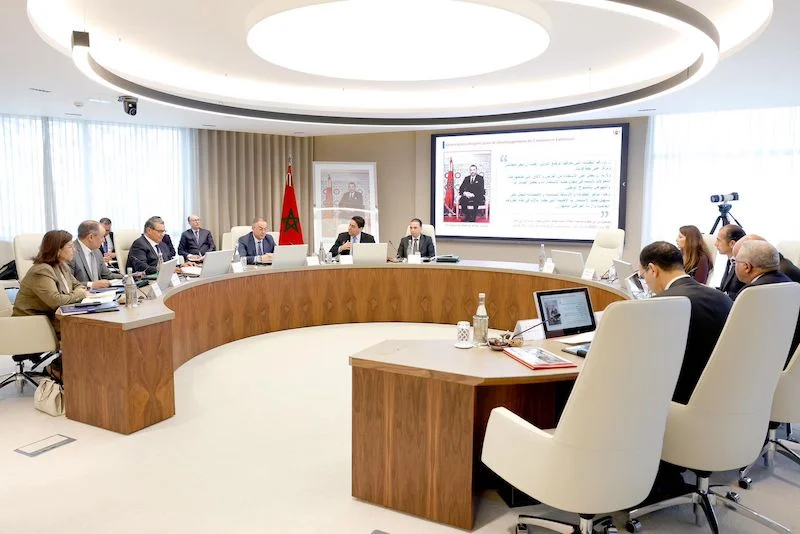
For multinational CFOs, Morocco’s opportunity cannot be assessed without looking at currency and repatriation.
The Moroccan dirham operates under a managed exchange-rate framework, and Morocco has been gradually moving toward greater exchange-rate flexibility over time. That transition matters for companies with imported inputs, euro-linked revenues, dollar exposure or dividend flows.
Foreign investors also need to understand compliance with Morocco’s foreign-exchange framework, overseen by the Office des Changes.
The issue is not whether foreign capital can operate in Morocco. It can. The issue is whether equity contributions, intercompany flows, foreign-currency accounts, dividends, royalties, management fees and repatriation mechanics are structured correctly from the start.
For CFOs, FX exposure and Office des Changes compliance are not technical details. They are part of the return calculation.
MMO Executive Checklist: 2026 Underwriting Matrix
Before committing capital in Morocco, serious investors should pressure-test the project against seven questions.
Incentive monetisation. Does the project clearly meet the employment, regional, sectoral, sustainability or local integration triggers required to benefit from Investment Charter support?
Site and utility readiness. Is the project connected to reliable power, water, telecoms, road access and logistics infrastructure — or is the business case dependent on future delivery?
Water security. Is the industrial or tourism footprint connected to a secure water framework, including desalination where relevant, or exposed to climate-stressed groundwater constraints?
Carbon and export exposure. Is the project exposed to CBAM or other carbon-related trade rules affecting exports into Europe?
Forex and repatriation structure. Are equity contributions, shareholder loans, management fees, royalties and dividend flows aligned with Office des Changes requirements from the beginning?
Execution capacity. Does the developer, operator, contractor or local partner have a verified delivery record in Morocco?
Demand quality. Is demand structural, or is it being inflated by World Cup-linked optimism, marketing pressure or short-term speculation?
That is the difference between entering Morocco and underwriting Morocco correctly.
Is Morocco Easy to Do Business In?
Morocco is easier to access than many emerging markets. But ease of access should not be confused with ease of execution.
The country offers stability, infrastructure, industrial momentum and a clearer investment framework than in the past. It also benefits from structural trends working in its favour: nearshoring, supply-chain diversification, carbon regulation, tourism growth and the 2030 World Cup cycle.
But companies still need to manage local approvals, serviced land, utility readiness, technical talent, counterparty risk, currency exposure and administrative delivery.
For businesses that prepare properly, Morocco can be a strong platform for growth.
For those that enter on the strength of the macro story alone, the market can produce unexpected friction.
Final Perspective
Doing business in Morocco in 2026 is not about whether the country offers opportunity. It does.
The more important question is whether companies can convert that opportunity into performance.
Morocco has improved access through reforms, incentives and institutional streamlining. But the operational layer remains decisive.
Access opens the door. Execution determines the outcome.
That is the difference foreign businesses need to understand.