



Morocco’s role in global trade is no longer defined by geography alone.
For years, the country was described as a strategic bridge between Europe and Africa. In 2026, that description is too limited. Morocco is increasingly becoming an operating platform for trade, logistics, manufacturing and regional market access.
That shift matters because global trade is being reshaped by three forces at once: supply-chain diversification, carbon regulation and regional market integration.
Morocco sits at the intersection of all three.
Its location near Europe remains important. But the real question is now whether the country can use infrastructure, industrial capacity and trade agreements to turn that location into durable commercial leverage.
From Geography to Trade Architecture
Geographic access is Morocco’s starting point, not its full trade strategy.
The country sits close to the Strait of Gibraltar, one of the world’s most important maritime corridors, with direct exposure to Atlantic, Mediterranean, European and African trade routes.
But ports and proximity alone do not make a trade hub.
The value lies in building the architecture around that geography: container terminals, industrial zones, customs systems, highways, supplier networks, energy access and export platforms.
That is where Morocco’s trade story becomes more important.
The country is trying to move beyond being a transit point. It is building a trade architecture designed to connect production, logistics and market access.
For investors and exporters, that is the difference between a country that goods pass through and a country where value is created.
Tanger Med Is the Trade Anchor
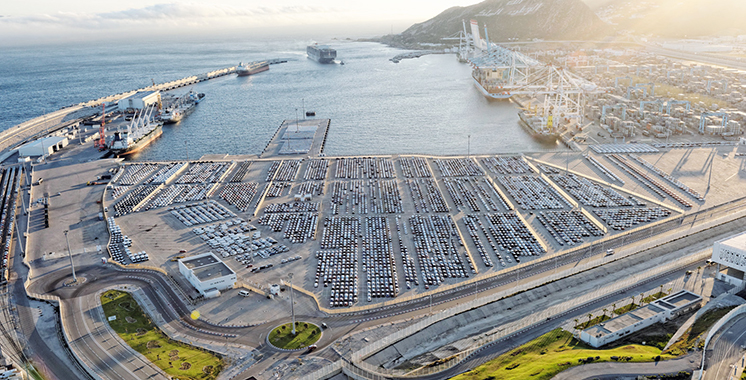
Tanger Med is the most visible asset in Morocco’s global trade strategy.
The port complex handled more than 11.1 million TEUs in 2025, an increase of 8.4% from 2024, reinforcing its position as the leading container port in Africa and the Mediterranean. It was also ranked among the world’s major container ports by Alphaliner, reflecting the scale of its global integration.
That scale is strategically important.
Tanger Med is not just a container port. It is a logistics and industrial ecosystem linking maritime routes, customs flows, free zones, manufacturing clusters and export activity.
For companies serving Europe, Africa and the Mediterranean, the port offers something few regional competitors can match: a high-capacity trade platform connected directly to industrial production.
This is why Morocco’s trade role cannot be measured only in cargo volumes.
The more important question is whether the country can keep converting port capacity into manufacturing output, supplier ecosystems and export value.
Europe Remains the Demand Anchor
Morocco’s trade strategy is deeply connected to Europe.
European demand supports Moroccan exports in automotive, agriculture, textiles, aerospace components and industrial goods. Proximity gives Morocco a natural advantage over more distant production bases.
But in 2026, the European relationship is changing.
It is no longer only about cost and distance. It is increasingly about resilience, carbon exposure and supply-chain compliance.
The European Union’s Carbon Border Adjustment Mechanism entered its definitive regime in 2026 after a transitional period from 2023 to 2025. That makes carbon reporting and lower-emission production more important for companies exporting covered goods into Europe.
For Morocco, this creates both opportunity and pressure.
The opportunity is to position itself as a nearshoring platform with renewable energy potential and shorter logistics chains.
The pressure is that export-facing industrial sites must prove they can meet the compliance demands of European supply chains.
In global trade, proximity is no longer enough. The future advantage belongs to locations that can combine proximity with verifiable operational standards.
Industrial Exports Are Changing the Trade Story
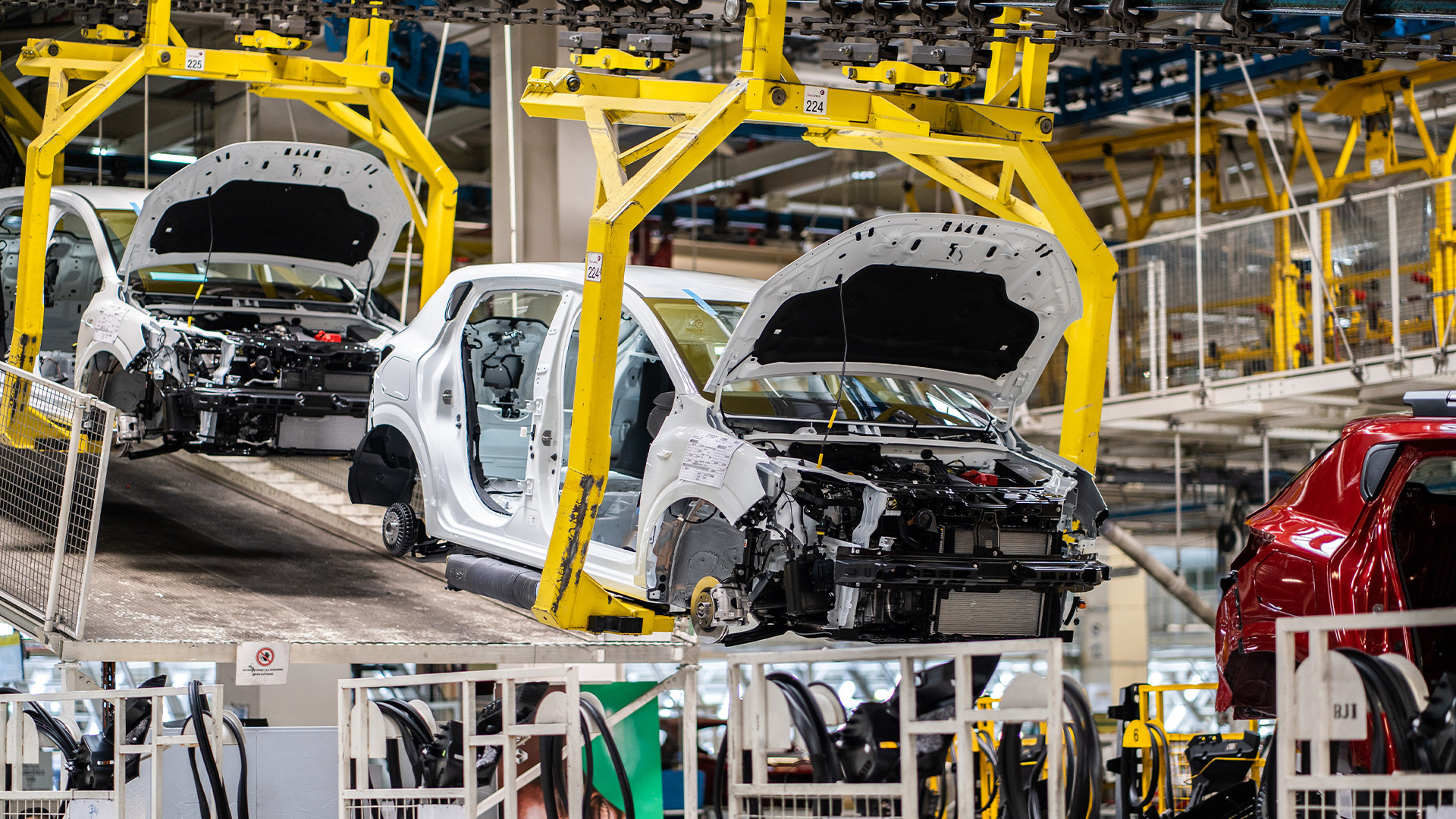
Morocco’s trade role has become stronger because the country is not only moving goods. It is increasingly producing them.
Automotive is the clearest example.
Morocco’s automotive exports reached 157.6 billion dirhams in 2024, rising 6.3% and maintaining the sector’s position as the country’s leading export engine.
That matters because it changes the economic function of trade.
A pure logistics hub earns value from transport. An industrial trade hub earns value from production, suppliers, labour, customs efficiency and export integration.
Morocco is trying to move further into the second category.
The same logic applies to aerospace, agribusiness, textiles, renewable energy components and the emerging EV battery ecosystem. These sectors make Morocco more than a geographic corridor. They make it a production-linked trade platform.
For investors, the question is not only whether Morocco can ship efficiently. It is whether it can keep scaling the industrial base behind those shipments.
Africa Is the Expansion Layer
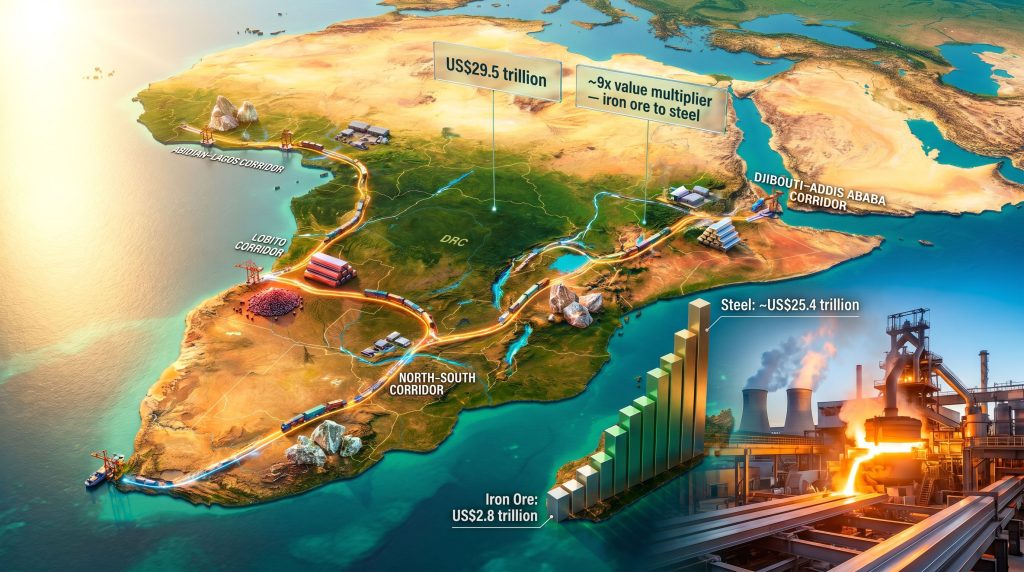
If Europe is Morocco’s primary trade anchor, Africa is the expansion layer.
Moroccan banks, industrial groups, construction companies and service providers have increased their presence across West and Central Africa. This gives Morocco a role that goes beyond North African positioning.
It is increasingly trying to function as a platform into African growth markets.
The African Continental Free Trade Area adds another layer to this strategy. As AfCFTA implementation deepens, rules of origin and preferential tariff treatment can make production structure more important for companies targeting African markets.
For manufacturers, the question becomes more strategic:
Can production in Morocco support competitive access into African markets while also serving Europe?
If the answer is yes, Morocco’s value as a trade platform increases significantly.
That is the dual-market argument behind the Morocco hub story.
The Trade Corridors That Matter
Morocco’s global trade role is not evenly distributed across the country. It is concentrated in operating corridors where infrastructure, industry and export access overlap.
Tangier-Tetouan-Al Hoceima — The Maritime Export Corridor
Strategic focus: Tanger Med, automotive suppliers, customs integration, port-driven logistics and export manufacturing.
Trade relevance: best suited for companies that need fast maritime access, container capacity, supplier networks and Europe-facing shipping routes.
Execution test: customs efficiency, land availability, port access, labour depth and industrial-zone readiness.
Kenitra — The Automotive and EV Corridor
Strategic focus: Atlantic Free Zone, automotive production, EV batteries and supplier ecosystems.
Trade relevance: important for manufacturers exposed to Europe-linked automotive value chains and electric mobility.
Execution test: specialised technical talent, utility reliability, supplier depth and project delivery around anchor investments.
Casablanca-Nouaceur — The Aerospace and Corporate Trade Platform
Strategic focus: aerospace suppliers, logistics, services, finance and corporate headquarters.
Trade relevance: valuable for companies needing proximity to decision-makers, business services, aviation-linked production and a deeper urban labour market.
Execution test: cost discipline, skilled labour, logistics integration and administrative coordination.
Agadir and Southern Corridors — Agribusiness and Atlantic Access
Strategic focus: agribusiness, fisheries, tourism-linked logistics and Atlantic-facing trade.
Trade relevance: relevant for food exports, cold-chain infrastructure, port access and regional development.
Execution test: water security, cold-chain efficiency, transport links and climate resilience.
Why Morocco Matters in the 2026 Trade System
Morocco’s importance is rising because global trade is becoming more fragmented and more regulated.
Companies are no longer optimising only for the lowest cost. They are looking at resilience, distance to market, regulatory exposure, carbon reporting, political stability and supply-chain redundancy.
Morocco benefits from several of these shifts.
Nearshoring: Europe-facing companies are looking for closer production options.
Supply-chain diversification: manufacturers want alternatives to overconcentrated Asian production networks.
Carbon regulation: CBAM increases the value of lower-carbon production pathways for Europe-linked exporters.
AfCFTA optionality: African market access can become more valuable as rules-of-origin systems mature.
Industrial policy: Morocco is using infrastructure, industrial zones and investment incentives to attract higher-value production.
Port scale: Tanger Med gives Morocco a trade asset with international weight.
The opportunity is that these drivers reinforce each other.
The risk is that trade ambition outpaces operational execution.
The Competitive Pressures Morocco Must Manage
Morocco’s trade position is strong, but not unchallenged.
Other countries are also competing for nearshoring, logistics flows, manufacturing investment and green industry.
To maintain its edge, Morocco must manage several constraints.
Port-to-factory execution. High port capacity matters only if inland logistics, customs processes and industrial zones remain efficient.
Technical talent. Automotive, aerospace, batteries and logistics require specialised workers and middle-management depth.
Utility readiness. Export manufacturing depends on reliable power, water, telecoms and transport links.
Carbon compliance. Europe-linked exporters will increasingly need credible emissions data and lower-carbon energy pathways.
Industrial land pressure. Prime zones near ports, airports and major corridors can become more expensive or constrained.
Rules-of-origin complexity. AfCFTA and other trade frameworks can create opportunity, but only if products qualify under the relevant rules.
These are not reasons to question Morocco’s trade trajectory.
They are the underwriting tests that determine whether the trajectory converts into investor returns.
MMO Global Trade Risk Dashboard: 2026
Trade driver: Tanger Med and maritime logistics
Upside: high container capacity, global shipping integration and direct connection to industrial zones.
Risk: port scale must be matched by customs efficiency, inland logistics and available industrial land.
Investor test: can the company move goods from factory to vessel without bottlenecks?
Trade driver: Europe-linked nearshoring
Upside: proximity to EU markets, shorter supply chains and manufacturing integration.
Risk: carbon compliance, technical labour and utility readiness can limit competitiveness.
Investor test: does the production site meet both cost and compliance requirements?
Trade driver: Automotive and industrial exports
Upside: export growth, supplier ecosystems and stronger value-chain integration.
Risk: dependence on European demand and specialised talent availability.
Investor test: is the business tied to a durable supply chain or only short-term cost arbitrage?
Trade driver: AfCFTA and African market access
Upside: potential rules-of-origin advantages and preferential access into African markets.
Risk: qualification complexity and uneven implementation across countries.
Investor test: does Moroccan production actually qualify for preferential treatment?
Trade driver: Green trade positioning
Upside: renewable energy potential and lower-carbon export positioning.
Risk: grid capacity, emissions verification and CBAM-related reporting requirements.
Investor test: can the company prove its carbon profile to European buyers and regulators?
What This Means for Investors and Businesses
Morocco should not be viewed only as a domestic market or a geographic bridge.
Its strongest trade proposition is as a platform where companies can combine production, logistics, export access and regional reach.
But the value is corridor-specific and sector-specific.
A logistics operator tied to Tanger Med is not underwriting the same Morocco as a food exporter in Agadir, an automotive supplier in Kenitra or an aerospace company in Nouaceur.
The central questions are practical:
Can the company access the right corridor?
Is the industrial land serviced?
Are customs and logistics reliable?
Does production meet European carbon requirements?
Can goods qualify for African preferential access?
Is the labour pool deep enough for the sector?
That is the difference between using Morocco as a trade slogan and using Morocco as a trade platform.
Final Perspective
Morocco’s growing role in global trade is not built on location alone.
It is built on the country’s ability to connect geography with infrastructure, production and regulatory access.
Tanger Med gives Morocco global maritime weight. Industrial exports give the trade model economic depth. Europe provides demand. Africa provides expansion optionality. Carbon regulation and supply-chain diversification are reshaping the opportunity.
But the next phase will depend on execution.
Location creates access. Infrastructure creates capacity. Production creates value. Execution creates relevance.
That is why Morocco’s role in global trade matters in 2026.