


Dakhla Atlantique is set to become one of Morocco’s most strategically important infrastructure projects before the end of the decade.
The deepwater port, under construction on Morocco’s southern Atlantic coast, is expected to become operational around 2028 as part of the kingdom’s wider effort to expand port capacity, strengthen regional connectivity and turn the southern provinces into a stronger platform for trade, fisheries, logistics and African market access.
For Morocco, Dakhla Atlantique is more than a port.
It is a test of whether major infrastructure can reshape the economic geography of the south, connect Atlantic trade routes, support the blue economy and position Dakhla as a gateway toward West Africa.
The ambition is clear.
The question is whether Dakhla Atlantique can move from a strategic infrastructure project into a functioning economic ecosystem.
A Southern Atlantic Gateway
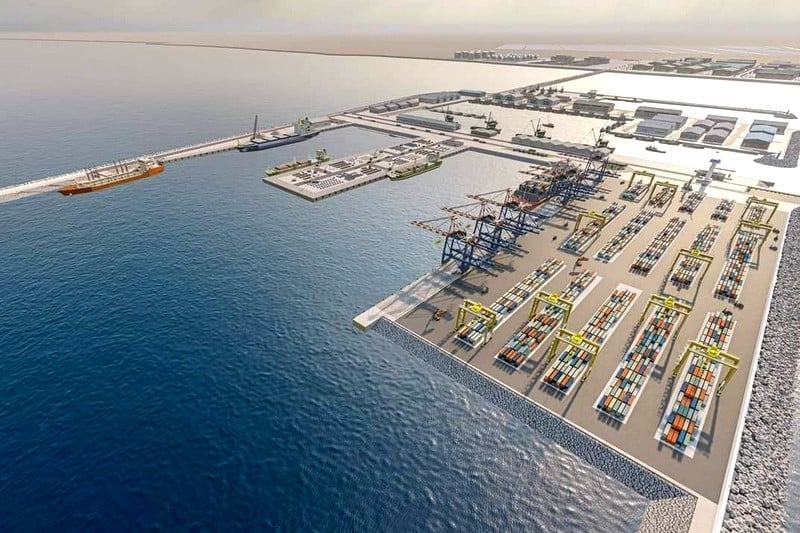
Dakhla Atlantique has a different strategic profile from Morocco’s other major port projects.
Tanger Med anchors Morocco’s northern global trade platform. Nador West Med is designed as a second Mediterranean industrial-logistics engine. Dakhla Atlantique is the Atlantic-facing gateway for the south.
That gives it a distinct role.
The port is intended to support trade, fisheries, logistics, regional development and connectivity with African markets. Its location near the Atlantic corridor gives Morocco a platform that looks south and west, not only north toward Europe.
This matters because Morocco’s infrastructure strategy is no longer concentrated only around the Tangier-Casablanca axis.
Dakhla Atlantique is part of a broader effort to expand economic capacity across regions and give the southern provinces a stronger logistical and industrial base.
If executed well, the port could become one of the defining assets of Morocco’s Atlantic strategy.
The Project Timeline and Scale
Dakhla Atlantique is one of Morocco’s major port projects currently under construction.
Reuters has reported that Morocco plans to open Dakhla Atlantique around 2028, as part of a wider strategy that also includes Nador West Med. The project has been described as costing roughly $1 billion.
Construction is already well advanced.
Moroccan media reported in 2026 that the project had passed the 50% completion mark, with Médias24 placing progress at more than 53%.
That progress is important.
Unlike early-stage projects that exist mainly on paper, Dakhla Atlantique is already moving through the construction phase.
The next test is whether physical progress converts into operating readiness, cargo flows, industrial activity and regional economic impact.
A Port Built Around More Than Cargo
Dakhla Atlantique is not designed as a simple cargo-handling facility.
The project is expected to support several functions at once:
- commercial trade
- fisheries and seafood processing
- regional logistics
- industrial activity
- Atlantic maritime connectivity
- southern economic development
That multi-function design is what makes the project strategically important.
A port that only handles cargo can move goods. A port that supports fisheries, processing, logistics and industrial activity can reshape a regional economy.
For Dakhla, the opportunity is to move from coastal positioning toward a deeper economic function.
The port could allow the region to capture more value from maritime resources, trade flows and Africa-facing logistics.
But that will require more than quays and breakwaters.
It will require operators, processing facilities, transport connections, storage, skilled labour and a functioning industrial ecosystem around the port.
The Fisheries and Blue Economy Layer
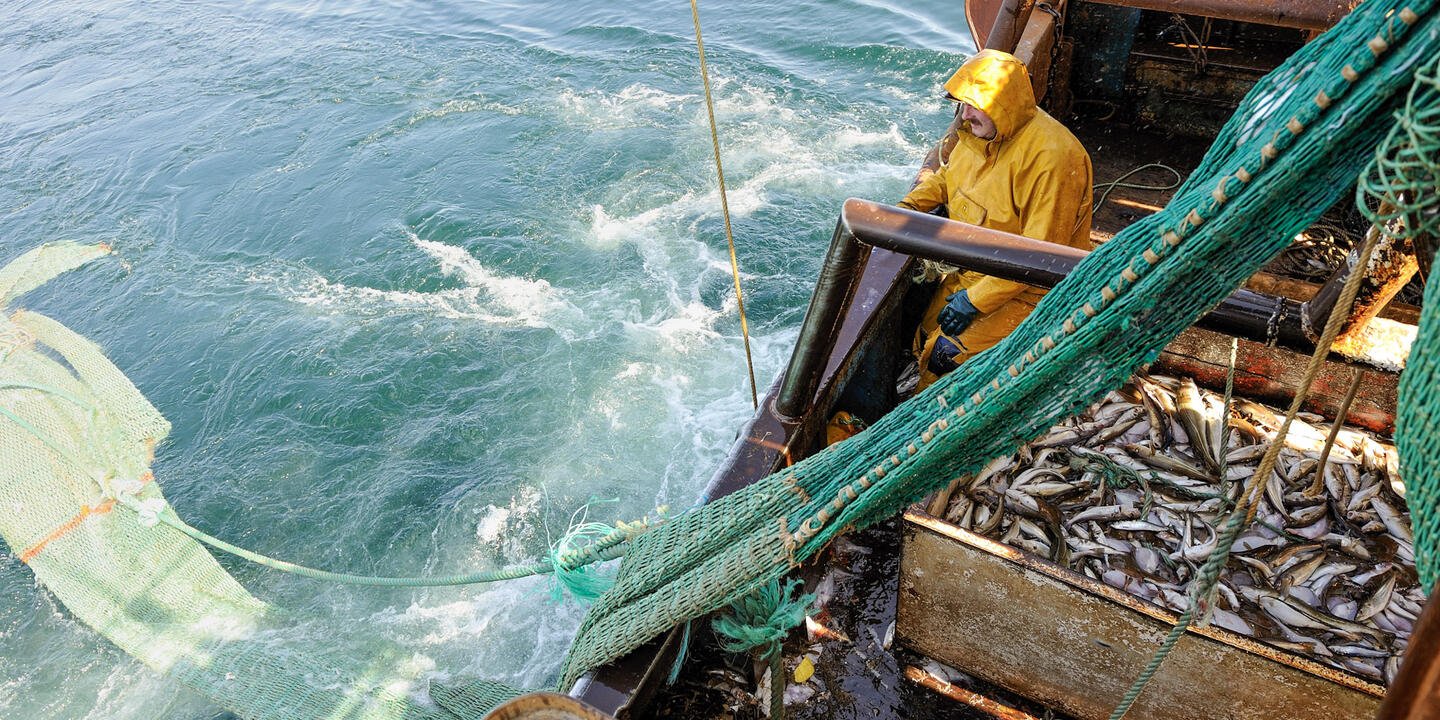
The blue economy is one of the most important dimensions of Dakhla Atlantique.
Dakhla and the surrounding region have long been linked to fisheries and Atlantic maritime resources. The new port could strengthen that role by improving landing capacity, processing potential, cold-chain logistics and export readiness.
Reports on the project indicate that the fishing basin is expected to include extensive quay infrastructure, with Le360 reporting 1,662 metres of quays across 28.8 hectares dedicated to the fishing port component.
That matters because fisheries infrastructure is not only about volume.
The economic value comes from what happens after the catch: processing, refrigeration, storage, packaging, export logistics and quality control.
If Dakhla Atlantique can strengthen that chain, the region could capture more value from its maritime economy.
The risk is that raw resource flows remain underprocessed.
For the blue economy to become a true growth driver, the port must support higher-value activity, not just higher throughput.
A Platform Toward West Africa
Dakhla Atlantique also has a wider regional dimension.
Its Atlantic location gives Morocco a stronger platform for trade and logistics links toward West Africa.
This is especially important as Morocco continues to position itself as a bridge between Europe, Africa and Atlantic trade routes. Dakhla’s southern location could support regional commerce, fisheries exports, logistics services and future Africa-facing industrial activity.
The port’s strategic value will depend on whether it can connect to:
- road networks
- logistics platforms
- storage and processing zones
- regional trade corridors
- West African demand centres
- maritime routes along the Atlantic coast
For Morocco, the opportunity is to make Dakhla more than a remote coastal city.
The long-term ambition is to turn it into a functional southern gateway.
That is a powerful vision.
But it depends on hinterland connectivity.
A port can face Africa geographically. To serve Africa commercially, it needs transport corridors, operators and trade flows that work in practice.
Southern Development and Regional Rebalancing
Dakhla Atlantique is also a regional development project.
Morocco’s strongest economic corridors have traditionally been concentrated in the north and centre: Tangier, Casablanca, Rabat, Kenitra and Marrakech. Dakhla Atlantique is part of a broader strategy to expand economic opportunity further south.
If successful, the port could support:
- job creation
- industrial land development
- fisheries value chains
- logistics services
- construction activity
- hospitality and urban growth
- regional private investment
This is why the project matters beyond maritime policy.
It has the potential to reshape how investors view Dakhla and the southern provinces.
But regional rebalancing is difficult.
Infrastructure can create the conditions for growth, but private-sector uptake determines whether the growth becomes durable.
The real question is whether Dakhla Atlantique can generate enough economic density around the port to support a wider regional ecosystem.
Connectivity Will Determine the Impact
For any deepwater port, the quay is only one part of the value chain.
The true economic impact depends on connectivity.
Dakhla Atlantique will need efficient links to inland roads, industrial zones, storage facilities, cold-chain systems, logistics operators and regional markets.
Without that, the port risks operating below its full potential.
The strongest port ecosystems are those where goods and resources move efficiently from vessel to processing facility, warehouse, highway, airport or export route.
For Dakhla Atlantique, the core execution test is simple:
Can Morocco connect maritime infrastructure to inland economic activity?
If yes, the port can become a southern development engine.
If not, its impact may remain more limited than its scale suggests.
How Dakhla Atlantique Fits Morocco’s Port Strategy
Dakhla Atlantique should not be viewed in isolation.
It is part of Morocco’s broader port strategy.
Tanger Med anchors global container flows and northern industrial logistics. Nador West Med is designed to expand Mediterranean capacity and support the Oriental region. Dakhla Atlantique gives Morocco an Atlantic platform in the south.
Together, these projects suggest a more diversified maritime strategy.
Rather than relying on a single gateway, Morocco is building a network of port assets with different functions:
Tanger Med: global container and industrial logistics.
Nador West Med: Mediterranean bulk, energy and industrial expansion.
Dakhla Atlantique: Atlantic access, fisheries, southern development and West Africa-facing logistics.
This is important because port diversification can reduce concentration risk and support regional development.
But each port must define its own economic role.
For Dakhla Atlantique, the role is not to replicate Tanger Med.
It is to anchor a different geography and a different economic logic.
The Execution Risks
Dakhla Atlantique has strong strategic logic, but execution will determine its long-term value.
Several risks need to be managed carefully.
Operational readiness. Construction progress must translate into port systems, staffing, customs processes, equipment, safety standards and operator readiness.
Hinterland connectivity. The port’s value depends on roads, logistics zones, processing facilities and inland access.
Fisheries value capture. The region must move beyond raw landing capacity toward processing, refrigeration and export quality.
Private-sector uptake. Industrial and logistics zones need real operators, not only infrastructure plans.
Regional labour and skills. The port ecosystem will require trained workers in logistics, fisheries, processing, maintenance and operations.
Cargo-flow uncertainty. Future volumes must be supported by real demand, not only strategic positioning.
Post-opening utilisation. The first years after opening will be critical in determining whether the port becomes an economic engine or a long-term capacity project still waiting for full demand.
These risks do not weaken the project’s importance.
They define the conditions for success.
MMO Dakhla Atlantique Project Dashboard: 2026
Port construction
Strategic upside: the project is already beyond the halfway point and moving toward expected 2028 commissioning.
Execution risk: construction progress must convert into operational readiness.
Investor test: are terminal systems, equipment, staffing and operators aligned with the timeline?
Fisheries and blue economy
Strategic upside: expanded quay infrastructure can support landing, processing, cold-chain logistics and exports.
Execution risk: value may remain limited if the region does not build enough processing and storage capacity.
Investor test: does the project capture more value after the catch, not only more volume at landing?
West Africa-facing logistics
Strategic upside: Dakhla can become a southern Atlantic platform for regional trade and connectivity.
Execution risk: geography alone does not create cargo flows.
Investor test: are trade corridors, operators and demand centres clearly connected to the port?
Southern regional development
Strategic upside: the port can anchor jobs, investment, urban growth and regional economic rebalancing.
Execution risk: private-sector uptake may lag behind infrastructure delivery.
Investor test: are industrial, logistics and service businesses committing around the port?
Morocco’s port network
Strategic upside: Dakhla Atlantique diversifies Morocco’s maritime strategy beyond the northern corridor.
Execution risk: the port must define a distinct commercial role rather than depend only on national strategy.
Investor test: what function makes Dakhla Atlantique uniquely competitive?
What This Means for Investors and Businesses
Dakhla Atlantique creates potential opportunities across several sectors.
The most relevant include:
- fisheries and seafood processing
- cold-chain logistics
- storage and warehousing
- port services
- transport and distribution
- industrial land development
- regional trade services
- hospitality and urban support services
- maintenance and maritime operations
But investors should avoid treating the project as automatically bankable because of its strategic importance.
The strongest opportunities will be those linked to real operational demand.
Investors should ask:
- Is the relevant port function already defined?
- Are operators committed?
- Is there cold-chain and processing capacity?
- Are road and logistics links sufficient?
- Can the business serve West African markets in practice?
- Is there enough labour and local service depth?
- Is the project tied to real demand or only future expectations?
Dakhla Atlantique is a major opportunity.
But it is still a project that must be underwritten through execution.
Final Perspective
Dakhla Atlantique is one of Morocco’s most strategically important projects on the road to 2030.
It gives the country a southern Atlantic gateway, strengthens the development case for Dakhla and the southern provinces, and expands Morocco’s maritime strategy beyond the northern port corridor.
But the port’s success will not be measured only by construction progress or opening date.
It will be measured by what follows: cargo flows, fisheries value chains, processing capacity, regional logistics, private-sector uptake and connectivity with African markets.
Geography creates the opportunity. Infrastructure creates the platform. Industrial uptake creates the value. Execution creates the legacy.
That is the real test of Dakhla Atlantique.