

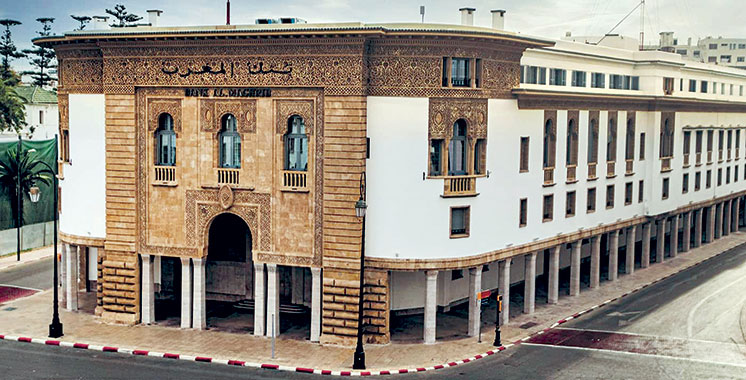
Bank Al-Maghrib’s decision to hold Morocco’s benchmark interest rate at 2.25% is not a routine monetary policy footnote.
It is one of Morocco’s most important macroeconomic signals in 2026.
At a time when global markets remain exposed to energy volatility, shifting rate expectations and geopolitical shocks, Morocco is operating with a rare policy combination: contained inflation, accelerating growth expectations and a central bank able to remain patient.
For investors, that combination matters because it lowers the cost of uncertainty.
Stable prices reduce risk premiums. Predictable rates improve capital planning. A credible monetary framework supports long-term investment decisions across real estate, infrastructure, manufacturing, tourism and export-oriented industry.
In Morocco’s case, Bank Al-Maghrib’s stability strategy is helping protect the investment climate while the country moves into a new cycle of infrastructure spending, industrial expansion and World Cup 2030 preparation.
The Policy Signal: 2.25% and a Central Bank Refusing to Overreact

Bank Al-Maghrib kept its benchmark rate unchanged at 2.25% during its March 2026 policy meeting.
The decision came as the central bank pointed to moderate inflation, stronger growth prospects and continued uncertainty in the international environment.
At the same meeting, Bank Al-Maghrib revised its 2026 growth forecast upward to 5.6%, supported by improved agricultural output after stronger rainfall and the domestic momentum linked to public investment.
The rate freeze is therefore significant.
By holding the policy rate steady while raising its growth outlook, Bank Al-Maghrib is signalling confidence that Morocco can absorb stronger activity without triggering inflationary overheating.
That places Morocco in a stronger position than emerging markets forced into defensive tightening cycles to protect currencies or contain domestic price pressure.
Rabat is navigating a more favourable macroeconomic window: stronger output expectations with monetary stress still contained.
Risk Premium Mitigation: Inflation as a Sovereign Advantage
Low inflation is not only a consumer benefit.
It is a sovereign investment asset.
When inflation is volatile, investors demand higher risk premiums. Borrowing costs become harder to price. Real returns weaken. Wage negotiations become more uncertain. Imported input costs can destabilise business models.
Morocco’s ability to keep inflation low strengthens its macroeconomic credibility.
The IMF’s 2026 Article IV baseline placed average inflation at 0.8%, allowing Bank Al-Maghrib to maintain a neutral monetary policy stance after earlier rate cuts. The IMF also projected real GDP growth at 4.4% in 2026, supported by agricultural recovery and public infrastructure investment.
That gives Morocco a useful macroeconomic profile.
Growth is accelerating. Inflation remains low. Monetary policy is not being forced into emergency mode.
For foreign investors, that reduces one of the most damaging forms of uncertainty: unpredictable price instability.
The Growth Delta: Why BAM Sees 5.6% While the IMF Sees 4.4%
The most important detail in Morocco’s 2026 macro outlook is the gap between Bank Al-Maghrib’s growth forecast and the IMF’s projection.
Bank Al-Maghrib expects 5.6% real GDP growth in 2026.
The IMF projects 4.4%.
That is a 120-basis-point divergence.
For a premium investor audience, the difference matters.
Bank Al-Maghrib’s more optimistic forecast reflects a stronger expected agricultural rebound after improved rainfall, combined with domestic economic momentum from public investment, infrastructure spending and World Cup 2030-linked activity.
The IMF’s more conservative number reflects standard emerging-market caution.
Large infrastructure cycles can lift growth, but they can also generate import leakage through machinery, equipment, energy, construction inputs and foreign services. That means part of the investment impulse can flow outward through the current account rather than remaining fully inside the domestic economy.
The gap therefore tells investors where to look.
If agriculture rebounds strongly and infrastructure spending translates into local productivity, the central bank’s higher forecast becomes more credible.
If import leakage, execution delays or external shocks absorb part of the stimulus, the IMF’s more cautious view may prove closer to reality.
The key question is not which institution is more optimistic.
The key question is whether Morocco’s non-agricultural economy can convert public investment into durable productivity rather than temporary headline growth.
FDI Visibility: Why Stable Prices Matter for Capital Deployment
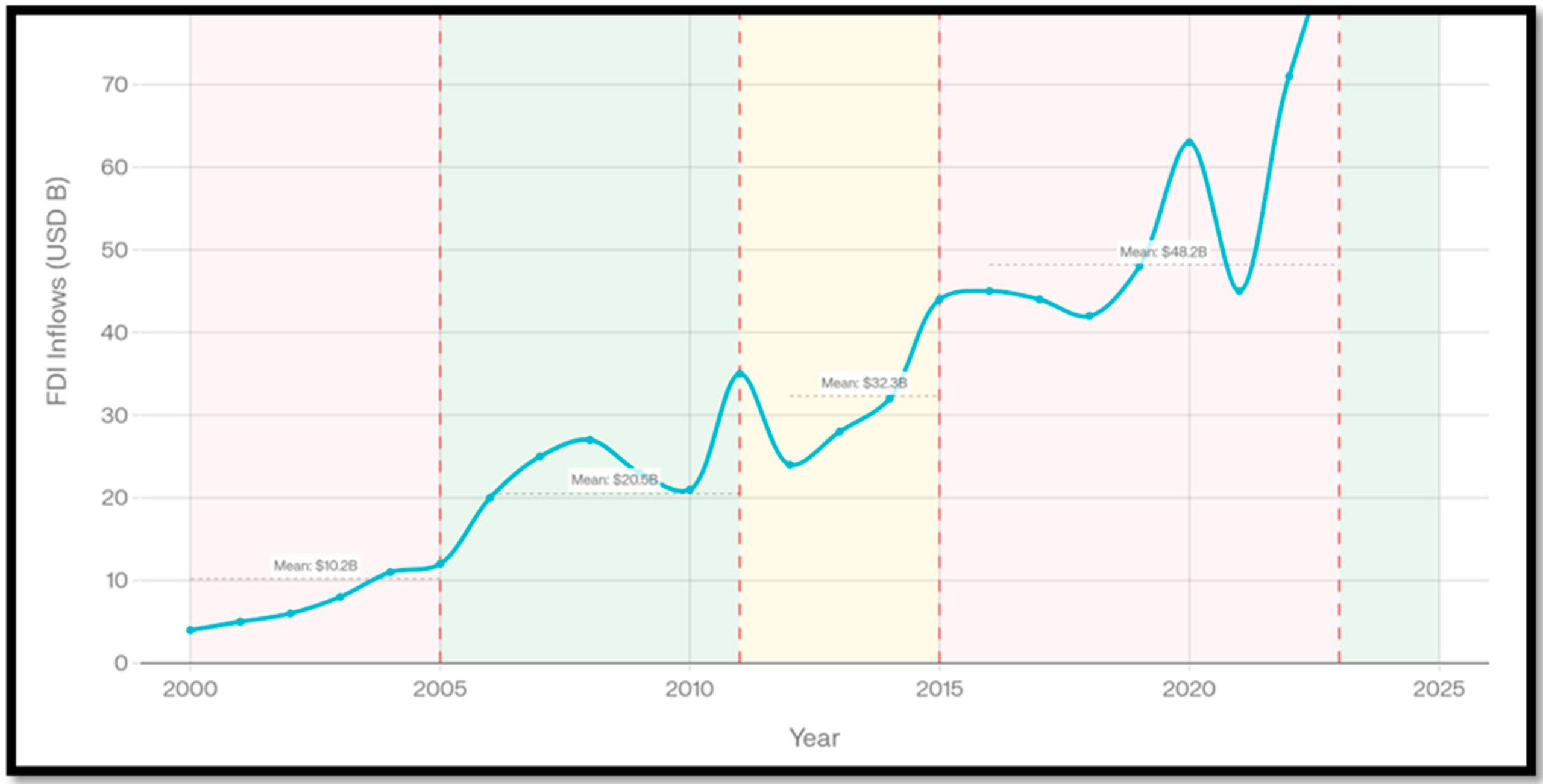
Foreign direct investment is sensitive to macroeconomic visibility.
Companies investing in factories, logistics platforms, hotels, renewable energy, real estate or business services need to underwrite costs over several years.
They need visibility on:
- borrowing conditions
- currency risk
- wage pressure
- construction costs
- consumer demand
- input prices
- capital repatriation
- Low inflation improves that visibility.
It does not eliminate execution risk, but it reduces one of the main variables that can distort project returns.
For Morocco, this is particularly important because the country is competing for long-term capital in sectors where investment horizons are extended.
An aerospace plant, EV battery facility, industrial zone, hotel, desalination project or logistics hub cannot be underwritten only on short-term sentiment.
Investors need confidence that the macro framework will remain manageable.
Bank Al-Maghrib’s stance supports that confidence.
FX Framework: Currency Reform Without Monetary Stress
Morocco’s inflation performance also matters for exchange-rate policy.
The country has been gradually moving toward greater exchange-rate flexibility while maintaining institutional caution. The IMF has encouraged continued progress toward a more flexible exchange-rate regime and a fuller inflation-targeting framework, with careful sequencing and communication.
For foreign investors, this is a technical but important issue.
Currency management affects:
dividend repatriation
foreign-currency borrowing
import costs
capital allocation
investment returns
exit planning
A low-inflation environment makes currency reform easier to manage.
It gives the central bank more room to sequence exchange-rate flexibility without being forced into abrupt moves by price instability.
This is especially important for investors assessing long-term exposure to Morocco.
A credible inflation framework strengthens the ability to underwrite dirham risk.
The Capex Collision: Financing World Cup 2030 Without Overheating

Morocco is entering one of its most important public investment cycles in decades.
World Cup 2030 preparations, airport expansion, rail upgrades, port development, urban mobility, water infrastructure, tourism capacity and industrial zones are all moving through the national project pipeline.
Public investment can lift growth.
But it can also raise demand for imported machinery, construction materials, energy, technical services and foreign contractors.
That creates what investors should view as the capex collision: the meeting point between infrastructure acceleration and macroeconomic discipline.
If managed well, infrastructure spending supports productivity, mobility, tourism, exports and private investment.
If poorly absorbed, it can increase import pressure, inflate construction costs and widen external imbalances.
Bank Al-Maghrib’s role is therefore critical.
The central bank must preserve price stability while the fiscal and project-execution cycle accelerates.
That balance is one of Morocco’s most important macroeconomic tests before 2030.
Real Estate and Credit Conditions
Stable monetary conditions also matter for Morocco’s real estate market.
Property investment depends on financing costs, household purchasing power, developer balance sheets and buyer confidence.
A stable policy rate gives lenders, developers and buyers a clearer environment for mortgage pricing and project finance.
That does not mean every real estate segment becomes attractive.
Location, title quality, liquidity, delivery timelines and developer execution remain decisive.
But stable inflation and predictable rates reduce one important layer of uncertainty.
For foreign buyers entering with hard-currency income, Morocco’s low-inflation environment can also make living costs, rental yields and holding costs easier to assess.
This supports selective demand in cities where real estate is linked to infrastructure, tourism, diaspora buyers and long-term urban growth.
The External Shock Test
Morocco’s macroeconomic stability still operates in a volatile global environment.
Energy imports, food prices, global freight costs, geopolitical tensions and external rate shifts can all affect domestic inflation, the budget and the current account.
That is why Bank Al-Maghrib’s cautious stance matters.
The central bank is not treating low inflation as permanent immunity. It is preserving room to respond if imported shocks become more persistent.
Low inflation gives Morocco a stronger starting point.
A country entering an external shock with inflation at 0.8% has more policy flexibility than one already facing elevated price pressure.
That is a competitive advantage.
MMO Monetary Stability Matrix: 2026
Benchmark rate
Macro market signal: Bank Al-Maghrib held the benchmark rate at 2.25% in March 2026, maintaining a neutral policy stance.
Institutional test: how quickly policy would adjust if the Federal Reserve, the European Central Bank or global yield baselines shift materially.
Growth divergence
Macro market signal: Bank Al-Maghrib forecasts 5.6% growth versus the IMF’s 4.4% projection, a 120-basis-point gap.
Institutional test: whether non-agricultural sectors can absorb infrastructure spending without excessive import leakage.
Inflation floor
Macro market signal: IMF data places average inflation at 0.8%.
Institutional test: resilience against imported energy shocks, agricultural supply changes and global freight volatility.
Currency reform
Macro market signal: Morocco continues its gradual transition toward greater exchange-rate flexibility and an inflation-targeting framework.
Institutional test: whether dividend repatriation, capital flows and dirham flexibility can be managed without creating investor anxiety.
FDI climate
Macro market signal: low inflation and stable interest rates improve planning visibility for long-term investors.
Institutional test: whether macro stability is matched by administrative efficiency, skilled labour, infrastructure delivery and project execution.
What Investors Should Watch Next
Investors should monitor five variables over the coming quarters.
First, whether inflation remains contained despite external shocks.
Second, whether Bank Al-Maghrib maintains the current policy rate or adjusts in response to new domestic or global data.
Third, whether the agricultural rebound is strong enough to support the central bank’s higher growth projection.
Fourth, whether public investment translates into productivity rather than import leakage.
Fifth, whether Morocco continues its gradual exchange-rate reform path without disrupting investor confidence.
These signals will determine whether Morocco’s macroeconomic advantage remains intact through the next stage of growth.
Final Outlook
Bank Al-Maghrib’s stability strategy is one of Morocco’s most important investment advantages in 2026.
The central bank is managing a delicate macroeconomic balance: stronger growth expectations, low inflation, major infrastructure spending, gradual currency reform and persistent global uncertainty.
For investors, this balance matters.
Low inflation lowers risk premiums. A stable policy rate improves planning visibility. Gradual exchange-rate reform strengthens long-term credibility.
Morocco’s macroeconomic stability is not a background condition.
It is part of the investment case.