

Morocco’s investment case is entering a more demanding phase.
For years, the country has marketed itself on stability, proximity to Europe, competitive labour costs and large-scale infrastructure. In 2026, that story is no longer enough on its own.
The sharper question for investors is whether Morocco can convert its policy reforms, industrial ambitions and global positioning into projects that deliver on time, at scale and with the right execution quality.
That question matters because Morocco is no longer competing only as a low-cost gateway to Africa. It is positioning itself as a nearshoring base for Europe, a logistics platform between continents, a clean-energy investment destination and a future industrial hub for electric mobility.
The opportunity is real. But the gap between Morocco’s strategic ambition and investor returns will be defined by execution.
Why Investors Are Looking at Morocco Now
Morocco’s appeal in 2026 is being shaped by several forces converging at the same time.
The first is policy. Morocco’s new Investment Charter has strengthened the incentive framework for major projects, with total grants able to reach up to 30% of eligible investment depending on criteria such as sector, location, employment, sustainability and local integration. That matters because Morocco is no longer relying only on geography; it is using incentives to compete for capital.
The second is supply-chain realignment. European manufacturers are under pressure to shorten supply chains, reduce risk and manage carbon exposure. The European Union’s Carbon Border Adjustment Mechanism entered its definitive phase in 2026 after a transitional period from 2023 to 2025, making carbon reporting and lower-emission production more important for companies exporting into Europe.
The third is industrial upgrading. Morocco is not only trying to attract assembly lines. It is targeting deeper participation in value chains, especially in automotive, batteries, renewable energy, logistics and industrial production.
That is what makes the 2026 investment story different from the older narrative.
Morocco is no longer simply saying: invest here because the country is stable and well located. It is increasingly saying: invest here because the country can connect capital, infrastructure, energy and export markets.
The Industrial Bet: From Assembly to Higher-Value Production
The strongest signal of Morocco’s industrial ambition is the move toward electric mobility and battery manufacturing.
China’s Gotion High-Tech signed a deal to build a $1.3 billion EV battery plant in Kenitra, with production expected to start in the third quarter of 2026. The project’s initial planned capacity is 20 GWh, with potential expansion to 100 GWh and eventual investment that could reach $6.5 billion.
For investors, the significance goes beyond one factory.
If delivered effectively, the project could deepen Morocco’s role in Europe-linked automotive supply chains and move the country further up the value chain. It also gives Morocco a stronger position in the global competition for EV manufacturing capacity.
Automotive and aerospace have already helped Morocco build credibility as an industrial platform. The battery push adds a more strategic layer: it links Morocco’s manufacturing base to electrification, energy storage and Europe’s decarbonisation agenda.
That is exactly where investor interest is moving.
Green Energy Is Becoming an Investment Argument
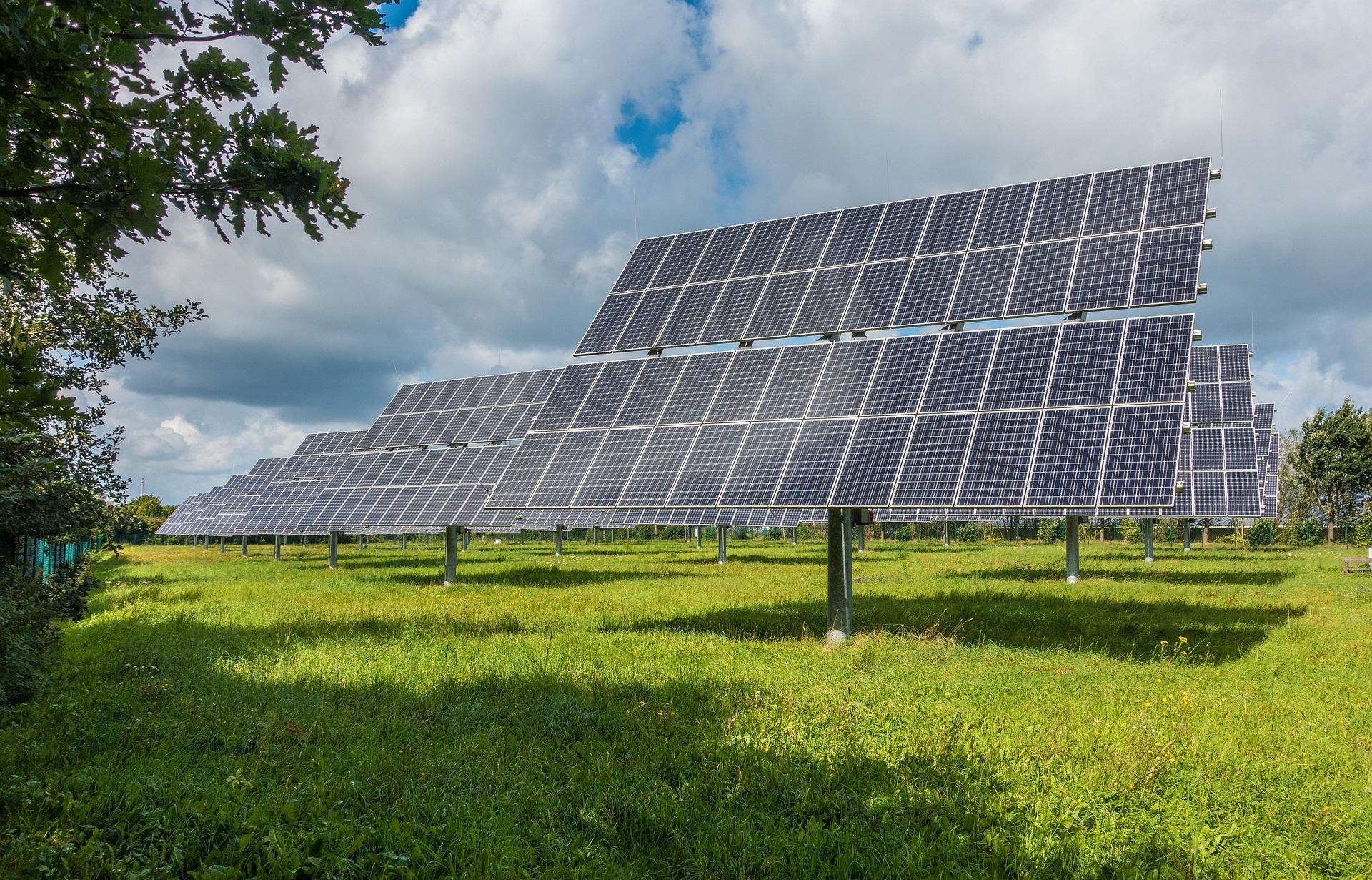
Morocco’s renewable energy strategy is also becoming more commercially relevant.
For years, clean energy was discussed mainly as part of Morocco’s sustainability agenda. In 2026, it is increasingly part of the country’s investment pitch.
That shift is visible in the “Morocco Offer” for green hydrogen, launched as an investor framework covering the sector’s value chain and designed to attract large-scale green hydrogen projects. The programme includes elements such as land allocation, governance and investor incentives.
This matters because energy is becoming part of industrial competitiveness.
Manufacturers exporting to Europe will increasingly care not only about labour cost and logistics, but also about the carbon intensity of production. Countries that can combine industrial capacity with renewable energy may gain an advantage.
Morocco’s opportunity is to connect its renewable resources with export-oriented manufacturing, logistics and green industrial projects.
The challenge is that green hydrogen and clean industrial ecosystems require more than announcements. They require grid capacity, water planning, infrastructure, offtake agreements and long-term execution discipline.
World Cup Infrastructure Adds Scale — And Speculation

Morocco’s co-hosting of the 2030 FIFA World Cup with Spain and Portugal is reshaping the investment environment well before the tournament.
The event cycle is accelerating attention on airports, stadiums, hotels, transport networks, urban upgrades and tourism capacity. Morocco has outlined a 38 billion dirham airport expansion programme to raise national airport capacity to 80 million passengers by 2030, while the African Development Bank has approved €270 million in financing for airport upgrades ahead of the World Cup.
For construction, hospitality, transport and real estate investors, the World Cup cycle is turning infrastructure into a measurable capital-spending opportunity — not just a branding event.
It creates a larger addressable market. But it also increases the risk of speculative pricing, land inflation and projects being marketed more on World Cup momentum than on long-term demand.
The key is to separate structural demand from event-driven hype.
Morocco’s real opportunity is not simply to host 2030. It is to use the event cycle to strengthen long-term tourism capacity, airport infrastructure, urban mobility and international visibility.
Logistics Remains the Backbone
Tanger Med remains one of Morocco’s clearest investment advantages.
The port has helped transform Morocco from a country with a strategic location into a functioning logistics and industrial platform. It connects manufacturing zones, export activity and global shipping routes in a way few African markets can match.
For companies looking at Europe, Africa and the Mediterranean, that infrastructure matters.
The investment case is no longer only about moving goods. It is about combining logistics, production, warehousing, customs operations and export access within integrated platforms.
That is why Morocco’s logistics story is central to sectors such as automotive, aerospace, textiles, agribusiness, renewable energy components and industrial exports.
Where Capital Is Likely to Go
In 2026, Morocco’s strongest investment opportunities are concentrated in sectors where policy support, infrastructure and global demand overlap.
Advanced manufacturing. Automotive, aerospace, EV batteries and supplier ecosystems remain among the strongest sectors. The opportunity is in production capacity, components, industrial services and export platforms connected to global supply chains.
Renewable energy and green industry. Solar, wind, green hydrogen, desalination-linked energy projects and lower-carbon industrial production are becoming increasingly important. The opportunity is real, but capital intensity is high and timelines can be long.
Logistics and trade infrastructure. Ports, warehousing, distribution, cold-chain logistics and customs-linked services remain attractive because they benefit from Morocco’s position between Europe and Africa.
Tourism and hospitality. World Cup momentum, tourism growth and destination upgrades create opportunities in hotels, resorts, serviced apartments and hospitality services. The sector remains sensitive to location, operating quality and demand cycles.
Real estate and urban development. Casablanca, Rabat, Tangier and Marrakech each offer different investment dynamics. The strongest opportunities are likely to come from projects aligned with real demand, infrastructure growth and credible execution — not speculative development alone.
The Frictions Investors Should Not Ignore
Morocco’s investment story is positive, but not frictionless.
The most important risks are operational, not ideological.
Execution risk. Many projects look strong at the planning stage. The test comes in permitting, land preparation, utility connections, contractor performance and delivery timelines. For institutional investors, execution capacity should be treated as a central underwriting factor.
Industrial land and utility readiness. As more companies look at Morocco for nearshoring and industrial production, pressure on well-located industrial land may increase. The issue is not whether land exists nationally. It is whether the right land exists with power, water, logistics access and a clear approval pathway.
Green utility compliance. Export-oriented investors need to assess whether a site can support lower-carbon production. That means looking at power sourcing, water security, grid reliability, carbon exposure and potential CBAM-related requirements before committing capital.
Water stress and desalination readiness. Water is becoming a strategic constraint for parts of the economy. Heavy industry, tourism, agriculture and urban expansion all depend on reliable water planning. Morocco is responding through large-scale desalination, including the Casablanca seawater desalination PPP, designed for 548,000 cubic metres per day in its first phase and expandable to 822,000 cubic metres per day. For investors, the key question is whether a project relies on stressed groundwater or is connected to a more secure desalinated-water framework.
Technical talent. Morocco has a young workforce and a growing industrial base, but specialised technical talent remains a key issue. Battery manufacturing, aerospace, advanced logistics, renewable energy and digital services all require skills that are not always available at the pace investors want.
Administrative delivery. Morocco has improved its investment framework, including through regional investment structures and incentive mechanisms. But investors still need to understand how approvals, permits and documentation move in practice. The issue is not the absence of a system. It is the speed and consistency with which the system operates across sectors and regions.
What Serious Investors Should Check Before Committing
The old advice — “do due diligence” — is not enough. Investors evaluating Morocco in 2026 should be more specific.
Incentive eligibility. Does the project qualify for Investment Charter support, and under which sector, regional, employment or sustainability criteria?
Site readiness. Does the location have reliable access to power, water, logistics infrastructure and labour?
Carbon and export exposure. Is the project exposed to CBAM or other carbon-related trade rules affecting exports into Europe?
Execution capacity. Does the developer, operator, contractor or local partner have a proven delivery record?
Demand quality. Is demand structural, or is it being inflated by World Cup-linked optimism, marketing pressure or short-term speculation?
That is the difference between investing in Morocco’s headline story and investing in a project that can actually perform.
Is Morocco a Good Place to Invest in 2026?
Yes — but the answer is increasingly conditional.
Morocco has one of the more credible investment platforms in North Africa. It offers stability, infrastructure, export access, industrial momentum and a clearer incentive framework than in the past.
It is also benefiting from global shifts that work in its favour: nearshoring, supply-chain diversification, clean energy demand, Europe’s carbon rules and the 2030 World Cup cycle.
But Morocco is not a passive investment opportunity.
The market rewards investors who understand execution, local constraints and sector-specific realities. It is less forgiving for those who rely only on macro narratives.
The best opportunities are likely to sit at the intersection of policy support, infrastructure readiness, export demand and credible delivery.
Final Perspective
Morocco’s investment appeal in 2026 is stronger than it was a decade ago.
But it is also more complex.
The country is moving from a story built on stability and location to one built on industrial depth, renewable energy, logistics, infrastructure and global competitiveness.
That is a stronger story — but also a more demanding one.
Morocco offers opportunity. Execution determines who captures it.
For investors, that is the real test.