
Morocco’s 2030 World Cup strategy is no longer only a sports narrative. It is becoming a nation-branding and investment-diplomacy platform designed to convert global visibility into tourism growth, airport throughput, hotel investment, serviced-residence demand, diaspora confidence, private-sector upgrades and long-term capital flows.
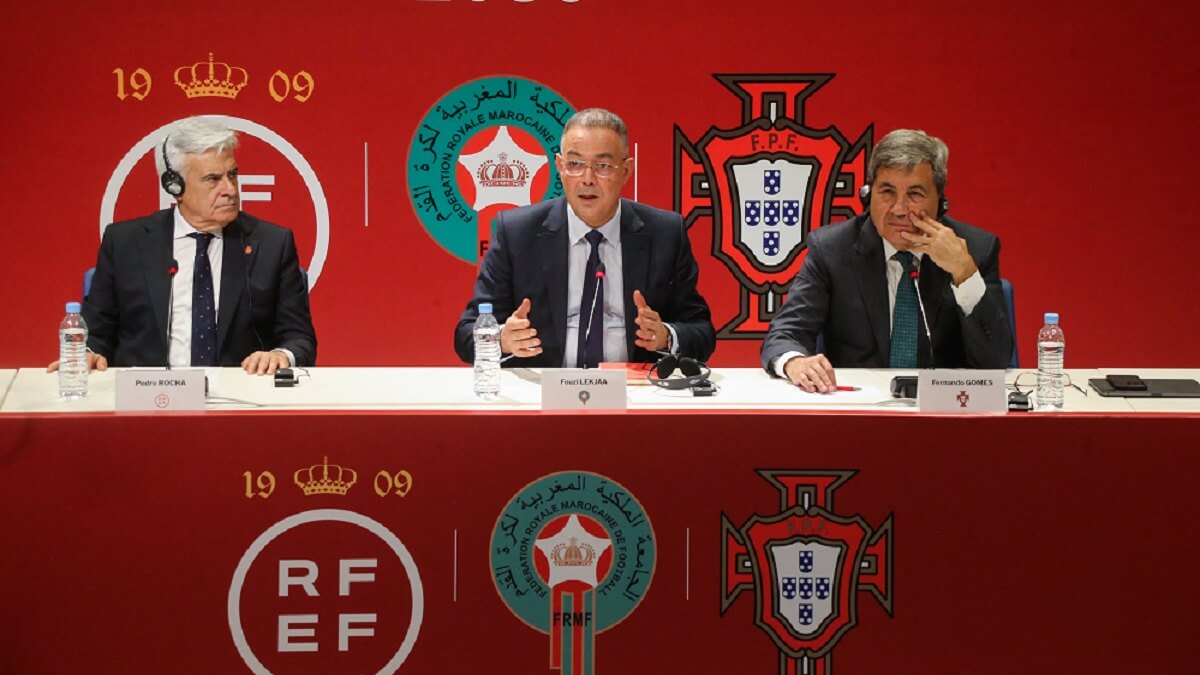
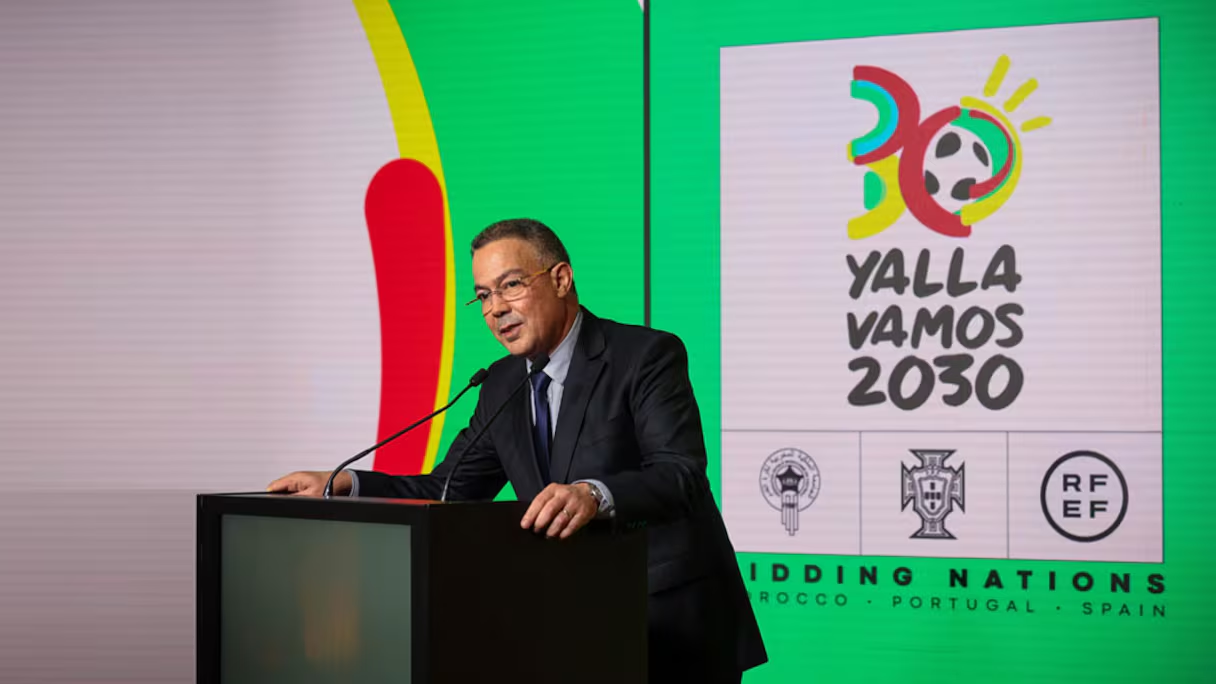
FIFA appointed Morocco, Spain and Portugal as hosts of the 2030 FIFA World Cup in December 2024, with three centenary celebration matches to be held in Argentina, Paraguay and Uruguay. The tournament will be the first World Cup staged across this Euro-African host architecture, giving Morocco a rare position inside one of the most visible global events of the decade.
The commercial baseline is already material. Morocco received a record 19.8 million tourists in 2025, up 14% year-on-year, with tourism revenues reaching 124 billion dirhams in the first 11 months of the year. In Q1 2026, arrivals increased another 7% to 4.3 million, while March arrivals rose 18% year-on-year. Morocco is targeting 26 million visitors by 2030, directly aligning its tourism expansion cycle with World Cup preparation.
The central question is no longer whether Morocco will receive global attention. It is whether Rabat can convert transient traffic into structured, repeat capital allocation across tourism, real estate, aviation, healthcare, mobility, hospitality, private services and corporate investment.
That is the real test of Morocco’s 2030 investment leverage.
The 2030 Platform: Sport as Institutional De-Risking
Mega-events operate as signalling platforms. For governments, a World Cup can demonstrate airport efficiency, security capacity, urban management, hospitality depth, broadcast capability, digital readiness and institutional coordination. For investors, these signals matter because they systematically compress institutional perception barriers.
Morocco is using 2030 to show that it can deliver under global scrutiny. The country is expanding airports, building and upgrading stadiums, accelerating mobility infrastructure, increasing hotel capacity and positioning itself as a Euro-African operating platform. Consequently, the tournament becomes more than a month of football; it becomes a fixed-deadline infrastructure cycle with direct implications for investment confidence.
The risk is that visibility remains temporary. The opportunity is that visibility becomes a permanent upgrade in how investors, tourists, diaspora families, sovereign wealth funds and corporate boards evaluate Morocco’s execution capacity.
Airport Capacity: Business Infrastructure, Not Travel Decoration
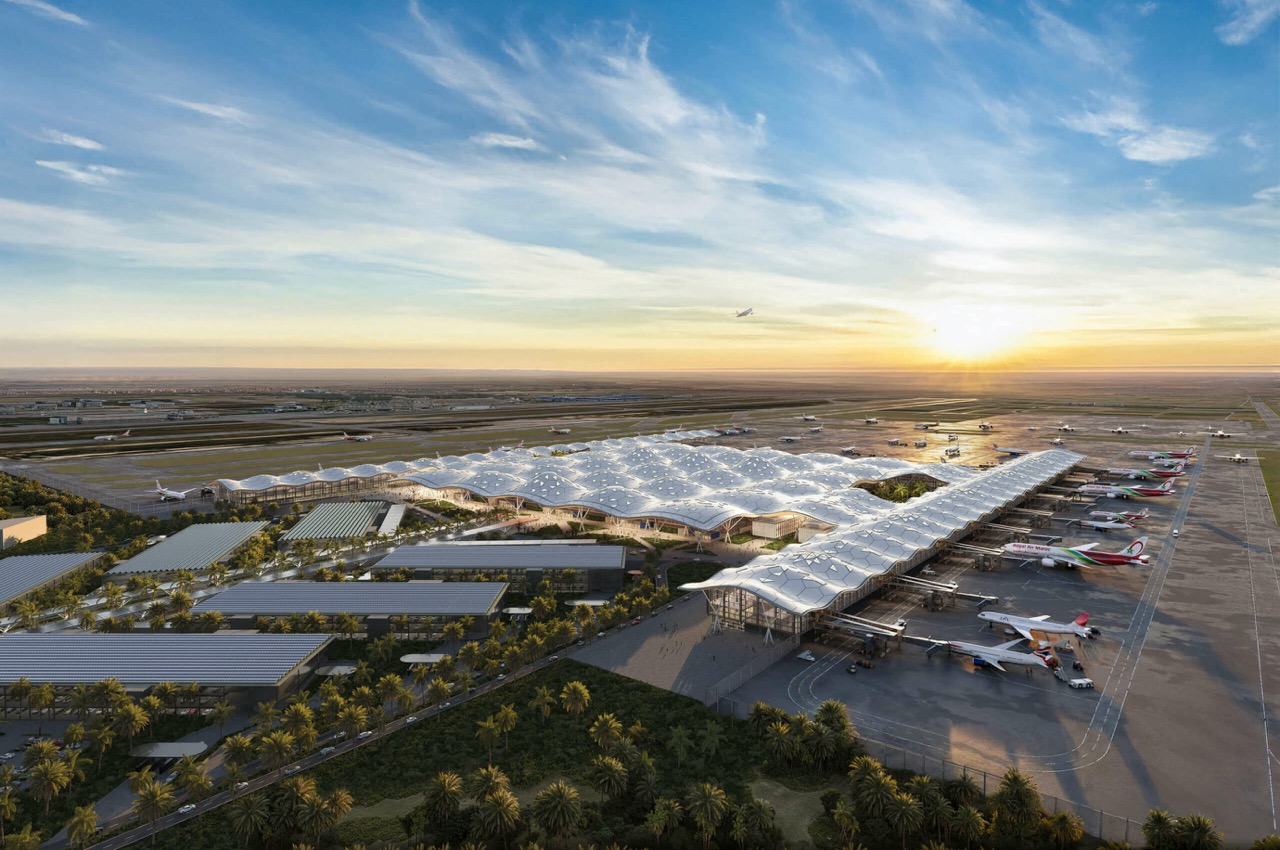
Air connectivity is one of the clearest conversion channels in Morocco’s 2030 strategy. Reuters reported that Morocco plans to expand national airport capacity from around 38 million passengers to 80 million by 2030, supported by a wider airport investment programme estimated at roughly $4 billion. In December 2025, the African Development Bank approved €270 million, or about $316 million, to support airport upgrades ahead of the tournament, targeting major destinations including Marrakech, Agadir, Tangier and Fez.
This is not only a travel-capacity upgrade. It is business-infrastructure de-risking. Higher airport capacity improves hotel underwriting, serviced-apartment demand, conference tourism, diaspora mobility, private healthcare access, foreign executive travel, investor roadshows and corporate site selection. The World Cup provides the deadline, but the capacity remains after 2030.
Royal Air Maroc’s route expansion and fleet ambitions also matter inside this framework. Stronger air connectivity gives Casablanca a more credible role as a regional hub linking Africa, Europe and the Americas. For investors, airport throughput is therefore not a soft tourism metric; it is an operating variable that affects occupancy, mobility, meeting frequency, deal flow and destination liquidity.
Tourism Conversion: Repeat Capital Over Matchday Spending
Morocco’s tourism growth gives Rabat a strong starting point, but the investment thesis is not simply visitor volume. The true metric of success is conversion velocity: the ability to turn short-stay visitors into repeat travellers, property buyers, conference delegates, long-stay residents, healthcare consumers, business founders and private-service clients.
This distinction is critical. Matchday spending is cyclical consumer expenditure. Repeat capital is structural. A visitor who attends a match and leaves behind only hotel revenue is valuable for one cycle; a visitor who returns to buy property, establish a company, invest in a hotel, relocate family or bring corporate partners into Morocco creates multi-year economic value.
That is why the 2030 cycle should be analysed through an investment-conversion lens. Morocco’s tourism base, airport expansion, hospitality upgrades, private healthcare growth and serviced-residence demand all form part of the same commercial chain. The World Cup delivers attention. The private sector must convert that attention into recurring revenue.
The Final Race: Gross Capex Versus Opex Ecosystem
Morocco’s bid to host the 2030 World Cup final places the Grand Stade Hassan II in a direct operational risk audit against Spain’s established stadium ecosystem. Reuters reported that the planned 115,000-seat venue near Benslimane was around 30% complete in May 2026, with roughly 40% of tribunes built, a late-2027 completion target, an estimated cost of about $1 billion, and construction led by Moroccan groups TGCC and SGTM.
Morocco’s competitive edge is gross capex and symbolic geography. The country is offering a new-build, 115,000-seat stadium designed around the 2030 cycle, with the potential to become the largest dedicated football stadium in the world and a landmark African final venue. Spain’s advantage is the existing opex ecosystem: mature hospitality inventory, proven broadcast systems, transport-tested stadium cities, established football brands and lower immediate operational execution risk.
That tension is the heart of the final race. FIFA’s decision will not be based on seating capacity alone. It will be an audit of airport throughput, fan dispersal, VIP hospitality, media operations, security capacity, hotel inventory, broadcast reliability and post-event utilisation. Morocco’s capex case is powerful, but the final will be won through opex confidence.
Grand Stade Hassan II: A Proof-of-Execution Credential
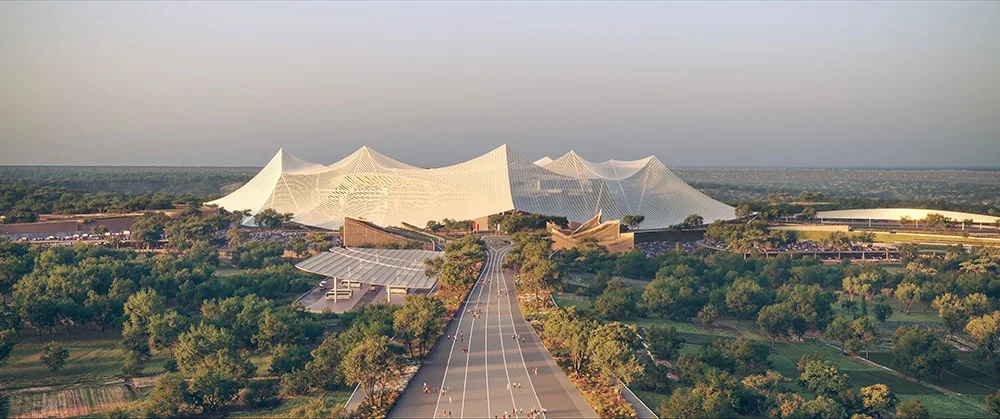
The Grand Stade is more than a venue. It is a national baseline proof-of-execution credential. If Morocco delivers a 115,000-seat stadium on schedule, with domestic contractors, integrated transport links and operational readiness before 2030, it will send a signal that extends beyond football.
That signal matters because infrastructure credibility is transferable. Investors who see successful delivery in stadiums may reassess Morocco’s capacity to deliver airports, rail stations, tourism zones, industrial districts, ports, private healthcare networks and urban redevelopment projects. For domestic contractors such as TGCC and SGTM, the project can also strengthen balance-sheet credibility for future African infrastructure opportunities.
The execution challenge is compressed. Stadium completion, commissioning, transport integration, crowd-flow testing, hospitality readiness and final-bid positioning must all advance in parallel. A completed structure is not enough; Morocco must deliver an operating system.
Euro-African Positioning: The Strategic Geography of 2030
The 2030 tournament gives Morocco an unusual geopolitical branding advantage. The country is not hosting alone; it is hosting alongside Spain and Portugal inside a cross-continental World Cup structure that links Africa and Europe in one tournament architecture.
For Rabat, this reinforces a broader national thesis already visible across trade, logistics, energy, tourism and diplomacy. Morocco is positioning itself not only as an African market or Mediterranean neighbour, but as a Euro-African gateway with Atlantic reach. The country’s ports, free-trade agreements, automotive base, renewable energy projects, airport expansion, tourism sector and diaspora networks all support this multi-directional identity.
World Cup 2030 gives that identity a global stage. The tournament becomes a narrative accelerator for a positioning strategy that was already underway.
Diaspora Confidence: Turning Emotional Capital Into Economic Capital
The World Cup also matters to Morocco’s diaspora. For millions of Moroccans living in Europe, 2030 is not only a football event; it is a signal of national recognition, infrastructure progress and emotional reconnection.
That emotional capital can become economic capital if properly channelled. Diaspora families may increase visits, buy property, invest in SMEs, explore relocation, open service companies, introduce European partners or support local ventures. The World Cup does not create this capital from nothing, but it can accelerate decisions among people already watching Morocco’s transformation.
For policymakers and private operators, diaspora conversion is a serious market. The relevant question is whether Morocco can offer clean property processes, credible banking services, transparent investment channels, professional advisory services and predictable service quality. Sentiment attracts attention. Execution converts it.
Private-Sector Operators: The Conversion Layer
The World Cup will test Morocco’s public infrastructure, but the conversion of visibility into capital depends heavily on private-sector operators. Hotels, airlines, banks, telecoms, insurers, real estate developers, logistics companies, private clinics, event operators and security providers all sit inside the 2030 opportunity chain.
ONDA and Royal Air Maroc affect aviation capacity and route depth. TGCC and SGTM affect stadium delivery credibility. Akdital and other private healthcare operators affect long-stay and premium-resident confidence. Banks and insurers affect financing, SME upgrades, property acquisition, event-risk coverage and tourism-linked investment. Telecom operators affect digital payments, fan connectivity, broadcast resilience and mobile service quality.
This is where the investment-diplomacy thesis becomes operational. Morocco’s public-sector deadline creates a private-sector upgrade cycle. The strongest companies will use 2030 not only to serve peak demand, but to build durable post-event capacity.
Corporate Sponsorship and Event Services
World Cup visibility also creates a sponsorship and event-services economy. Global brands will evaluate Morocco not only as a host territory, but as a market for hospitality packages, fan engagement, digital campaigns, retail activations, tourism partnerships and corporate client events.
For Moroccan companies, the opportunity is to move up the value chain. Banks, telecoms, airlines, insurers, hospitality groups, property developers and healthcare providers can use the 2030 cycle to increase visibility, build international partnerships and reach diaspora and foreign-investor audiences.
The most durable value will not come from one-off promotional campaigns. It will come from recurring commercial relationships: conference tourism, corporate travel, sports-event hosting, medical tourism, serviced accommodation, real estate advisory and brand partnerships that continue after 2030.
Investment Diplomacy: From Roadshow Narrative to Executable Pipeline
World Cup diplomacy works only when visibility converts into investment conversations and then into executable projects. Morocco can use the 2030 cycle to deepen engagement with sovereign wealth funds, hotel groups, infrastructure investors, airlines, sports-event operators, real estate developers, media companies, technology providers and private-equity platforms.
The event gives Rabat a legitimate platform for investor roadshows, public-private partnerships, tourism promotion, city branding and sector-specific deal origination. But the pitch must remain disciplined. Investors are not underwriting pride; they are underwriting delivery, demand, regulation, yield, exit routes and operational depth.
World Cup visibility opens the door. Project execution keeps it open.
The Risk Layer: Visibility Raises the Execution Standard
The World Cup increases attention, and attention raises the execution standard. International media, fans, sponsors, investors, football authorities and corporate partners will evaluate Morocco’s infrastructure, transport, hotels, pricing, labour systems, security, accommodation, digital services and urban management.
This scrutiny should be understood as part of the hosting equation. A disciplined cycle would strengthen Morocco’s reputation far beyond sport. A less disciplined cycle would make operational gaps more visible. Therefore, the strategic requirement is to treat global attention as an operating standard rather than a publicity windfall.
The main risk is not visibility itself. The main risk is expectation rising faster than delivery. If Morocco keeps infrastructure, service quality and private-sector execution aligned, the 2030 cycle can become a credibility accelerator.
Investor Monetization Logic
Morocco’s 2030 investment leverage creates opportunities across several layers. The first is hospitality: hotels, serviced apartments, branded residences, corporate accommodation and villa management can benefit from visitor growth and repeat-stay conversion. The second is aviation and mobility: airport expansion, route development, ground transport, shuttle systems, parking, private transfers and intercity connections all become investable service categories.
The third is real estate: stadium zones, tourism cities, coastal markets and transport-linked districts may benefit if zoning and infrastructure delivery remain disciplined. The fourth is private services: healthcare, insurance, security, concierge, legal advisory, tax planning and relocation support can grow as visitors convert into residents or investors. The fifth is media and brand partnerships: Morocco’s visibility creates demand for storytelling, advertising, sponsorship, event content and corporate positioning.
The sixth is infrastructure operations: facility management, stadium technology, crowd management, ticketing systems, digital payments and public-safety systems can generate recurring demand. The strongest opportunities will sit where World Cup exposure connects to post-2030 use.
Execution Risks
Morocco’s 2030 investment leverage carries several risks. Deadline risk is the first: airports, stadiums, transport systems and hotel capacity must be delivered before the tournament, not after global attention has arrived. Capacity risk follows closely, because airport processing, hotel service, transport systems and event operations must scale without damaging visitor experience.
Pricing risk also matters. Excessive hotel, rental or transport inflation during the tournament could weaken repeat-visitor conversion and damage destination credibility. Legacy risk is equally important: stadiums, hotels, mobility systems and service upgrades must remain useful after 2030. Coordination risk sits across the entire cycle, since public agencies, private operators, cities and international bodies must execute in parallel.
For investors, the central test is whether Morocco turns World Cup visibility into recurring demand rather than one-off exposure.
MMO 2030 Investment Leverage Matrix: 2026
Strategic Vector: Global host status
2026 Market Signal: FIFA appointed Morocco, Spain and Portugal as 2030 World Cup hosts in December 2024.
Conversion Mechanism: Host status gives Morocco a global platform for tourism promotion, investor roadshows, city branding and Euro-African positioning.
Institutional Execution Test: Whether host status converts into durable investor perception, tourism growth and corporate engagement.
Strategic Vector: Tourism momentum
2026 Market Signal: Morocco welcomed 19.8 million tourists in 2025 and 4.3 million arrivals in Q1 2026, with a 26 million visitor target by 2030.
Conversion Mechanism: Visitor volume becomes valuable when converted into repeat travel, serviced-residence demand, property buying, healthcare consumption and SME investment.
Institutional Execution Test: Conversion velocity from transient traffic into structured, repeat capital allocation.
Strategic Vector: Airport capacity
2026 Market Signal: Morocco plans to expand airport capacity from 38 million to 80 million passengers by 2030, supported by a wider airport programme of roughly $4 billion and AfDB financing of €270 million.
Conversion Mechanism: Airport capacity de-risks business travel, hotel underwriting, conference tourism, diaspora mobility and executive site selection.
Institutional Execution Test: Route growth, airport processing, service quality and connectivity with tourism and business hubs.
Strategic Vector: Grand Stade execution
2026 Market Signal: Grand Stade Hassan II is planned at 115,000 seats, around 30% complete in May 2026, with completion targeted by late 2027.
Conversion Mechanism: Successful delivery creates a national proof-of-execution credential and strengthens final-bid credibility.
Institutional Execution Test: Construction delivery, transport integration, opex readiness, hospitality capacity and post-event utilisation.
Strategic Vector: Final venue race
2026 Market Signal: Morocco’s new-build capex case competes against Spain’s established stadium and hospitality opex ecosystem.
Conversion Mechanism: Winning the final would multiply symbolic visibility and increase investor attention toward Morocco’s event-infrastructure capacity.
Institutional Execution Test: Whether FIFA prioritises new-build scale and Euro-African symbolism over lower-risk established European operating systems.
Strategic Vector: Private-sector leverage
2026 Market Signal: Aviation, hotels, telecoms, banking, healthcare, insurance, real estate and event services all gain exposure to 2030 demand.
Conversion Mechanism: Public infrastructure deadlines force private operators to upgrade capacity, service quality and international partnerships.
Institutional Execution Test: Permanent service upgrades, recurring revenue and post-2030 commercial sustainability.
What Investors Should Watch Next
Investors should monitor five signals. First, whether airport expansion and Royal Air Maroc route growth remain on schedule through 2026 and 2027. Second, whether hotel supply, serviced apartments and event accommodation expand without damaging pricing credibility. Third, whether the Grand Stade and other sports infrastructure projects remain aligned with transport and urban planning.
Fourth, investors should track whether Morocco uses World Cup visibility to attract long-term capital into tourism, real estate, mobility, healthcare, media and private services. Fifth, the strongest signal will be post-2030 planning: recurring business tourism, conferences, sports events, diaspora investment channels and private-sector partnerships that remain valuable after the tournament.
These indicators will determine whether Morocco’s 2030 strategy becomes a long-term investment lever or a temporary visibility cycle.
Final Outlook
Morocco’s 2030 World Cup strategy is becoming one of the country’s most important investment-diplomacy platforms. The tournament gives Rabat a rare combination: a fixed deadline, worldwide visibility, Euro-African symbolism and a stage on which to demonstrate infrastructure execution.
The opportunity is significant. Morocco can use 2030 to strengthen tourism, aviation, hospitality, real estate, private healthcare, mobility, diaspora confidence and investor perception. But the outcome will be decided by execution, not exposure.
Stadiums must be completed. Airports must process volume. Hotels must maintain pricing discipline. Transport must move people efficiently. Private operators must improve service quality. Cities must convert visitors into repeat engagement.
World Cup diplomacy is not about one month of football. It is about whether Morocco can turn global attention into durable economic credibility and repeat capital allocation.
That is the investment leverage Rabat is trying to build.
Executive Engagement
Are you operating in tourism, hospitality, aviation, real estate, private services, infrastructure, media, branding, healthcare or World Cup 2030 investment?
MMO is tracking how Morocco’s 2030 visibility converts into investment leverage across public infrastructure and private-sector markets.
Share your operational insights with our editorial team or contact us with data on visitor conversion, service capacity, infrastructure delivery, investor demand or World Cup-linked commercial opportunities.