

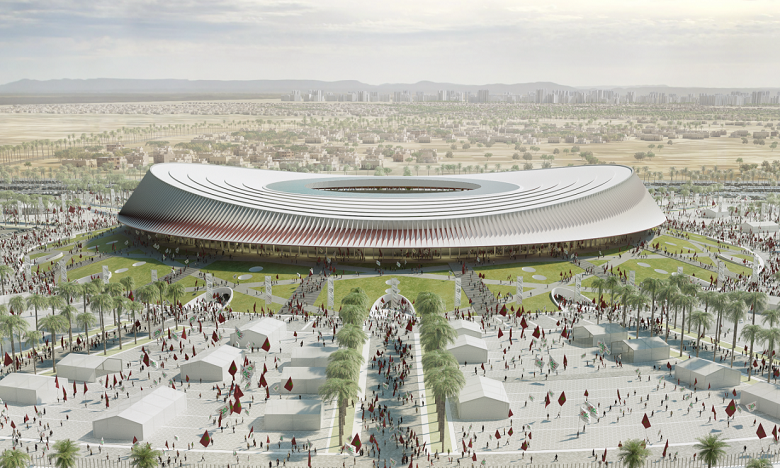
Morocco’s Grand Stade Hassan II is no longer only a stadium-led infrastructure project. It is becoming a spatial-economic catalyst for one of the country’s most important metropolitan corridors.
The 115,000-seat venue being built near Benslimane, between Casablanca and Rabat, is already changing how developers, landowners and institutional investors may evaluate the territory between Morocco’s economic capital and administrative capital. Reuters reported that the stadium is being developed on a roughly 150-hectare site of farmland and forest, was around 30% complete as of May 2026, had roughly 40% of its tribunes built, and is targeted for completion by late 2027.
The same report said the site is expected to be connected to Casablanca and Rabat through new highways and a railway station. That combination — mega-venue, rail access, highway infrastructure and World Cup visibility — creates a real estate thesis that is far larger than matchday footfall.
For investors, the central question is not whether the stadium can attract attention. It is whether Benslimane can evolve from a lower-density peripheral node into a planned, transit-oriented real estate corridor capable of supporting hotels, serviced apartments, sports infrastructure, retail, logistics, event operations and long-term mixed-use demand.
The upside is significant. The risk is speculative pricing ahead of infrastructure execution.
The Baseline: A Spatial-Economic Catalyst Between Two Capitals
The Grand Stade Hassan II sits between Casablanca and Rabat, Morocco’s two most important urban poles. Casablanca concentrates corporate headquarters, financial services, industrial demand, logistics activity and the country’s deepest commercial real estate market. Rabat provides administrative stability, diplomatic presence, long-term family housing demand and institutional-grade residential depth.
Consequently, Benslimane’s position is not incidental. The stadium anchors a midpoint between two major demand pools, giving the zone potential access to both Casablanca’s commercial gravity and Rabat’s administrative stability. If the planned highway and railway links are executed properly, the stadium could compress spatial distance and convert Benslimane into a functional metropolitan node rather than a peripheral location.
This is the real estate logic. A stadium alone can create temporary event traffic. A stadium connected to rail, highways, utilities, zoning clarity and hospitality infrastructure can create long-term land value. The difference between those two outcomes is planning discipline.
The National Market Baseline: Stable Prices, Selective Liquidity Recovery
Morocco’s broader real estate market is not in a national speculative boom, which makes the Benslimane thesis more selective and more technical. Bank Al-Maghrib and ANCFCC’s Real Estate Asset Price Index recorded moderate annual price movement, with the overall index rising around 1.2% year-on-year in Q3 2025, while transactions increased 26.6% over the same period.
That divergence matters. Price growth remains disciplined nationally, but transaction liquidity has recovered more strongly. This creates a market where rare, infrastructure-linked plots can outperform without implying broad overheating across the entire Moroccan property sector.
For investors, the lesson is precise. Benslimane does not create a universal land-buying signal. It creates a narrow underwriting opportunity around scarcity-driven transit frontage, clean title, utility access, zoning visibility and credible post-2030 demand.
The stadium zone is not a reason to buy any nearby parcel. It is a reason to underwrite specific parcels with institutional discipline.
Why Stadium Infrastructure Reprices Land
Major stadiums affect land markets because they create fixed-location demand. That demand is not limited to football. A 115,000-seat venue requires hotels, serviced apartments, retail, parking, security, mobility systems, food and beverage, medical support, event logistics, media operations and maintenance infrastructure.
However, stadium-led land repricing is not automatic. The strongest outcomes occur when the venue is embedded inside a broader transport and mixed-use plan. The weakest outcomes occur when the stadium is surrounded by speculative plots, unclear zoning, weak utilities and fragmented land ownership.
For Benslimane, the real estate value chain depends on whether the area becomes a planned event district rather than a loose collection of opportunistic developments. Investors should therefore separate narrative value from buildable value. Proximity to the stadium may create interest, but road frontage, rail access, permitted use, water, electricity and ANCFCC title quality determine whether land becomes financeable.
The Casablanca-Rabat Mega-Region Thesis
The stadium’s location points toward a broader spatial reconfiguration. Casablanca and Rabat are already linked by highway and rail, but the Grand Stade introduces a new anchor between them. If the transport layer is executed at sufficient scale, Benslimane could become part of an emerging Casablanca-Rabat mega-region rather than remaining a secondary residential and agricultural zone.
This matters because infrastructure compresses distance. Land that previously appeared peripheral can become institutionally investable once access, services and predictable demand improve. A rail station, if delivered with sufficient frequency and capacity, would be especially important because it shifts the district from car-dependent event land toward transit-oriented development.
The real estate categories most likely to benefit are not generic luxury villas. They are functional assets tied to the event and mobility economy: hotels, serviced residences, event accommodation, parking infrastructure, retail parks, sports academies, medical and emergency support facilities, logistics yards, staff housing and conference spaces.
The mega-region thesis is not about turning Benslimane into Casablanca or Rabat. It is about creating a functional middle node between them.
Benslimane: From Peripheral Land to Event-District Optionality
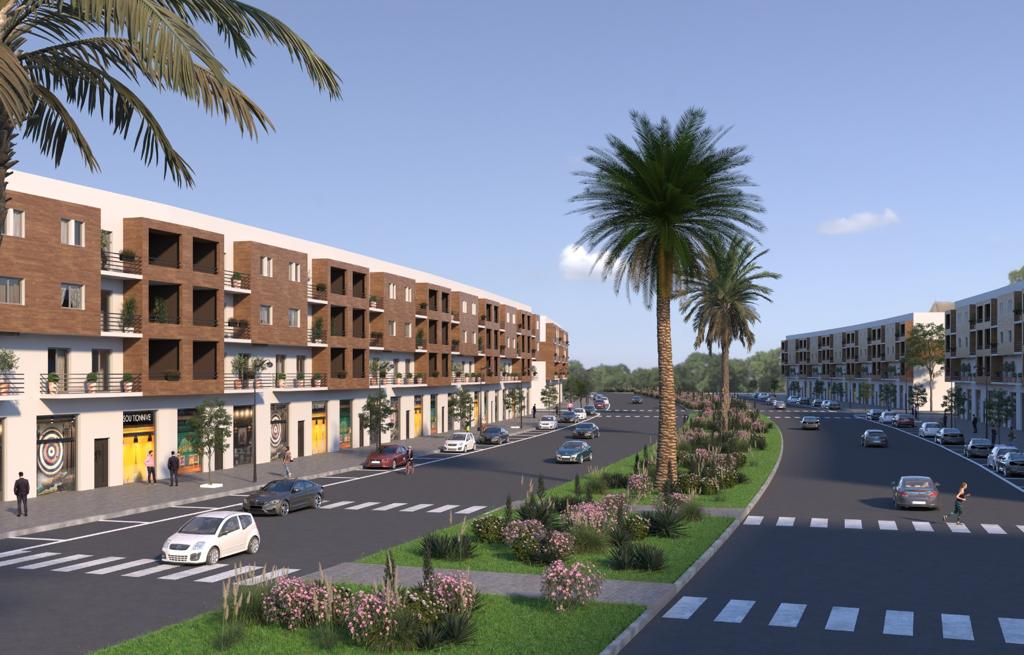
Benslimane has historically offered lower density, green surroundings and proximity to Casablanca and Rabat. The Grand Stade changes its investment profile by introducing a major event anchor and accelerating the need for transport, utilities and commercial zoning.
The first development layer is hospitality. World Cup visitors, future event attendees, team delegations, media, sponsors, corporate guests and contractors could create demand for hotels and serviced accommodation. The second layer is mobility infrastructure, including structured parking, shuttle zones, bus staging, ride-hailing areas, traffic management and pedestrian access systems.
The third layer is sports and wellness. A stadium of this scale can support training centres, academies, sports medicine, gyms, rehabilitation clinics and event-support services. The fourth layer is residential spillover, but that thesis is weaker unless schools, healthcare, retail, security and daily services deepen alongside transport delivery.
This distinction is essential. Stadium proximity may support event-linked assets first. It does not automatically create full residential demand.
Hotels and Serviced Apartments: From Capex Speculation to Opex Yield
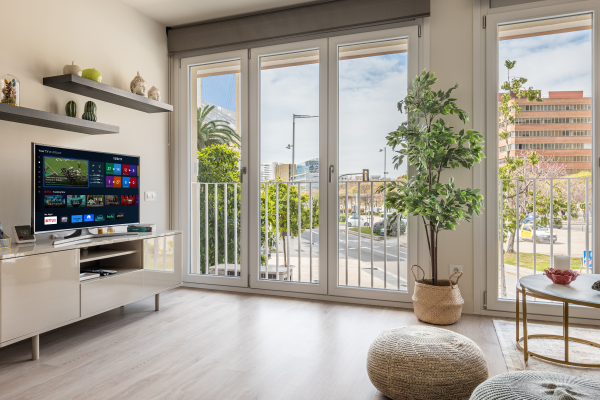
The most immediate real estate opportunity around the stadium zone is not speculative build-and-sell housing. It is recurring operating income from hospitality, serviced living and event-linked asset management.
A final-scale stadium creates temporary demand spikes, but hotel economics require year-round occupancy. That makes serviced apartments and flexible accommodation especially relevant. They can serve event visitors, contractors, media teams, consultants, corporate guests, diaspora families, club staff, transport operators and security personnel across different demand cycles.
The financial logic is Opex over Capex. A developer who simply builds and sells into stadium hype captures one transaction. An operator who controls serviced units, facility management, cleaning, maintenance, guest services, transport partnerships and corporate leasing can capture recurring yield beyond tournament peaks.
This is the sustainable model. Master-planned serviced living, flexible corporate accommodation and third-party facility operations are better positioned to absorb World Cup demand while maintaining income during non-matchday cycles. The key question for investors is whether post-2030 occupancy can support the operating model once tournament demand fades.
Retail and Food Service: Event Peaks Versus Daily Baseline Demand
Retail demand around stadiums is often misunderstood. A large venue can generate intense peaks on matchdays, but peak traffic alone does not guarantee sustainable retail performance. Permanent retail requires daily baseline demand from residents, hotel guests, staff, office users, conference visitors and surrounding mixed-use activity.
For Benslimane, the strongest retail thesis begins with event-linked convenience, food service and mobility-adjacent retail. Broader retail parks and lifestyle centres only become defensible if hotels, serviced apartments, residential communities and corporate-event infrastructure develop around the venue.
The same logic applies to restaurants. A matchday-only restaurant cluster can struggle with utilisation. A restaurant district linked to hotels, sports academies, conference spaces and residential demand has a stronger income base.
Event demand creates peaks. Mixed-use planning creates durability.
Land Speculation Risk
Infrastructure-led development often attracts speculative pricing ahead of infrastructure execution. That is the main risk around the Grand Stade zone.
When investors price land based on future roads, rail, hotels, zoning and World Cup activity before those elements are legally or physically delivered, the market can disconnect from fundamentals. Land values can rise faster than realistic rental demand, fragmented ownership can make coordinated development harder, and poorly serviced plots can trade at inflated prices despite weak buildability.
Morocco’s best outcome is disciplined zoning and planned development. The weaker outcome is uncoordinated land appreciation around a landmark stadium.
Institutional buyers should avoid paying for narrative alone. The required underwriting pillars are title quality, ANCFCC registration, zoning status, road access, utility availability, distance to the railway station, environmental restrictions, permitted density, land classification and exit liquidity.
The investment target is not “land near the stadium.” It is scarcity-driven transit frontage with legal and infrastructure visibility.
Title, Zoning and Vocation Non-Agricole
The most important legal friction point is land status. Reuters described the stadium site as farmland and forest, and surrounding land may include agricultural or protected classifications that cannot automatically be converted into residential, hotel, retail or commercial development.
For developers, the central regulatory threshold is vocation non-agricole, or the legal conversion of agricultural land into non-agricultural use where applicable. Without proper conversion, planning approval and title verification, proximity to the stadium does not create development rights.
ANCFCC registration is the first institutional filter. A clean titled parcel with verified ownership, clear boundaries and no unresolved disputes is materially different from informal or weakly documented land. The second filter is zoning: whether the land is designated for agricultural, residential, commercial, mixed-use, forest, public-use or infrastructure-linked activity. The third filter is utilities: water, electricity, sanitation, road access and potential grid capacity.
Developers must also assess eminent domain exposure, access-road alignment, environmental restrictions and public infrastructure reservations. A plot can look attractive on a map and still be unfinanceable if it lacks legal conversion, utility corridors or permitted use.
In stadium-zone real estate, the core rule is simple: proximity is not buildability.
Transport-Led Development: The Railway Station Is the Real Trigger
The stadium is the visual anchor, but the planned railway station may become the real real estate trigger. Transport access determines whether the area becomes a functional district or a car-dependent event site.
If the station is delivered with sufficient frequency, capacity, pedestrian access, shuttle integration and connection to Casablanca-Rabat mobility patterns, surrounding land can support higher-value uses. Hotels, serviced apartments, retail and conference facilities become more credible when visitors and workers can arrive without relying only on private cars or buses.
If rail delivery lags or operates with limited frequency, the investment case shifts. The area becomes more dependent on highways, parking, event logistics and lower-density commercial use. That can still create value, but it is a different value profile.
Investors should therefore monitor transport sequencing as closely as stadium construction. The land market will reprice more credibly when rail and highway delivery become visible, funded and operationally integrated.
Investor Monetization Logic
The Grand Stade zone creates opportunity across several real estate and operating layers. The first is hospitality: hotels and serviced apartments can capture event visitors, delegations, media teams, consultants and business travellers. The second is land assembly: clean, well-located parcels with zoning visibility and transport access may become valuable if the district is planned coherently.
The third is retail and food service, but only where event demand connects to daily baseline demand. The fourth is mobility infrastructure, including parking, shuttle services, bus staging, traffic control and ride-hailing operations. The fifth is sports-related infrastructure: academies, training centres, gyms, sports medicine and rehabilitation facilities.
The sixth is property and facility management. Serviced accommodation, event rentals, staff housing and mixed-use assets require professional operations. The strongest opportunity is not speculative land flipping; it is controlling functional assets that serve recurring demand.
Execution Risks
The stadium-zone real estate thesis carries several risks. The first is timing risk, where land values rise before transport, zoning and utility delivery justify the increase. The second is zoning risk, where unclear planning frameworks make development speculative rather than financeable.
The third is demand risk. World Cup activity is temporary, while real estate value requires post-2030 use. The fourth is transport risk, because without rail and highway integration the zone may remain event-dependent. The fifth is liquidity risk, since peripheral land can become harder to exit if speculative demand fades.
The sixth is operating risk. Hotels, serviced apartments, parking, retail and event-linked facilities require professional management. For investors, the key question is not whether the stadium will create attention. It is whether that attention converts into recurring revenue.
MMO Stadium Zone Real Estate Matrix: 2026
Strategic Vector: Spatial-economic catalyst
2026 Market Signal: 115,000-seat Grand Stade Hassan II planned near Benslimane, around 30% complete in May 2026 and targeted for completion by late 2027.
Institutional Execution Test: Whether the stadium becomes a recurring event anchor rather than a one-cycle World Cup asset.
Strategic Vector: Land base
2026 Market Signal: Stadium site covers around 150 hectares between Casablanca and Rabat.
Institutional Execution Test: Title verification, ANCFCC registration, zoning clarity, utility access and disciplined land-use planning.
Strategic Vector: Transport trigger
2026 Market Signal: Site expected to be connected to Casablanca and Rabat through new highways and a railway station.
Institutional Execution Test: Rail frequency, station capacity, road delivery, parking strategy and transit-oriented dispersal capacity.
Strategic Vector: Real estate price baseline
2026 Market Signal: BAM/ANCFCC data show moderate national price growth but stronger transaction liquidity, with Q3 2025 year-on-year price growth around 1.2% and transaction growth at 26.6%.
Institutional Execution Test: Separating rare transit-oriented premium plots from broad speculative pricing ahead of infrastructure execution.
Strategic Vector: Hospitality and serviced living
2026 Market Signal: Stadium scale creates demand for hotels, serviced apartments, event accommodation and corporate hospitality.
Institutional Execution Test: Post-2030 occupancy, average daily rates, facility management quality and Opex-based recurring yield.
Strategic Vector: Legal conversion
2026 Market Signal: Surrounding land may include agricultural or protected classifications requiring proper conversion and planning review.
Institutional Execution Test: Vocation non-agricole, permitted use, utility corridors, environmental restrictions and avoidance of unfinanceable plots.
Strategic Vector: Mixed-use potential
2026 Market Signal: Location between Casablanca and Rabat supports potential hotels, retail, sports academies, conference space and serviced residences.
Institutional Execution Test: Whether the zone develops as a planned district or fragmented speculative belt.
What Investors Should Watch Next
Investors should monitor five signals.
First, whether rail and highway links are delivered in parallel with stadium construction. Transport is the trigger that can move Benslimane from event-site logic into transit-oriented development.
Second, whether authorities clarify zoning and permitted uses around the stadium zone. Without zoning visibility, land appreciation remains speculative rather than institutionally financeable.
Third, whether hotel operators, serviced-apartment groups and event-service companies begin securing sites before 2030. Operator entry would be a stronger market signal than land trading alone.
Fourth, whether transactions are supported by clean title, ANCFCC registration, utility access and credible development rights. Legal clarity will separate investable parcels from speculative land stories.
Fifth, whether Morocco defines a post-2030 event calendar strong enough to support recurring real estate demand. The zone needs activity beyond World Cup peaks.
These signals will determine whether Benslimane becomes a disciplined stadium-led development corridor or a speculative land belt.
Final Outlook
The Grand Stade Hassan II is already one of Morocco’s most important 2030 infrastructure projects. For real estate investors, however, the stadium itself is only the visible anchor. The larger opportunity sits in the land, transport and service economy forming around it.
Benslimane’s position between Casablanca and Rabat gives the stadium zone strategic potential. A 115,000-seat venue, new highways, a planned railway station and World Cup visibility can support land repricing if execution is disciplined. But the opportunity is selective, not automatic.
The best assets will be those with clean title, zoning clarity, transport access, utility readiness and credible post-2030 demand. The weakest assets will be those bought only on proximity and speculative narrative.
For Morocco, the stadium zone could become more than an event site. It could become a new real estate corridor between the country’s economic and administrative capitals. That outcome will depend on planning discipline, legal clarity and recurring demand.
Executive Engagement
Are you operating in real estate development, hospitality, serviced apartments, land acquisition, transport planning, stadium infrastructure or World Cup 2030 investment?
MMO is tracking how the Grand Stade Hassan II could reshape land values and development patterns between Benslimane, Casablanca and Rabat.
Share your operational insights with our editorial team or contact us with data on land pricing, zoning, hotel demand, serviced-apartment performance or project execution.