

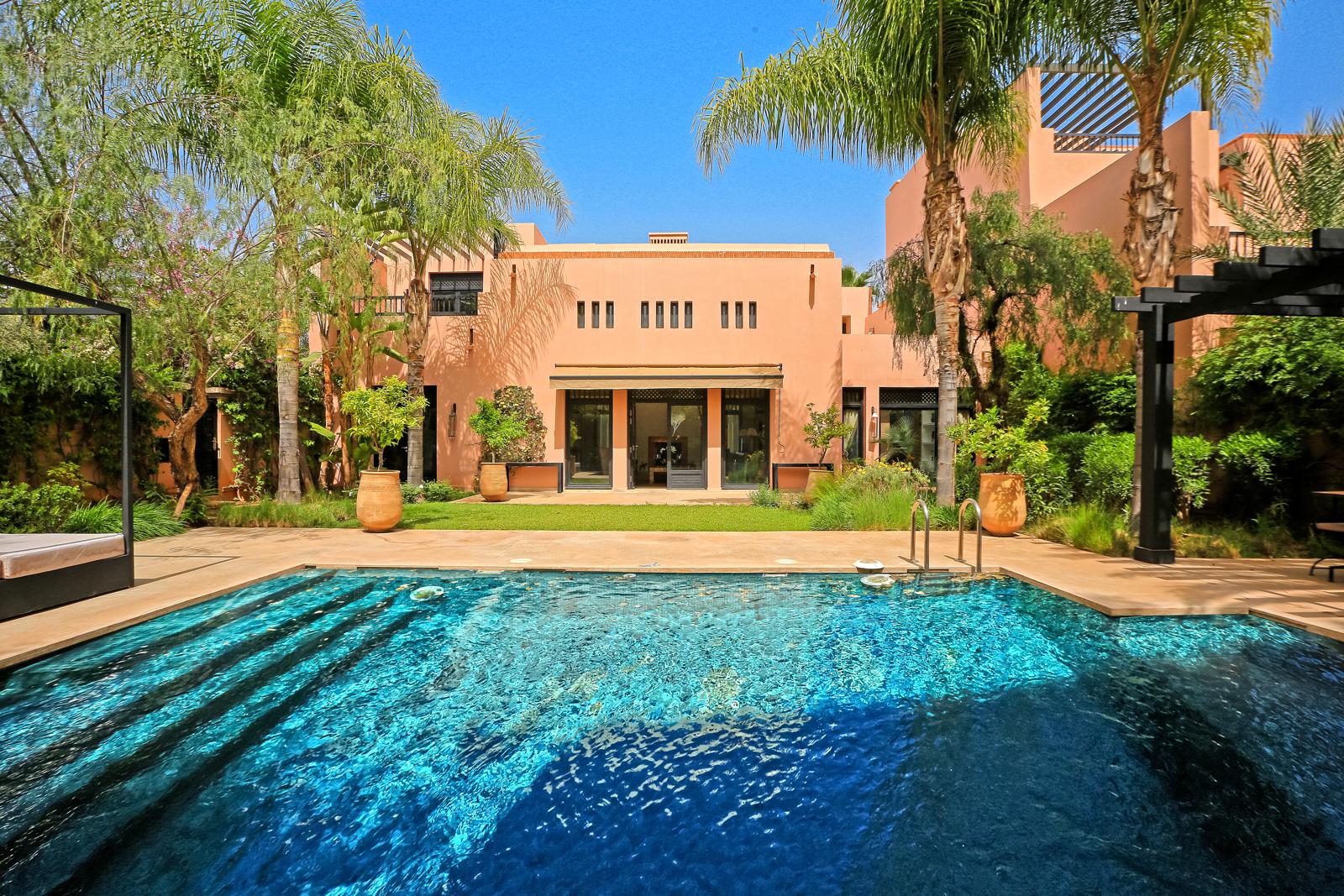
Morocco’s luxury-living market is moving beyond the traditional imagery of medinas, riads and seasonal tourism.
A more sophisticated private-wealth ecosystem is forming around high-net-worth individuals, returning diaspora families, Gulf buyers, European executives, private entrepreneurs and internationally mobile professionals who want lifestyle quality, hard-asset exposure, private healthcare, international schooling, security, aviation access and a culturally distinct base between Europe, Africa and the Atlantic.
The macro backdrop supports the shift. Morocco welcomed a record 19.8 million tourists in 2025, up 14% year-on-year, while tourism revenues reached 124 billion dirhams in the first 11 months of 2025. In Q1 2026, arrivals rose another 7% to 4.3 million, and Morocco is targeting 26 million visitors by 2030.
For wealth managers, luxury developers and private-service operators, the signal is clear: Morocco is no longer only receiving short-stay premium tourism. It is creating the conditions for part of that flow to convert into longer-stay residence, hard-asset capital allocation and recurring private-service demand.
The question is whether Morocco can convert that attention into a durable luxury ecosystem built on property quality, healthcare depth, education access, legal clarity, property management and private-service reliability.
The New Luxury Thesis: From Heritage Stay to Wealth Base
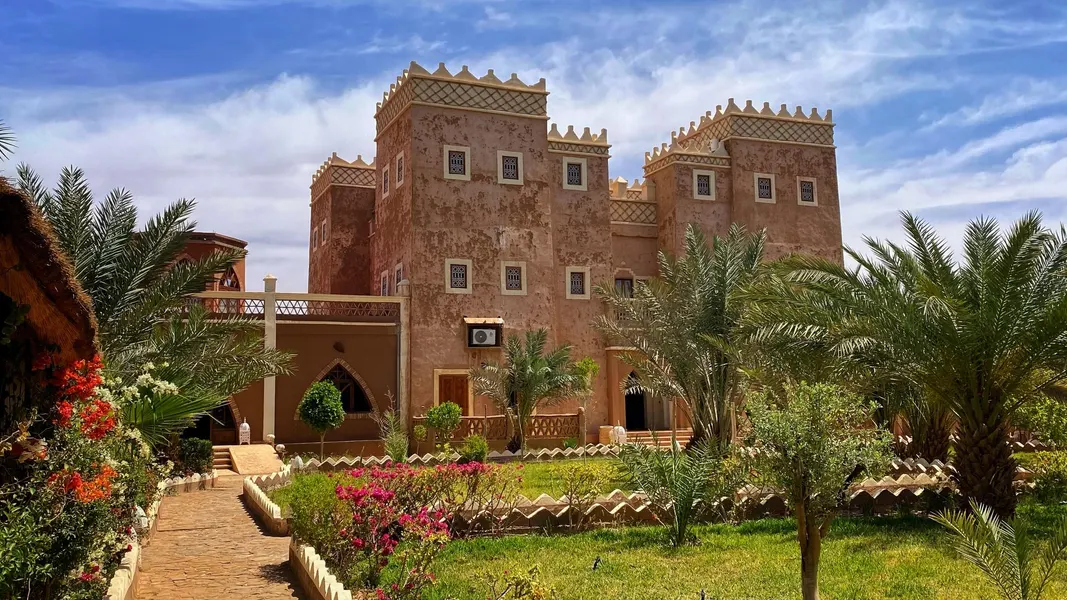
Morocco’s luxury appeal has traditionally been built around Marrakech riads, desert retreats, coastal resorts and heritage hospitality. That layer remains valuable, but it no longer explains the full market.
The new buyer is more operational. A high-net-worth family does not only ask whether a property is beautiful. It asks whether the asset can support a complete life structure: schools, clinics, airports, staff, security, banking, taxation, residency, maintenance, rental management and exit liquidity.
That changes the category. Luxury is no longer only design and atmosphere. It is infrastructure, governance and daily operating reliability.
Morocco’s advantage is that it offers a different mix from established lifestyle markets such as Lisbon, Marbella, Dubai, the South of France and southern Spain: cultural depth, proximity to Europe, Atlantic and Mediterranean access, improving infrastructure, relative value and a growing premium-services economy.
This is the shift beyond the medina.
Regional Asset Matrix: Marrakech, Tangier, Rabat and Casablanca
Morocco’s luxury market is not one market. It is a group of regional asset classes with different buyer profiles, rental dynamics, liquidity risks and service requirements.
Strategic Market: Marrakech
Luxury Function: Yield and leisure anchor
Market Signal: Marrakech remains Morocco’s strongest luxury-lifestyle brand, supported by villas, riads, golf communities, boutique hotels, restaurants, wellness services and global recognition.
Institutional Reading: Marrakech is the clearest market for hospitality-linked living, villa rentals, premium short stays and lifestyle-driven property ownership. The risk is seasonality, management quality and overpaying for assets that look beautiful but do not produce disciplined net yield.
Strategic Market: Tangier
Luxury Function: Transnational mobility base
Market Signal: Tangier benefits from Spain proximity, coastal living, northern infrastructure and Europe-facing demand. Premium furnished apartments in Malabata, Corniche and city-centre corridors can command around MAD 12,000 to MAD 18,000 per month, with selected premium listings visible around MAD 15,500 to MAD 16,000.
Institutional Reading: Tangier is a mobility-driven luxury market. Its strongest assets are modern, secure, fibre-connected apartments or villas with parking, views, management quality and access to both Morocco and Europe. The risk is product inconsistency, building maintenance and overpricing in cosmetic luxury stock.
Strategic Market: Rabat
Luxury Function: Defensive family and diplomatic market
Market Signal: Rabat offers diplomatic presence, administrative stability, international schools, premium residential districts and quieter long-term living.
Institutional Reading: Rabat is less speculative and more defensive. It appeals to families, diplomats, senior executives and long-term residents who prioritise security, schools, healthcare, clean title and daily functionality over short-stay yield.
Strategic Market: Casablanca
Luxury Function: Corporate liquidity and capital preservation
Market Signal: Casablanca offers financial-sector depth, private healthcare, corporate tenants, stronger exit liquidity and access to Morocco’s largest business ecosystem.
Institutional Reading: Casablanca is a capital-preservation market in selected prime districts. It may not deliver the same lifestyle narrative as Marrakech or Tangier, but it offers deeper tenant demand, business services and resale liquidity.
The correct underwriting approach is not to ask whether Moroccan luxury is rising nationally. It is to ask which city, which asset class and which service layer can support durable value.
Private Healthcare: De-Risking the Medical Underwriting Variable
High-net-worth relocation depends heavily on healthcare confidence.
Morocco’s private healthcare sector is expanding quickly, and institutional operators are becoming more important. Akdital, listed on the Casablanca Stock Exchange, reported full-year 2025 revenue of 4.413 billion dirhams, up 49% compared with 2024. By 31 December 2025, the group had expanded to 4,505 beds across 41 facilities.
That matters for luxury living because wealthy families do not relocate on real estate alone. They underwrite medical access.
For younger founders, routine private care may be sufficient. For families, retirees and executives, the requirement is more complex: specialist access, emergency pathways, insurance acceptance, direct billing, imaging, surgery, oncology, cardiology, maternity, paediatrics and medical evacuation options.
Casablanca and Rabat remain the deepest healthcare markets. Marrakech and Tangier are improving, but complex-care access still requires careful underwriting.
For luxury developers and relocation advisers, proximity to credible private healthcare is becoming part of the value proposition. A villa without medical access is a lifestyle asset. A villa supported by credible tertiary-care access becomes a residence.
International Schools and Family Infrastructure

Luxury migration becomes durable when families can educate children.
This is one of the clearest differences between short-stay luxury tourism and long-stay high-net-worth relocation. Affluent families evaluate international schools, bilingual education, transport times, extracurricular activities, safety, university pathways and social environment.
Casablanca and Rabat have the strongest institutional school depth. Marrakech has growing appeal for internationally mobile families but requires more selective planning. Tangier’s family infrastructure is improving alongside its international profile and north-Morocco connectivity.
This matters for property demand because a luxury home near credible schools, clinics and secure transport routes has a different buyer base from a pure holiday property. The family-infrastructure layer supports longer stays, higher retention and stronger demand for serviced homes, villa management, drivers, domestic staff, tutoring, healthcare and insurance.
For Morocco, this is where luxury living becomes a private-services economy. The buyer is not only purchasing square metres. The buyer is purchasing a functioning life system.
The Real Estate Price Baseline: Stable National Market, Selective Luxury Outperformance
Morocco’s national real estate market is not in a broad speculative boom.
Bank Al-Maghrib and ANCFCC data show a stable national price environment, with the Real Estate Asset Price Index rising only 0.6% in 2025. Transactions, however, remained more active, signalling liquidity recovery without broad price overheating.
That contrast is important. A stable national market can coexist with selective outperformance in rare premium assets.
Luxury behaves differently from the national average. Prime properties in Marrakech, Tangier, Rabat and Casablanca can attract international and diaspora demand even when national prices move slowly. But this does not mean every luxury asset appreciates.
The market rewards scarcity, quality and management. It punishes weak title, poor build quality, bad location, overpricing and unreliable rental operations.
For HNWI buyers, Morocco’s opportunity is selective. The country offers relative value compared with mature Mediterranean luxury markets, but institutional-grade premium assets must be underwritten carefully.
From Capex to Opex: The Private-Service Economy
The most important shift in Morocco’s luxury market is not only the sale of expensive homes.
It is the transition from a cyclical build-and-sell model into a recurring, high-margin service economy.
In the old model, developers captured value through capex: land acquisition, construction, sales and exit. In the emerging model, operators capture value through opex: property management, security, domestic staffing, private chefs, maintenance, concierge services, rental administration, healthcare coordination, school placement, drivers, legal structuring and wealth advisory.
That changes the investment thesis.
A villa sold once creates one transaction. A villa managed properly creates recurring annual revenue through maintenance, staffing, rentals, insurance, repairs, guest services and owner support.
For private equity, family offices and service operators, the predictable value may sit less in the asset sale and more in controlling the service layer around the asset.
Morocco’s luxury market will professionalise when the service layer becomes institutional: transparent contracts, audited rental income, trained staff, maintenance schedules, tax declarations, insurance coverage and emergency response.
The next stage of luxury is not only ownership.
It is asset management.
Legal and Tax Structuring: The 183-Day Threshold
High-net-worth relocation requires legal discipline.
Morocco is accessible to foreign buyers, but real estate and residency decisions still require proper structuring. Buyers must verify title, registration, land status, seller authority, tax treatment, inheritance implications, rental declarations and foreign-exchange documentation.
Tax residence is one of the most important issues. Under Moroccan tax-residence rules, an individual can be considered tax resident if they have a permanent home in Morocco, if Morocco is their centre of economic interest, or if their stay exceeds 183 days within any 365-day period.
For globally mobile families, the 183-day threshold is the point at which lifestyle mobility can become worldwide income exposure. Once Moroccan tax residence is triggered, foreign income, treaty treatment, double-taxation relief, rental income, capital gains, business activity and employer exposure all require proper professional structuring.
This is not routine paperwork. It is cross-border legal architecture.
The core issues are clear: tax residence, foreign income treatment, double-tax treaties, property ownership structure, rental declarations, inheritance planning, capital repatriation, staff employment, vehicle ownership and business activity.
A wealthy buyer does not only need a real estate agent.
A wealthy buyer needs notarial review, tax advice, foreign-exchange documentation, estate planning and asset-management governance.
Aviation Access and the 2030 Layer
High-net-worth living depends on air access.
Morocco is expanding airport capacity ahead of 2030. Reuters has reported that Morocco plans to raise airport passenger capacity from 38 million to 80 million by 2030, with airport upgrades supporting tourism growth and World Cup preparation. The African Development Bank approved €270 million in financing for airport upgrades, including work linked to key destinations such as Marrakech, Agadir, Tangier and Fez.
For luxury markets, this is not a background detail. It affects buyer confidence.
Marrakech benefits from global recognition and international routes. Tangier benefits from northern access and Spain proximity. Agadir and Essaouira can benefit from stronger tourism flows. Casablanca remains the main corporate aviation and business gateway.
Flight frequency, private aviation access, airport processing, customs experience and transfer time all influence high-end location choice.
Luxury property demand becomes stronger when access becomes easier.
Investor Monetization Logic
Morocco’s luxury-living shift creates opportunities across several layers.
The first is institutional-grade premium real estate: villas, serviced apartments, branded residences, restored riads and secure family homes.
The second is private-service infrastructure: healthcare coordination, school placement, relocation support, security, property management, domestic staffing and concierge services.
The third is hospitality-linked living: boutique hotels, serviced villas and branded residence concepts that capture longer-stay affluent demand.
The fourth is wealth and legal advisory: tax planning, ownership structuring, inheritance planning, banking, insurance and capital repatriation.
The fifth is healthcare and education: private clinics, international schools, tutoring, wellness and insurance networks.
The strongest commercial opportunity is not selling an isolated luxury asset. It is building the service infrastructure that makes Morocco viable as a long-stay wealth base.
The Execution Risks
The luxury-living thesis carries several risks.
The first is quality inconsistency. Morocco has premium properties, but not every expensive property meets international standards.
The second is service fragmentation. High-net-worth buyers expect reliable maintenance, security, healthcare coordination, legal advice and property management.
The third is legal complexity. Title, inheritance, tax residence and capital repatriation must be handled correctly.
The fourth is infrastructure unevenness. Healthcare, schooling, internet and transport access vary by city and neighbourhood.
The fifth is overpricing. Lifestyle appeal can encourage sellers to price assets above sustainable rental or resale value.
For investors, the question is not whether Morocco is attractive. It is whether the asset and service ecosystem can meet the expectations of global private wealth.
MMO Luxury Living Matrix: 2026
Strategic Vector: Tourism and visibility
2026 Market Signal: Morocco welcomed 19.8 million tourists in 2025 and targets 26 million by 2030.
Institutional Execution Test: Converting short-stay premium tourism into longer-stay residents, property buyers and recurring private-service demand.
Strategic Vector: Private healthcare
2026 Market Signal: Akdital closed 2025 with 4.413 billion dirhams in revenue, up 49%, and expanded to 4,505 beds across 41 facilities.
Institutional Execution Test: Depth of specialist care, insurance acceptance, emergency pathways and access outside Casablanca and Rabat.
Strategic Vector: Real estate pricing
2026 Market Signal: BAM/ANCFCC data show a stable national market, with the Real Estate Asset Price Index rising 0.6% in 2025.
Institutional Execution Test: Separating genuine prime scarcity and institutional-grade premium assets from overpricing and weak-quality luxury stock.
Strategic Vector: Family infrastructure
2026 Market Signal: HNWI demand increasingly depends on schools, healthcare, security, drivers, staff and property management.
Institutional Execution Test: Whether Morocco can deliver a full private-services ecosystem, not only attractive homes.
Strategic Vector: Tax and legal structuring
2026 Market Signal: Moroccan tax residence can be triggered by permanent home, centre of economic interest or presence exceeding 183 days within a 365-day period.
Institutional Execution Test: Proper ownership structures, tax planning, rental declarations, inheritance planning and capital repatriation.
Strategic Vector: Opex service economy
2026 Market Signal: Luxury ownership is shifting from one-off asset purchase toward recurring management, staffing, rental and concierge needs.
Institutional Execution Test: Institutionalising property management, service contracts, staff quality, rental reporting and owner support.
What Investors Should Watch Next
Investors should monitor five signals.
First, whether luxury demand continues shifting from short-stay tourism into longer-stay residence and asset ownership.
Second, whether premium property supply in Marrakech, Tangier, Rabat and Casablanca becomes more professionally managed.
Third, whether private healthcare and international schooling deepen outside Casablanca and Rabat.
Fourth, whether Morocco develops more transparent advisory services for HNWI relocation, tax planning and property ownership.
Fifth, whether 2030 infrastructure upgrades translate into easier access, stronger service quality and higher long-term occupancy.
These signals will determine whether Morocco’s luxury-living market becomes an institutional private-wealth segment or remains a fragmented premium tourism story.
Final Outlook
Morocco’s luxury-living market is entering a new phase.
The country is no longer defined only by medina riads, seasonal tourism or heritage hospitality. It is increasingly attracting wealthy buyers and long-stay residents who evaluate Morocco through property quality, healthcare access, education, taxation, aviation connectivity and private services.
Marrakech remains the established yield and leisure anchor.
Tangier is becoming a transnational mobility base.
Rabat and Casablanca offer defensive, family-oriented and institutional demand.
The opportunity is significant, but selective. The winners will be assets and operators that combine beauty with operational reliability: clean title, strong location, private services, healthcare access, school depth, rental management and legal clarity.
For Morocco, the next stage of luxury is not only about where wealthy people stay.
It is about whether they can build a life.
Executive Engagement
Are you operating in luxury real estate, private healthcare, international education, wealth management, legal advisory, relocation, hospitality or Morocco-focused property management?
MMO is tracking how Morocco’s luxury-living market evolves from premium tourism into long-stay wealth infrastructure.
Share your operational insights with our editorial team or contact us with data on buyer demand, service gaps, luxury rentals, family relocation or investment execution.