

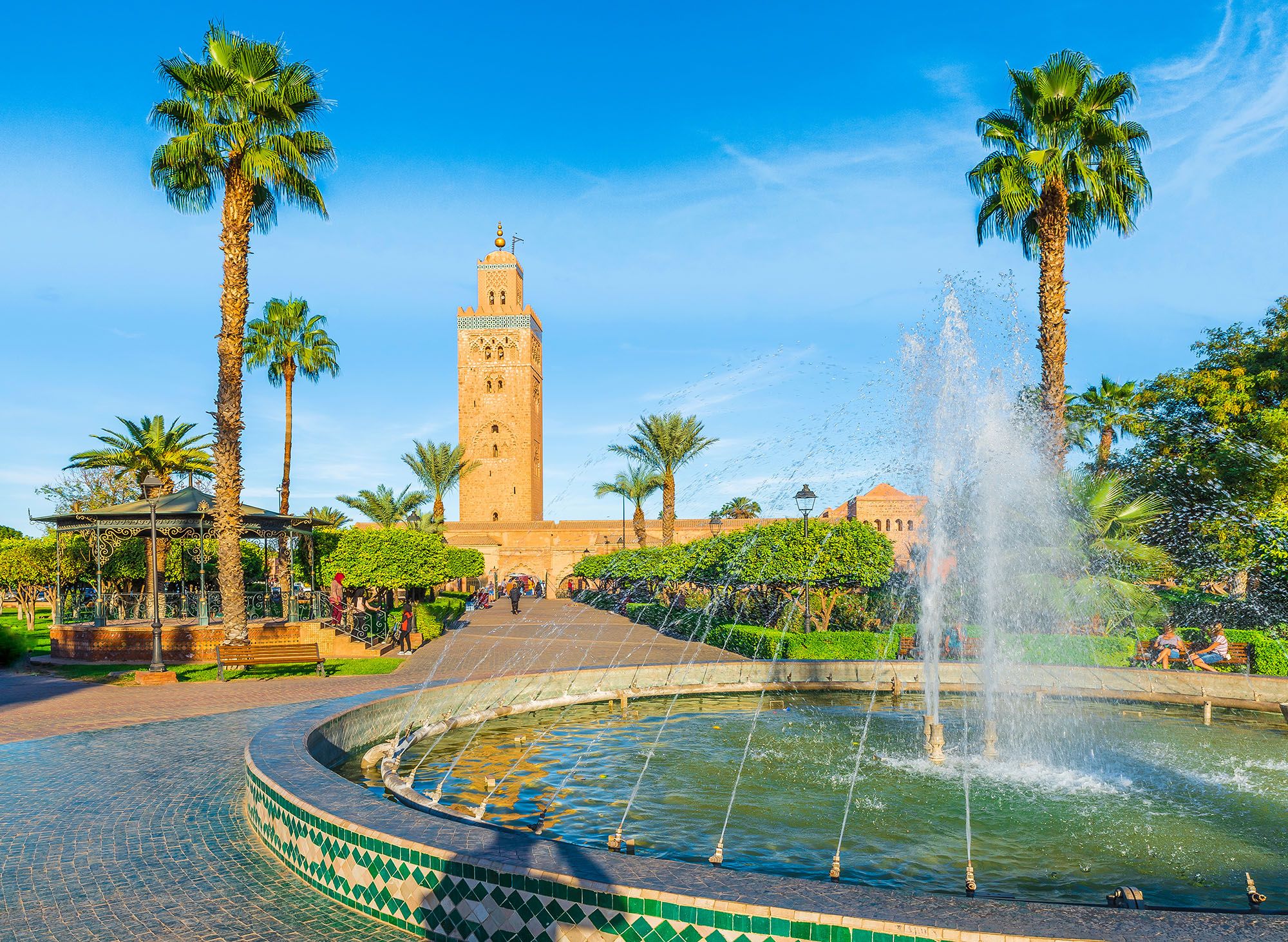
Morocco’s remote-work economy is moving beyond café culture and short-stay tourism.
A more financially sophisticated lifestyle market is forming around founders, consultants, creatives, tech entrepreneurs, cross-border executives and high-income professionals seeking European time-zone access, lower operating overhead, improving international connectivity and a premium living base outside the high-cost cities of Western Europe.
Tangier and Marrakech are becoming two of the clearest beneficiaries.
The macro backdrop is already visible. Morocco received a record 19.8 million tourists in 2025, up 14% year-on-year, while tourism revenues reached 124 billion dirhams in the first 11 months of 2025. In Q1 2026, arrivals rose another 7%to 4.3 million, with March arrivals up 18% year-on-year. Morocco is targeting 26 million visitors by 2030.
For lifestyle investors, relocation advisers and wealth managers, the signal is clear.
Morocco is not only receiving more visitors.
It is creating the conditions for part of that flow to convert into medium-stay residents, premium tenants, property buyers, founders and recurring service consumers.
The question is whether Tangier and Marrakech can capture that demand without creating housing stress, compliance risk or service-quality gaps.
The Capital Arbitrage: Europe-Adjacent Lifestyle at Lower Operating Cost
Remote workers and founders do not evaluate cities only by climate or atmosphere.
They evaluate personal runway, operating overhead, tax exposure, time-zone alignment, travel friction and service reliability.
For a Paris, Amsterdam, Brussels or Lisbon-based founder, Morocco can offer a meaningful capital-arbitrage proposition.
The calculation is not simply “Morocco is cheaper.”
That language is too vague.
The real calculation is whether a professional earning in euros, dollars or pounds can reduce personal and operational overhead while preserving access to European working hours, international flights, private services and acceptable digital infrastructure.
A founder who lowers rent, daily expenses, office costs and support services can extend personal runway and retain more capital inside the business.
That is why Morocco’s remote-work lifestyle should be understood as a financial operating model, not only a lifestyle preference.
The strongest appeal sits with professionals who can keep foreign income streams while relocating part of their cost base to Morocco.
Tangier: The Northern Base for Europe-Facing Professionals
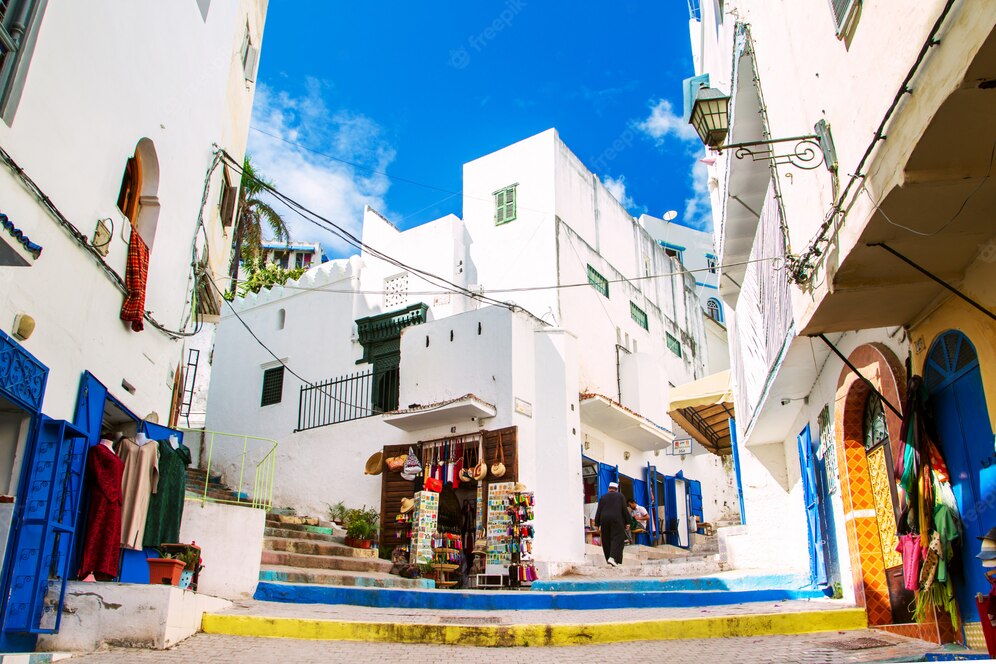
Tangier is becoming attractive because it combines coastal living, proximity to Spain, improving infrastructure and access to Morocco’s northern economic corridor.
For Europe-facing professionals, Tangier’s advantage is geographical.
The city allows a professional to remain close to Europe while operating from a lower-cost Moroccan base.
But the premium market is no longer defined by low rents.
High-demand waterfront and city-centre districts are already commanding corporate-grade pricing.
Premium, fibre-connected furnished apartments in Tangier’s Malabata, City Centre and Corniche corridors can list in the MAD 12,000 to MAD 18,000 monthly range, roughly $1,200 to $1,800 or €1,100 to €1,650, depending on size, view, building quality and service level. Current premium listings in areas such as Malabata show furnished apartments around MAD 15,500–16,000 per month.
Established residential areas such as Marshan, Iberia and selected cliff-side zones can offer a different premium category, often with more space, quieter surroundings and stronger long-stay appeal.
For investors, this segmentation matters.
Tangier is not one rental market.
It is a layered market: waterfront serviced inventory, city-centre apartments, established family districts and emerging mid-market zones.
The demand from remote professionals is strongest where housing combines internet reliability, parking, security, walkability, cafés, sea access and airport or ferry connectivity.
Marrakech: The Premium Lifestyle Market With Stronger Seasonality
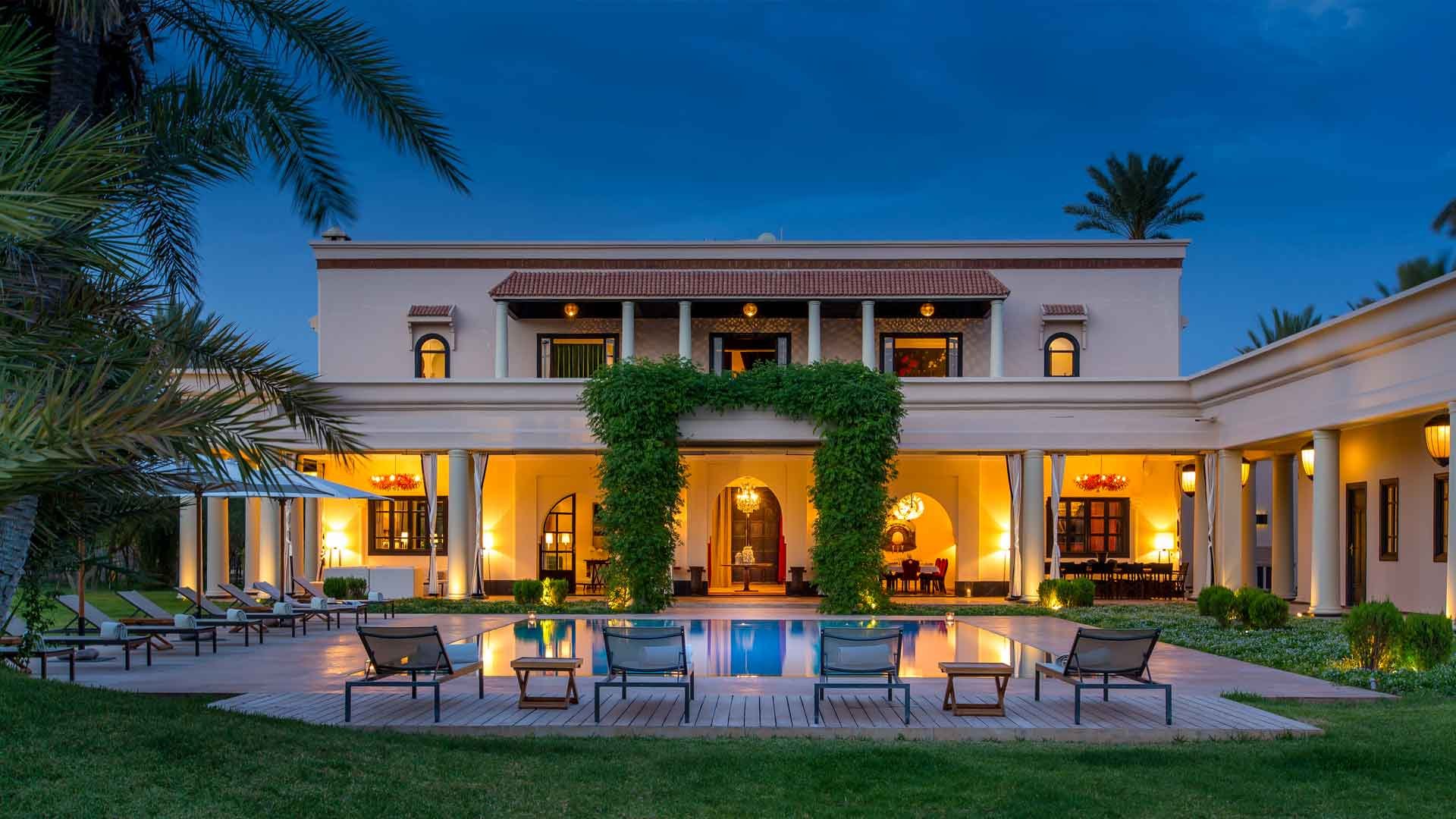
Marrakech operates differently from Tangier.
It is Morocco’s most internationally recognised lifestyle city, with established hospitality infrastructure, boutique hotels, riads, villas, restaurants, wellness services, private drivers, short-stay rentals and international visitor flows.
That makes Marrakech easier for foreigners to understand.
It also makes the city more exposed to seasonal pricing and premium inventory compression.
High-income remote professionals and founders tend to concentrate around districts such as Guéliz, Hivernage, Majorelle, Palmeraie and selected villa zones depending on budget, lifestyle and length of stay.
The city is not necessarily the lowest-cost remote-work base.
Its value lies in brand recognition, hospitality depth, international airport access, service availability and social network density.
For a founder, consultant or creative professional, Marrakech can function as a high-quality lifestyle base.
For a cost-sensitive remote worker, it requires disciplined budgeting.
The investor opportunity is in professionally managed medium-stay inventory: furnished apartments, serviced residences, riads with work-ready infrastructure, villa management and longer-stay hospitality products.
Connectivity: The Real Remote-Work Infrastructure
Remote work depends on operational reliability.
Morocco’s major cities and tourist hubs increasingly offer fibre, 4G and 5G connectivity strong enough for most professional use cases. Digital-nomad guides report fibre connections in major Moroccan cities commonly ranging from 50 Mbps to 150 Mbps, with coworking spaces often offering stable connections around 50 Mbps to 80 Mbps. These figures vary by neighbourhood, building and provider.
For founders and consultants, the issue is not average national internet speed.
It is apartment-level reliability.
A premium rental must be assessed for:
fibre availability
upload speed
router quality
backup 4G or 5G
power stability
quiet workspace
video-call privacy
coworking alternatives
building maintenance
landlord responsiveness
This is where lifestyle demand becomes an underwriting problem.
A city may be attractive, but a weak apartment setup can make professional work impossible.
The winners in Morocco’s remote-work market will be operators who package housing, connectivity, workspace and service reliability into one professional product.
Airport Access and the 2030 Travel Layer
Remote-work ecosystems scale when air connectivity improves.
Morocco’s airport strategy is therefore part of the lifestyle economy.
The country is pursuing a major airport capacity expansion ahead of 2030. Reuters reported that airport capacity is planned to rise from around 38 million passengers to 80 million by 2030, supported by a broader investment programme and World Cup-related upgrades.
For remote workers, air access affects location choice.
A founder based in Marrakech or Tangier may need regular access to Paris, London, Madrid, Brussels, Amsterdam, Dubai or Casablanca.
Flight frequency, airport processing, route competition, transfer time and ticket pricing all affect whether Morocco can compete with Lisbon, Barcelona or Dubai as a professional base.
Airport expansion does not only serve tourists.
It supports the movement of business owners, investors, consultants, diaspora professionals and remote executives.
That makes it part of Morocco’s lifestyle infrastructure.
The Capital Arbitrage: Micro-Cost Structures for High-Net-Worth Expats
Morocco’s lifestyle advantage is strongest when measured against high-cost European cities.
The comparison is not only rent.
It includes household staff, drivers, private fitness, cafés, restaurants, property management, short-haul travel, private healthcare, office space and personal services.
A founder who moves from Paris, Amsterdam, London or Barcelona to Tangier or Marrakech may reduce monthly overhead materially while preserving European market hours.
But the savings depend heavily on lifestyle.
A local-style life can be very efficient.
A premium international lifestyle can move closer to mid-range European costs.
The most realistic way to assess the market is through three cost tiers.
Local-efficient lifestyle: modest apartment, local groceries, limited private services, lower monthly burn.
Professional lifestyle: furnished apartment, coworking, cafés, gym, private healthcare, regular flights.
Premium founder lifestyle: serviced apartment or villa, private transport, frequent dining, staff, international travel, legal and tax advisory, healthcare insurance.
The arbitrage is strongest in the second tier.
That is where Morocco offers international functionality without European-level overhead.
Yield Compression and Inventory Shortages in Premium Serviced Rentals
Remote-work demand creates opportunity, but also pressure.
When foreign-income renters enter neighbourhoods with limited high-quality furnished stock, rents can rise quickly.
This is already visible in selected areas of Tangier and Marrakech, where demand concentrates around ready-to-live units with security, views, fibre internet, parking, modern interiors and proximity to restaurants or coworking spaces.
The risk is inventory compression.
If too much demand targets too little premium stock, two things happen.
First, prices rise.
Second, quality becomes inconsistent as weaker units are marketed as “premium” without meeting professional standards.
For investors, this creates opportunity in serviced apartments, co-living, professionally managed rentals and medium-stay hospitality products.
For cities, it creates planning risk.
Unchecked short-stay and medium-stay rental growth can reduce housing availability for local residents and distort neighbourhood affordability.
The investable market is not uncontrolled Airbnb expansion.
It is professionally managed inventory that can serve remote workers without damaging local housing balance.
Cross-Border Compliance: Navigating the 183-Day Fiscal Residency Threshold
Remote-work articles often oversell tax benefits.
That is a mistake.
Morocco should not be marketed as a simple tax haven for digital nomads.
For corporate counsels and wealth planners, the primary issue is tax residence.
According to Moroccan tax residence rules, an individual may be considered tax resident based on permanent home, centre of economic interest, or staying in Morocco for more than 183 days within any 365-day period. PwC’s 2026 Morocco tax summary lists these residence criteria in that order.
This creates a practical compliance threshold.
A founder, consultant or remote executive who spends extended time in Morocco must track physical presence, income source, employer obligations, company structure and double-tax treaty exposure.
The risk is not only personal tax.
Foreign employers may also worry about permanent-establishment exposure if employees perform business-generating activity from Morocco without proper protocols.
Professionals must evaluate:
days spent in Morocco
tax residence status
source of income
foreign employer rules
client location
company incorporation
social security obligations
double-tax treaty treatment
permanent-establishment risk
local invoicing or business setup
Morocco’s income tax system is progressive, and tax treatment depends on residence status, income type and applicable treaty rules. Some current tax summaries place Morocco’s individual income tax scale at up to around 37%, while some market datasets still refer to a top personal rate around 38%.
The correct takeaway is simple.
Lifestyle relocation must be structured before it becomes tax exposure.
Private Healthcare and Everyday Services
Remote workers choosing a long-stay base also evaluate healthcare and everyday service depth.
Tangier and Marrakech both offer private healthcare access, although Casablanca and Rabat remain deeper markets for advanced specialist care.
For younger professionals, basic private care, dentistry, pharmacies, gyms and routine services may be enough.
For families, executives or retirees, the calculation is different.
They need stronger access to private clinics, specialists, insurance networks and emergency pathways.
This is why Morocco’s remote-work lifestyle intersects with private healthcare, insurance, schooling and relocation services.
The market is not only about cafés and Wi-Fi.
It is about urban service infrastructure.
The cities that can combine housing, healthcare, internet, legal clarity, transport and safety will attract higher-value long-stay residents.
Tangier vs Marrakech: Two Different Remote-Work Models
Tangier and Marrakech attract different professional profiles.
Tangier is more Europe-facing.
It appeals to professionals who value coastal living, Spain proximity, a calmer pace than Casablanca and access to Morocco’s northern economic corridor.
It is suited to people who want a strategic base between Morocco and Europe.
Marrakech is more lifestyle-facing.
It attracts creatives, founders, consultants, wellness entrepreneurs, luxury-service professionals and investors who value hospitality infrastructure, global recognition and an existing international community.
Neither city is automatically better.
The right choice depends on income, climate tolerance, work rhythm, travel pattern, housing budget and compliance profile.
Tangier offers proximity and northern connectivity.
Marrakech offers lifestyle depth and stronger global brand recognition.
That difference matters for investors, landlords and relocation advisers.
Investor Monetization Logic
Morocco’s remote-work economy creates opportunities across several sectors.
The first is housing.
Demand is rising for furnished apartments, serviced residences, co-living models and professionally managed medium-stay rentals.
The second is coworking.
Remote workers need reliable internet, call booths, meeting rooms, flexible desks and community programming.
The third is private services.
Healthcare, insurance, relocation, legal structuring, tax advice, banking, fitness and schooling become more relevant as stays lengthen.
The fourth is hospitality.
Hotels, riads and villas can adapt part of their inventory toward longer-stay professionals, especially outside peak travel periods.
The fifth is real estate management.
Foreign owners and diaspora investors need property management, rental compliance, maintenance and guest services.
The sixth is mobility.
Airport transfers, intercity travel, car rental, private drivers and local transport services benefit from longer-stay residents.
The highest-value opportunity is not low-budget tourism.
It is the conversion of visitors into residents, tenants, founders and recurring service consumers.
The Execution Risks
The remote-work lifestyle economy is promising, but not risk-free.
The first risk is housing inflation.
If furnished rentals rise too quickly, cities can become less accessible for locals and less attractive for mid-income professionals.
The second is service inconsistency.
Internet, maintenance, contracts, customer service and property management must meet international expectations.
The third is legal ambiguity.
Remote workers need clarity around residency, taxation and business activity.
The fourth is seasonality.
Marrakech can become expensive and hot during certain periods, while coastal cities may experience demand spikes.
The fifth is infrastructure unevenness.
Not every neighbourhood has the same fibre access, healthcare depth, transport reliability or work-ready housing.
The market will reward operators who solve these problems professionally.
MMO Remote Work Lifestyle Matrix: 2026
Tourism momentum
2026 market signal: Morocco welcomed 19.8 million tourists in 2025 and 4.3 million arrivals in Q1 2026.
Investor value: larger visitor flows support longer-stay services, rentals and hospitality adaptation.
Execution test: converting short-stay tourism into repeat residents, founders and remote professionals.
Premium serviced rentals
2026 market signal: corporate-ready furnished apartments in Tangier’s Malabata, Corniche and city-centre corridors can command MAD 12,000–18,000 per month, with premium listings visible around MAD 15,500–16,000.
Investor value: serviced housing, co-living and managed rentals can capture medium-stay demand.
Execution test: quality control, fibre reliability, rental transparency and affordability pressure.
Airport access
2026 market signal: Morocco’s airport strategy targets capacity growth from about 38 million to 80 million passengers by 2030.
Investor value: stronger route depth improves Morocco’s viability as a Europe-adjacent work base.
Execution test: flight frequency, pricing, airport processing and city transfers.
Tax and residency
2026 market signal: Moroccan tax residence can be triggered by permanent home, centre of economic interest, or presence exceeding 183 days within a 365-day period.
Investor value: creates demand for tax, legal, relocation and corporate structuring advice.
Execution test: avoiding personal tax exposure and permanent-establishment risk for foreign employers.
Service infrastructure
2026 market signal: longer-stay professionals require private healthcare, insurance, coworking, property management and reliable digital connectivity.
Investor value: recurring service demand beyond tourism.
Execution test: service reliability, legal compliance and professional delivery standards.
What Investors Should Watch Next
Investors should monitor five signals.
First, whether Tangier and Marrakech continue attracting longer-stay professionals rather than only short-stay tourists.
Second, whether premium furnished housing supply grows without excessive pressure on local rental markets.
Third, whether coworking, fibre connectivity and serviced-apartment operators meet international reliability standards.
Fourth, whether Morocco develops clearer residency and tax pathways for remote professionals and entrepreneurs.
Fifth, whether airport expansion and route growth improve Morocco’s position against Lisbon, Barcelona, Dubai and other remote-work bases.
These signals will determine whether Morocco’s remote-work economy becomes a durable lifestyle sector or remains a fragmented visitor trend.
Final Outlook
Morocco’s remote-work lifestyle economy is entering a more serious phase.
Tangier and Marrakech are attracting global professionals not only because they are appealing places to visit, but because they offer a working base with lower overhead, cultural depth, improving connectivity and access to European time zones.
The opportunity is significant.
Remote workers can become tenants, property buyers, founders, service consumers and long-term residents.
But the execution test is technical.
Housing quality, internet reliability, healthcare access, tax residence, legal structuring, airport connectivity and service standards will determine whether Morocco can convert lifestyle attention into a durable economic segment.
For Tangier and Marrakech, the next stage is not only attracting digital nomads.
It is building a professional ecosystem for global work.
Executive Engagement
Are you operating in relocation, coworking, serviced apartments, private healthcare, legal advisory, tax structuring, hospitality or Morocco-focused property management?
MMO is tracking how Morocco’s remote-work lifestyle economy evolves beyond short-stay tourism.
Share your operational insights with our editorial team or contact us with data on housing demand, remote-worker profiles, service gaps or investment execution.