


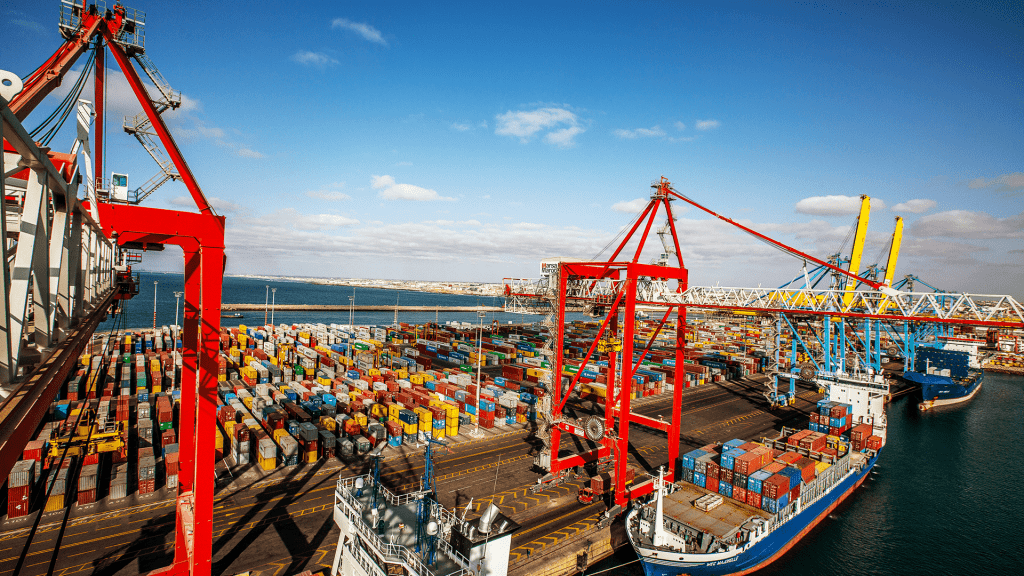
Tanger Med is moving deeper into renewable energy, lower-carbon port operations and circular economy infrastructure as global trade becomes increasingly shaped by emissions standards, ESG scrutiny and supply-chain transparency.
For Morocco, the shift matters beyond environmental branding.
Tanger Med is one of the country’s most important economic assets. It connects Morocco to global shipping routes, supports export-oriented manufacturing and strengthens the kingdom’s position as a logistics platform between Europe, Africa and wider international markets.
Now the port is trying to add another layer to its competitive profile: sustainability.
In a trade environment where manufacturers, shipping lines and investors are paying closer attention to carbon exposure, Tanger Med’s green transition could become part of Morocco’s long-term logistics advantage.
The question is no longer only whether Tanger Med can move cargo efficiently.
It is whether the port can remain competitive in a lower-carbon global economy.
A Port Strategy Moving Beyond Scale
Tanger Med has long been associated with scale, connectivity and strategic location.
But ports are increasingly judged by more than container volumes and maritime access. They are also being assessed on energy use, emissions management, operational efficiency and the environmental standards of their surrounding industrial ecosystems.
That is why Tanger Med’s sustainability strategy is economically significant.
The port is not treating sustainability as a separate branding exercise. It is integrating renewable energy, electrification, waste recovery and energy efficiency into its operating model.
For a logistics hub tied to manufacturing and exports, this is increasingly part of competitiveness.
Lower-carbon operations can matter for shipping companies, manufacturers and global investors that need to measure and reduce emissions across supply chains.
In this sense, Tanger Med’s green shift is not only an environmental programme.
It is a trade positioning strategy.
Carbon Neutrality as a 2030 Target
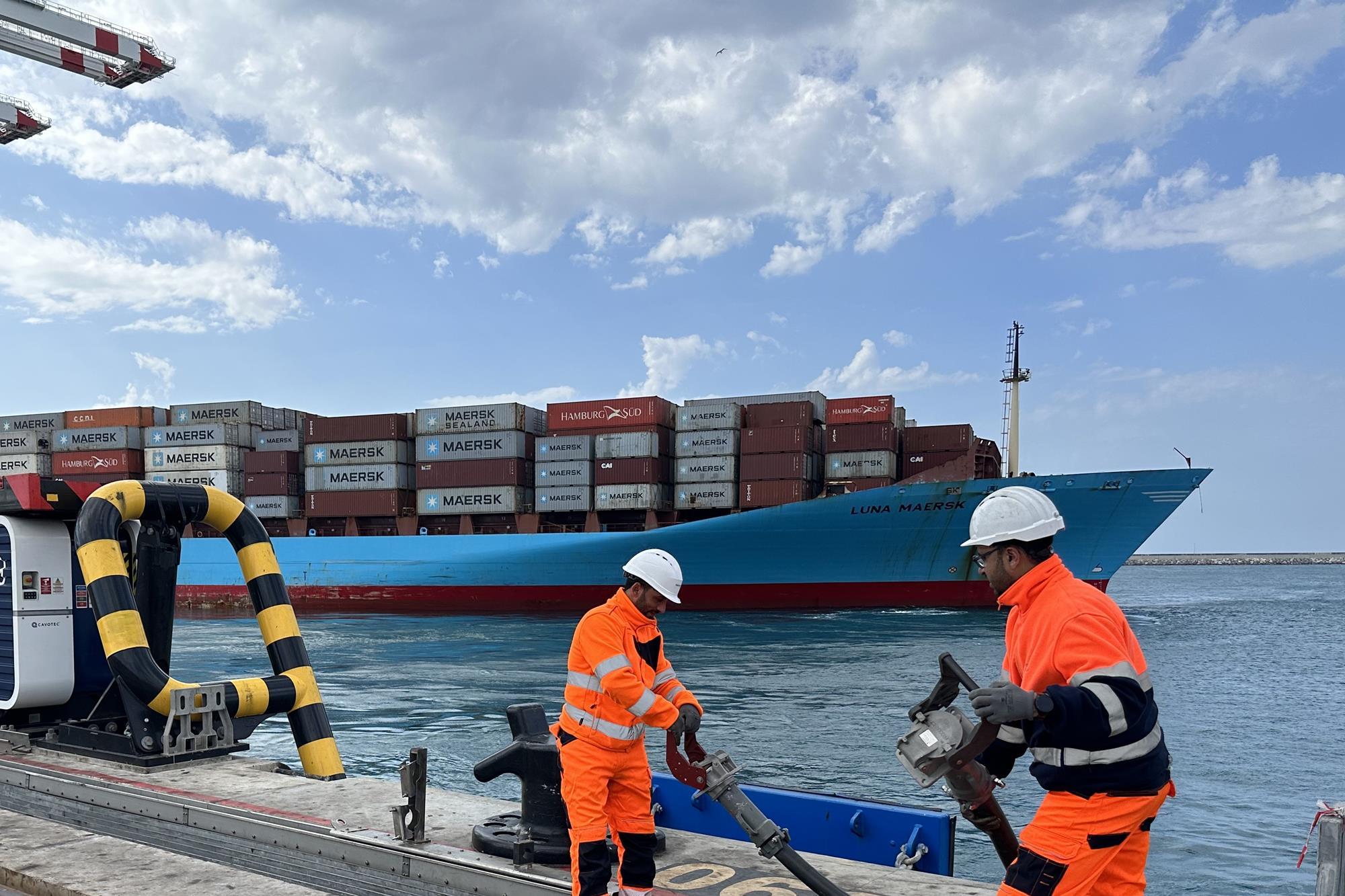
Tanger Med Group has set a target of reaching carbon neutrality across its operations by 2030.
That target places the port inside a wider global shift in infrastructure development, where economic performance and environmental responsibility are increasingly connected.
The roadmap focuses on several operational pillars:
decarbonised energy supply
energy efficiency
electrification of operations
green mobility
water and waste management
circular economy practices
For Morocco, the significance is clear.
If Tanger Med can reduce the carbon intensity of its operations while maintaining port efficiency, it strengthens the country’s position as a modern logistics platform.
But the ambition will be judged by delivery.
A carbon-neutrality target creates direction. Execution determines credibility.
Solar Power and Energy Autonomy

Renewable energy is one of the most visible parts of Tanger Med’s transition.
The port complex has expanded solar infrastructure across parking areas, rooftops, buildings and logistics facilities. These installations are designed to reduce the port’s carbon footprint while increasing energy autonomy.
The most important project is the floating solar park at the Oued Rmel Dam, located near the Tanger Med Port Complex.
The installation covers more than eight hectares and has a capacity of 13 MWc, with estimated annual production of around 20 GWh.
Once fully operational, the project is expected to supply clean electricity to the port complex and support the group’s wider decarbonisation programme.
The project also carries a water-management benefit.
Floating solar panels can help reduce evaporation from the reservoir, linking electricity generation with water efficiency. That matters in Morocco, where renewable energy and water security are increasingly strategic economic issues.
For Tanger Med, the solar programme is not only about producing clean electricity.
It is about reducing exposure to energy costs, improving operational resilience and aligning the port with lower-carbon supply-chain expectations.
Onshore Power Supply: Reducing Emissions at Berth
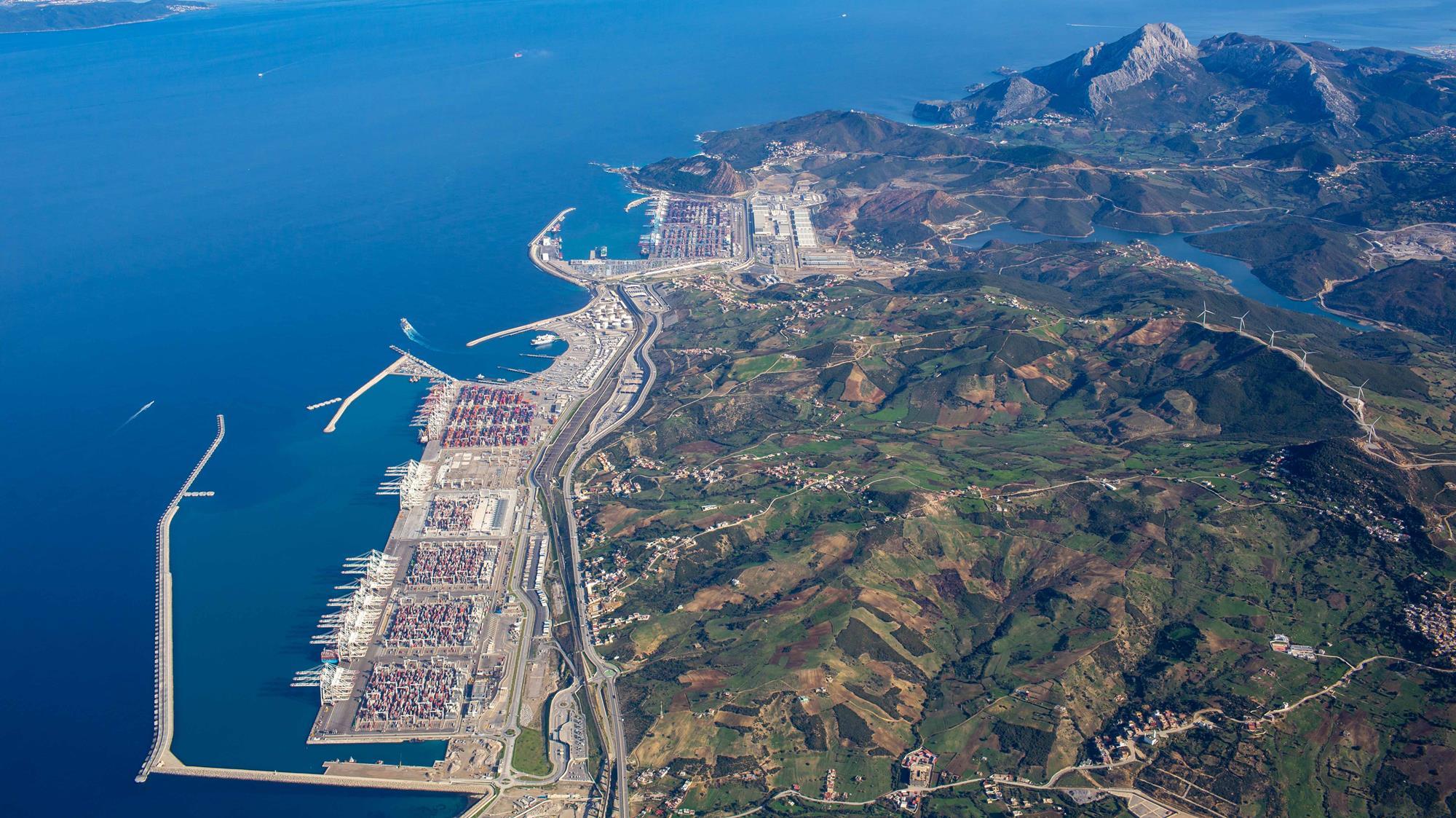
Another major component of Tanger Med’s transition is the deployment of Onshore Power Supply infrastructure.
OPS allows vessels at berth to connect to electricity from the port instead of running auxiliary engines while docked.
This can reduce emissions, fuel consumption and noise during port stays — an increasingly important issue for major ports operating under stricter environmental expectations.
At Tanger Med, the project is being rolled out in phases, with a long-term objective of nine connection points across the port complex.
A pilot phase has already been completed at Terminal TC4, where infrastructure was installed to power either one large vessel or two medium-sized vessels simultaneously.
If expanded effectively, OPS could become one of the port’s most important tools for reducing the environmental impact of maritime operations.
The strategic value is clear.
Ports that can offer lower-emission berthing may become more attractive to shipping lines and manufacturers trying to reduce supply-chain emissions.
For Tanger Med, this is where sustainability becomes a business advantage.
Circular Economy and Industrial Waste Management
Tanger Med’s sustainability strategy also extends to industrial waste management.
The port has launched an industrial waste sorting and recovery centre within its industrial platform. Covering more than 15,000 square metres, the facility is designed to process up to 29,000 tonnes of industrial waste per year.
The objective is to reduce landfilled waste while helping companies operating in Tanger Med’s industrial zones adopt stronger circular economy practices.
This matters because modern logistics hubs are no longer judged only by speed, scale and location.
They are increasingly judged by the environmental standards of the full ecosystem around them.
A port surrounded by industrial zones, factories, warehouses and export platforms must manage more than cargo movement. It must also manage industrial impact.
For Tanger Med, circular economy infrastructure strengthens both sustainability performance and industrial competitiveness.
Renewable Electricity as a Strategic Asset
Tanger Med’s decarbonisation strategy also includes a shift toward renewable electricity supply.
Through Power Purchase Agreements, the port complex has moved toward sourcing its electricity from renewable energy.
For a global logistics hub, renewable electricity is more than an environmental signal.
It can become a commercial advantage.
Manufacturers and shipping lines increasingly need to monitor emissions across their supply chains. A port that can show progress on renewable electricity, energy efficiency and lower-carbon operations may become more attractive to companies with ESG and carbon-reporting obligations.
That is particularly relevant for Morocco because its export model is closely tied to Europe.
As European supply chains become more sensitive to carbon exposure, Morocco’s logistics infrastructure must be able to support lower-carbon trade.
Tanger Med is one of the first places where that test becomes visible.
Why This Matters for Morocco
Tanger Med is not just a port.
It is one of Morocco’s most visible economic platforms.
Its development reflects several national priorities:
strengthening Morocco’s role in global trade
improving logistics competitiveness
attracting industrial investment
supporting export-oriented manufacturing
expanding renewable energy use
aligning infrastructure with future environmental standards
The port has already helped position Morocco as a trade and logistics hub.
Its green transition adds another layer to that positioning.
If successfully delivered, Tanger Med’s sustainability strategy could reinforce Morocco’s image as a country building infrastructure that is not only connected and competitive, but also aligned with the demands of a lower-carbon global economy.
That is important because the future of logistics will not be defined by speed alone.
It will also be defined by environmental credibility.
The Business Case for Sustainable Ports
Sustainability is becoming a commercial factor in global logistics.
Companies are under pressure to reduce emissions, monitor suppliers and manage supply-chain risk. Ports that can combine efficiency with lower-carbon operations may gain an advantage in future trade flows.
For Tanger Med, the business case rests on three points.
Operational efficiency: renewable energy and electrification can reduce emissions while supporting long-term energy resilience.
Supply-chain relevance: lower-carbon port operations can help Morocco remain attractive to export-oriented industries.
Investor credibility: infrastructure aligned with sustainability standards can appeal to companies and investors with ESG requirements.
That is where Tanger Med’s strategy becomes significant.
Its location helped make it important.
Its infrastructure helped make it competitive.
Its sustainability push may help define its next phase.
The Execution Risks
The ambition is clear, but delivery will determine the impact.
Large-scale sustainability projects require technical reliability, financing, operational coordination and consistent implementation.
Tanger Med’s strategy will depend on several execution tests:
Can renewable energy supply remain reliable at industrial scale?
Can OPS infrastructure be expanded across terminals without disrupting operations?
Can circular economy systems be adopted effectively by companies in the wider industrial platform?
Can emissions reductions be measured, verified and communicated credibly?
Can sustainability improve competitiveness without increasing operational friction?
These are not reasons to doubt the strategy.
They are the tests that will determine whether it becomes commercially meaningful.
For Morocco, the broader message is important: the country’s infrastructure strategy is moving beyond expansion alone.
The next stage is about competitiveness, sustainability and execution.
MMO Sustainable Logistics Dashboard: 2026
Solar energy and autonomy
Strategic upside: cleaner electricity, lower emissions and stronger energy resilience.
Execution risk: integrating renewable generation into port operations at scale.
Investor test: does renewable energy improve operational competitiveness, not only ESG positioning?
Onshore Power Supply
Strategic upside: reduced ship emissions, lower fuel use and quieter berth operations.
Execution risk: technical deployment across terminals and compatibility with vessel systems.
Investor test: can OPS become a practical operating standard rather than a limited pilot?
Circular economy infrastructure
Strategic upside: reduced landfill waste and stronger environmental standards across the industrial platform.
Execution risk: adoption by companies operating in the port’s ecosystem.
Investor test: are waste sorting and recovery systems embedded into daily industrial operations?
Renewable electricity sourcing
Strategic upside: lower-carbon logistics for export-facing manufacturers.
Execution risk: reliability, pricing and verification of clean energy supply.
Investor test: can companies using the port credibly reduce their supply-chain emissions profile?
Global trade competitiveness
Strategic upside: stronger appeal to manufacturers, shipping lines and ESG-sensitive investors.
Execution risk: sustainability claims must be backed by measurable operational performance.
Investor test: does the green transition make Tanger Med more competitive in real trade flows?
Final Perspective
Tanger Med’s green shift reflects a broader change in how Morocco is positioning its major infrastructure assets.
The port is not only connecting markets. It is adapting to a global trade system where environmental performance is becoming part of competitiveness.
For Tanger Med, the next chapter will not be defined only by port capacity, cargo volumes or maritime connectivity.
It will also be shaped by renewable energy, emissions reduction, circular economy practices and the ability to meet the standards of a lower-carbon global economy.
Connectivity made Tanger Med important. Sustainability may define its next competitive edge.