

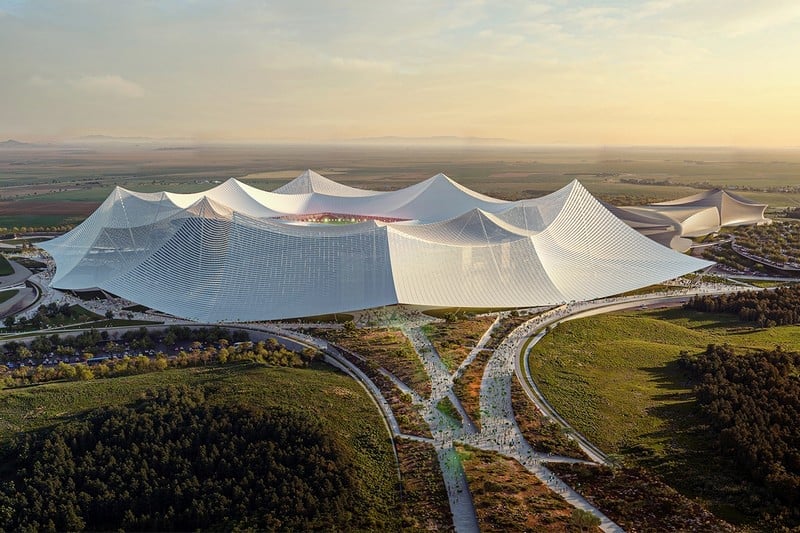
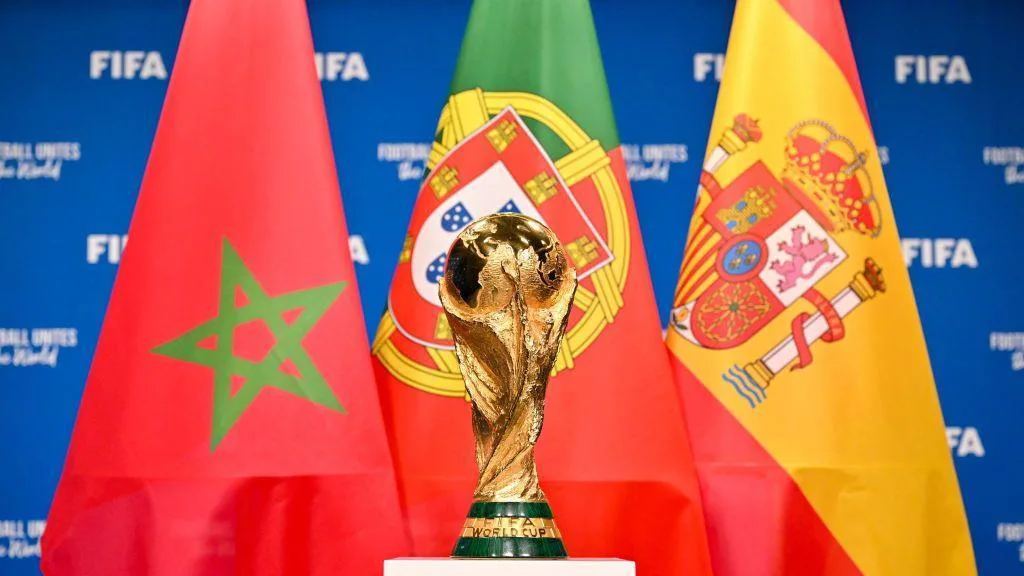
Morocco’s development pipeline is entering its most important execution phase in decades.
By 2030, the country is expected to host the FIFA World Cup alongside Spain and Portugal, expand airport and rail capacity, accelerate tourism infrastructure, scale industrial platforms, deepen renewable energy ambitions and strengthen water security through major desalination projects.
The scale is significant.
But the real story is not only the number of projects being launched. It is whether these projects can work together to reshape Morocco’s economic geography.
Airports, rail networks, ports, industrial zones, tourism assets, energy projects and desalination infrastructure are no longer isolated development files. They are becoming part of a wider national transformation strategy.
For investors, businesses and policymakers, the question is not whether Morocco has a major project pipeline.
It does.
The more important question is which projects will create lasting economic value beyond 2030.
The 2030 Development Cycle Is Already Underway
Morocco’s 2030 development cycle is being driven by several overlapping forces.
The first is the World Cup. Hosting the tournament has accelerated planning around airports, rail, stadiums, hotels, public spaces and urban mobility.
The second is industrial policy. Morocco is seeking to deepen its role in automotive, aerospace, batteries, logistics and export-oriented manufacturing.
The third is climate resilience. Water stress and energy security are pushing desalination, renewable energy and green hydrogen higher on the national agenda.
The fourth is regional competitiveness. Morocco is trying to strengthen its position as a platform between Europe, Africa and the Atlantic economy.
These forces are not separate.
They are converging into a development cycle where infrastructure, industry, tourism and sustainability increasingly reinforce each other.
The opportunity is large.
The execution burden is larger.
Airports: Expanding the Entry Gates
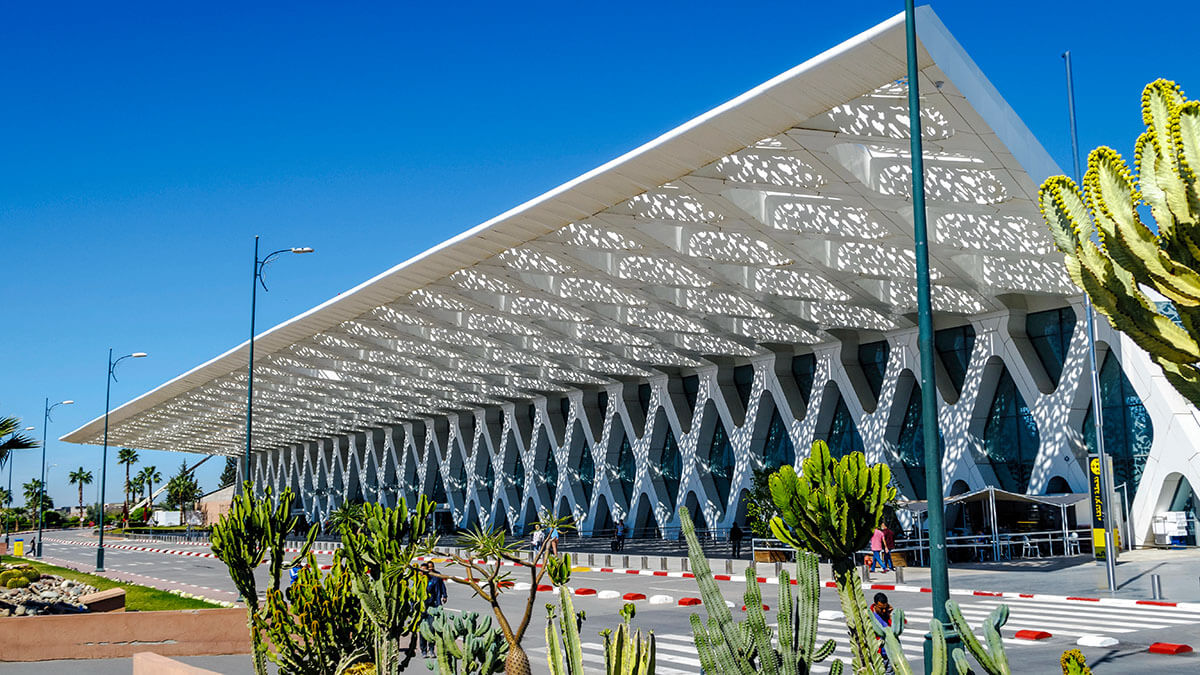
Airport expansion is one of the clearest signals of Morocco’s 2030 ambition.
Morocco has launched an “Airports 2030” programme designed to increase national airport capacity from 34 million passengers in 2024 to 80 million by 2030. The programme has been reported at 28 billion dirhams, while Reuters has separately reported Morocco’s plan to invest 38 billion dirhams to raise passenger capacity ahead of the World Cup.
The African Development Bank has also approved €270 million in financing for airport infrastructure upgrades as Morocco prepares for the 2030 tournament.
The airport strategy matters beyond football.
It can support tourism, business travel, diaspora mobility, MICE tourism, aviation services and regional connectivity. Casablanca, Marrakech, Rabat and Tangier are likely to be especially important because of their role as host-city and gateway markets.
The risk is that airport expansion becomes measured only by headline capacity.
For long-term value, Morocco needs passenger flows, airline connectivity, ground transport, hotel capacity and service quality to scale together.
The airport is only the entry gate.
The economic value is created after the passenger leaves the terminal.
Rail: The Backbone of the 2030 Mobility Strategy
Rail is becoming one of the most strategically important parts of Morocco’s development pipeline.
Morocco launched a 96 billion dirham rail expansion plan, including the high-speed rail extension to Marrakech ahead of the 2030 World Cup. The programme is designed to expand high-speed, intercity and urban rail networks, strengthening the country’s national mobility system.
The Kenitra-Marrakech high-speed line is particularly significant.
It would extend Morocco’s high-speed rail geography beyond the existing Tangier-Casablanca axis and connect the country’s main tourist hub more directly to the national rail network.
Reuters has also reported that ONCF is acquiring new trains as part of preparations for the rail expansion, including fast trains and broader fleet upgrades.
For Morocco, this is not only a transport story.
Rail can change the economics of tourism, commuting, urban expansion, real estate, logistics and regional development.
If executed well, the rail network can compress travel times between major cities and support a more integrated national economy.
The risk is delivery complexity.
High-speed rail expansion requires land, engineering, financing, procurement, coordination and technical execution at scale.
Rail can become one of Morocco’s most transformative projects by 2030 — if delivery keeps pace with ambition.
Ports and Logistics: Turning Connectivity Into Economic Value
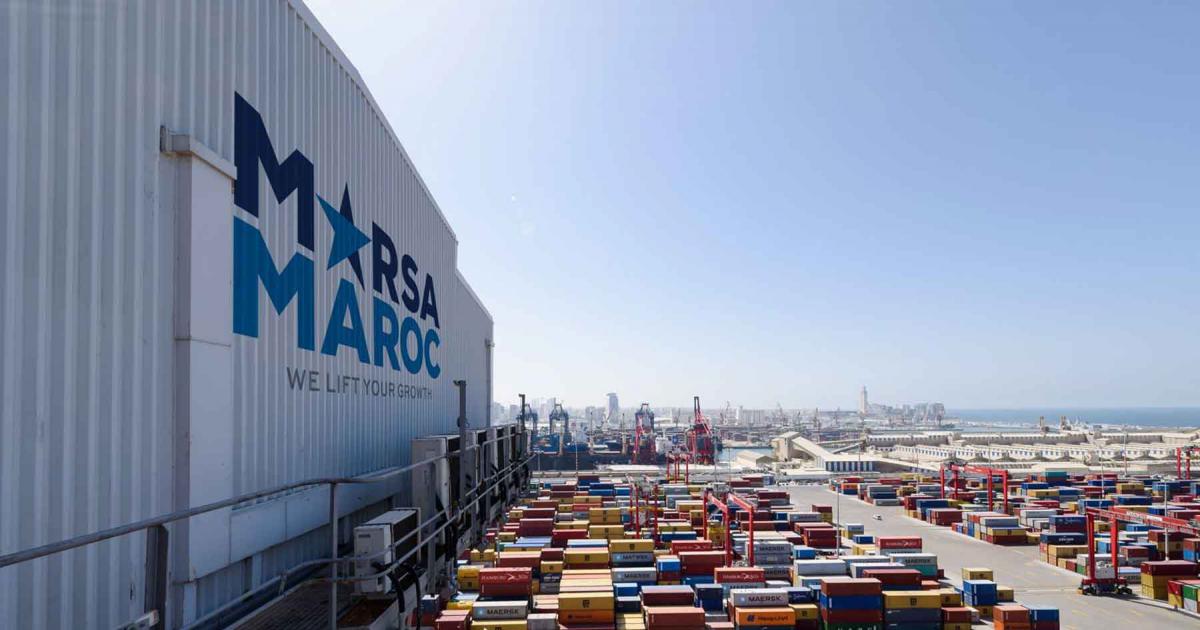
Morocco’s port and logistics system remains central to its development model.
Tanger Med has already established the country as a major trade platform. The next phase is about converting logistics capacity into higher-value industrial and export activity.
This matters because ports do not create full economic value alone.
The value comes when port capacity is connected to industrial zones, customs systems, highways, warehouses, cold-chain infrastructure and supplier ecosystems.
By 2030, Morocco’s logistics opportunity will likely be concentrated around three functions:
export manufacturing
regional distribution
cold-chain and agribusiness logistics
Tanger Med remains the flagship, but other Atlantic and regional corridors also matter for food exports, fisheries, tourism, industrial movement and domestic distribution.
The core question for investors is not whether Morocco has port capacity.
It is whether the inland execution layer — roads, customs, land, labour and warehousing — can support the next stage of trade growth.
Industrial Platforms: Automotive, Batteries and Aerospace
Morocco’s development pipeline is not only about public infrastructure.
Industrial platforms are becoming equally important.
The automotive sector remains the strongest example. Morocco’s industrial strategy is moving beyond assembly toward higher-value components, supplier ecosystems and electric mobility.
China’s Gotion High-Tech signed a deal for a $1.3 billion EV battery plant in Kenitra, with production expected in 2026 and potential expansion toward a much larger battery platform.
Battery materials are also part of the story. Chinese EV battery maker BTR announced a 3 billion dirham cathode plant in Morocco, with planned first output in 2026 and capacity of 50,000 tonnes.
Aerospace remains important around Casablanca-Nouaceur, while automotive and electric mobility are increasingly concentrated around Kenitra and other industrial corridors.
The 2030 question is whether these platforms create deeper supplier networks, skilled jobs and export capacity.
The upside is industrial upgrading.
The risk is bottlenecks in talent, utilities, supplier depth and local sourcing.
Morocco’s industrial future will be judged not by the announcement of anchor projects, but by the ecosystem that forms around them.
Tourism and Hospitality: The 2030 Demand Test
Tourism-related development is one of the most visible parts of Morocco’s 2030 project cycle.
Airport upgrades, rail expansion, stadium improvements, urban upgrades and destination development are all likely to support tourism capacity ahead of the World Cup.
But the real test is post-event demand.
Marrakech will remain one of Morocco’s strongest international tourism brands. Casablanca and Rabat can benefit from business travel and events. Tangier has rising international appeal through infrastructure and proximity to Europe. Agadir and coastal destinations remain important for leisure and long-stay visitors.
For developers and hospitality investors, the opportunity is clear.
More passengers, better transport and global visibility can support hotels, serviced apartments, restaurants, event spaces and tourism services.
The risk is equally clear.
Some projects may be priced on tournament optimism rather than long-term occupancy, service quality and market depth.
The strongest tourism investments will be those that remain economically useful after 2030.
Desalination: The Infrastructure Behind Growth
Water security is becoming one of Morocco’s most important development constraints.
Agriculture, urban growth, tourism, industry and green hydrogen all depend on reliable water planning.
That makes desalination a strategic infrastructure class.
The Casablanca seawater desalination plant is one of the clearest examples. The first phase is expected to provide 548,000 cubic metres per day, with capacity expandable to 822,000 cubic metres per day by 2030. Its annual production capacity is expected to reach 300 million cubic metres.
This matters because water infrastructure can determine where future growth is viable.
A hotel, industrial zone, agricultural project or green hydrogen facility connected to secure water infrastructure has a different risk profile from one exposed to groundwater stress or uncertain supply.
By 2030, water will no longer be a background issue in Moroccan development.
It will be one of the core tests of project bankability.
Green Hydrogen and Renewable Energy: The High-Ambition Sector
Green hydrogen is one of Morocco’s highest-ambition development sectors.
The “Morocco Offer” is designed to attract investment across green hydrogen and derivatives such as green ammonia and industrial fuels. In 2026, the government moved forward with preliminary land reservation agreements for selected projects under the framework.
The strategic logic is clear.
Morocco has renewable energy resources, land availability, port access and proximity to European demand. If those elements can be combined effectively, the country could become a platform for lower-carbon fuels and industrial products.
But this is also one of the most difficult sectors to deliver.
Green hydrogen projects require huge capital, secured land, renewable energy capacity, desalinated water, port infrastructure, bankable offtake agreements and long-term regulatory stability.
For investors, the distinction is critical.
Green hydrogen is one of Morocco’s most promising future sectors — but also one of the least forgiving if execution assumptions are weak.
Urban Development: Cities Under Pressure to Modernise
Urban development is the visible layer of Morocco’s project pipeline.
As cities expand, demand is rising for housing, transport, public spaces, commercial areas, mixed-use districts and upgraded services.
World Cup preparations add pressure to improve urban mobility, visitor experience and city presentation.
But urban development is not only about image.
It affects daily productivity, housing affordability, investment attractiveness, tourism, commuting and quality of life.
The strongest urban projects will be those that solve real city problems:
- mobility
- housing supply
- public space
- mixed-use density
- transport access
- service quality
The weakest projects will be those that are designed mainly for branding or short-term visibility.
By 2030, Moroccan cities will be judged not only by what they build, but by how well those projects function for residents and businesses.
MMO 2030 Project Pipeline Dashboard
Airports 2030
Strategic upside: tourism, business travel, diaspora mobility and World Cup readiness.
Execution risk: capacity expansion without matching airline connectivity, ground transport and service quality.
Investor test: does the airport upgrade support long-term passenger demand beyond 2030?
High-speed rail and national mobility
Strategic upside: faster city-to-city travel, tourism integration, commuting and regional development.
Execution risk: cost overruns, procurement delays and complex project coordination.
Investor test: does the rail corridor unlock real economic activity or only event-time movement?
Industrial platforms
Strategic upside: automotive, EV batteries, aerospace and supplier ecosystems.
Execution risk: technical talent, utilities, supplier depth and local sourcing.
Investor test: is the project anchored in a real industrial corridor with skilled labour and export demand?
Desalination and water security
Strategic upside: resilience for cities, tourism, agriculture and industry.
Execution risk: energy cost, distribution infrastructure and capital intensity.
Investor test: is the project connected to secured water infrastructure?
Green hydrogen and renewables
Strategic upside: lower-carbon exports, green ammonia, industrial fuels and energy transition.
Execution risk: bankability, offtake agreements, land, water and port access.
Investor test: does the project have credible buyers and infrastructure, not only strategic ambition?
Tourism and hospitality
Strategic upside: World Cup visibility, airport expansion and destination upgrades.
Execution risk: overbuilding, event-cycle speculation and post-2030 occupancy gaps.
Investor test: is demand structural beyond tournament-related peaks?
What This Means for Investors and Businesses
Morocco’s development pipeline offers a wide range of opportunities.
Construction, engineering, transport, hotels, logistics, water infrastructure, energy, industrial services, real estate and digital systems can all benefit from the 2030 cycle.
But investors should avoid treating all development projects as equally bankable.
The strongest opportunities will likely share five characteristics:
They are tied to real corridors.
They solve infrastructure constraints.
They have long-term demand beyond 2030.
They are supported by utilities, land and approvals.
They have credible operators and execution capacity.
The weakest projects will be those that rely mainly on future visibility, event branding or speculative pricing.
The 2030 cycle will create opportunity.
It will also expose weak underwriting.
Final Perspective
Morocco’s major development projects are reshaping the country’s economic landscape.
Airports, rail, ports, industrial zones, desalination plants, renewable energy projects, tourism assets and urban upgrades are not separate stories. They are part of a broader attempt to build a more connected, resilient and competitive economy.
The scale is impressive.
But scale alone does not create value.
Projects create capacity. Execution creates impact. Post-2030 utility creates legacy.
That is the real test of Morocco’s development pipeline by 2030.