

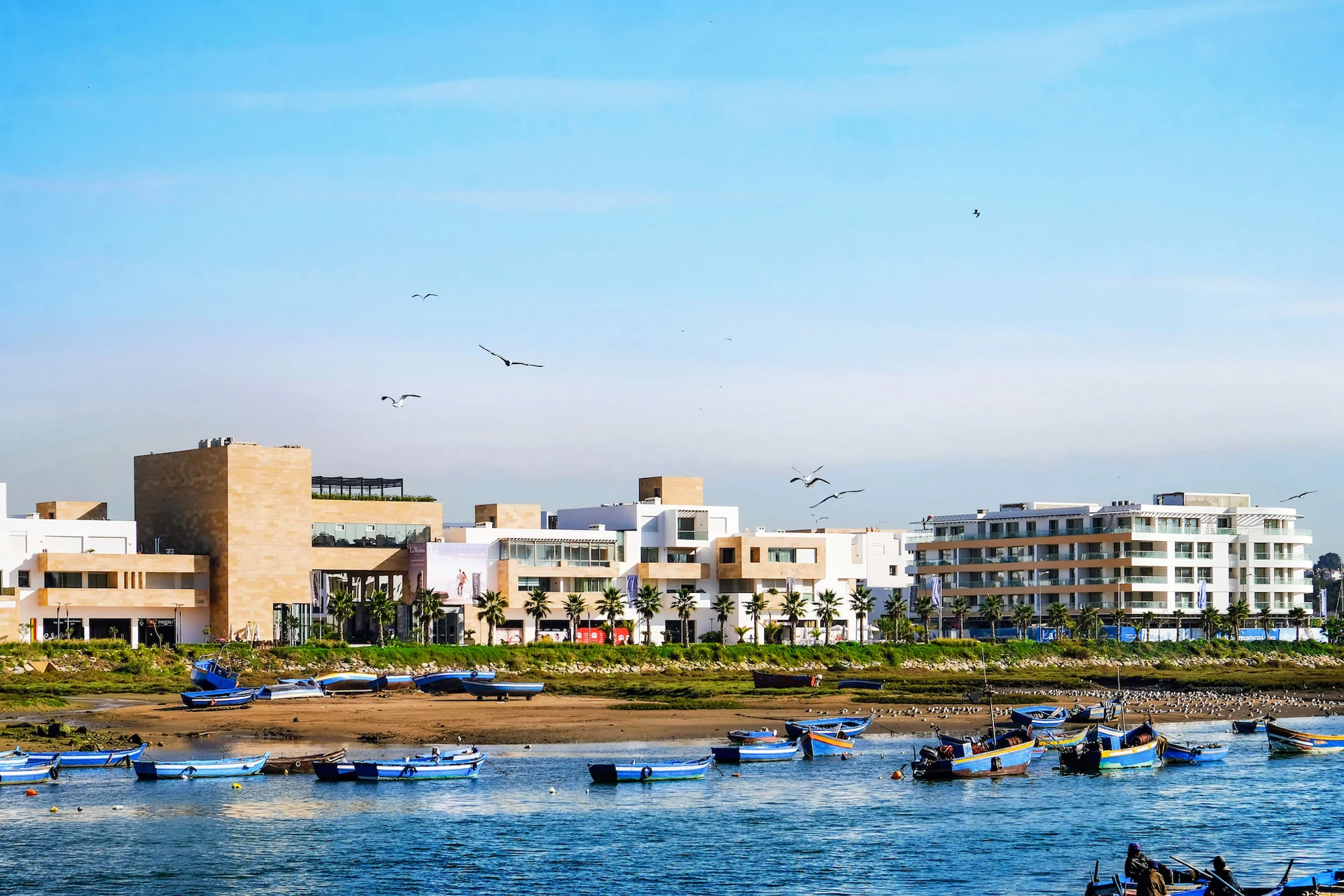
Morocco’s coastal real estate is no longer only a lifestyle market. It is becoming an institutional allocation trade linked to tourism growth, hotel capacity, branded residences, airport expansion and 2030 positioning.
The demand signal is already visible. Morocco welcomed 19.8 million tourists in 2025, up 14% year-on-year, while tourism revenues reached 124 billion dirhams in the first 11 months of the year. In Q1 2026, arrivals rose another 7% to 4.3 million, with Morocco still targeting 26 million visitors by 2030.
Morocco Waterfront Signal
2025 tourists: 19.8 million
2025 tourism growth: +14%
Q1 2026 arrivals: 4.3 million
2030 target: 26 million visitors
Q3 2025 real estate price index: +1.1% quarter-on-quarter
Q3 2025 transactions: +14% quarter-on-quarter
Bank Al-Maghrib and ANCFCC reported that Morocco’s Real Estate Asset Price Index rose 1.1% in Q3 2025, while transactions increased 14% from the previous quarter. The national market is not in a broad speculative boom; the investable story is selective liquidity moving toward scarce, serviceable coastal assets.
The high-alpha question is not whether Morocco’s coastline is attractive. The market already knows that. The question is whether strategic waterfront assets can convert tourism growth into institutional-grade income, liquidity and exit value.
The Disruption: Tourism Growth Is Repricing Coastal Land
Tourism demand is rising faster than Morocco’s premium coastal product base. That creates a bottleneck: investors are not only looking for land by the sea; they are looking for assets that can absorb visitors, generate managed income and remain liquid after 2030.
Demand-to-asset map
Tourism growth ──► hotel pressure ──► serviced residence demand ──► waterfront scarcity ──► institutional capital allocation
The strongest coastal assets are not necessarily the most beautiful. They are the ones with airport access, utilities, title clarity, hospitality management, rental governance and year-round demand.
That is why the next phase of Moroccan waterfront real estate will be priced less by emotion and more by operating infrastructure.
Tangier and Tamuda Bay: The Mobility Premium
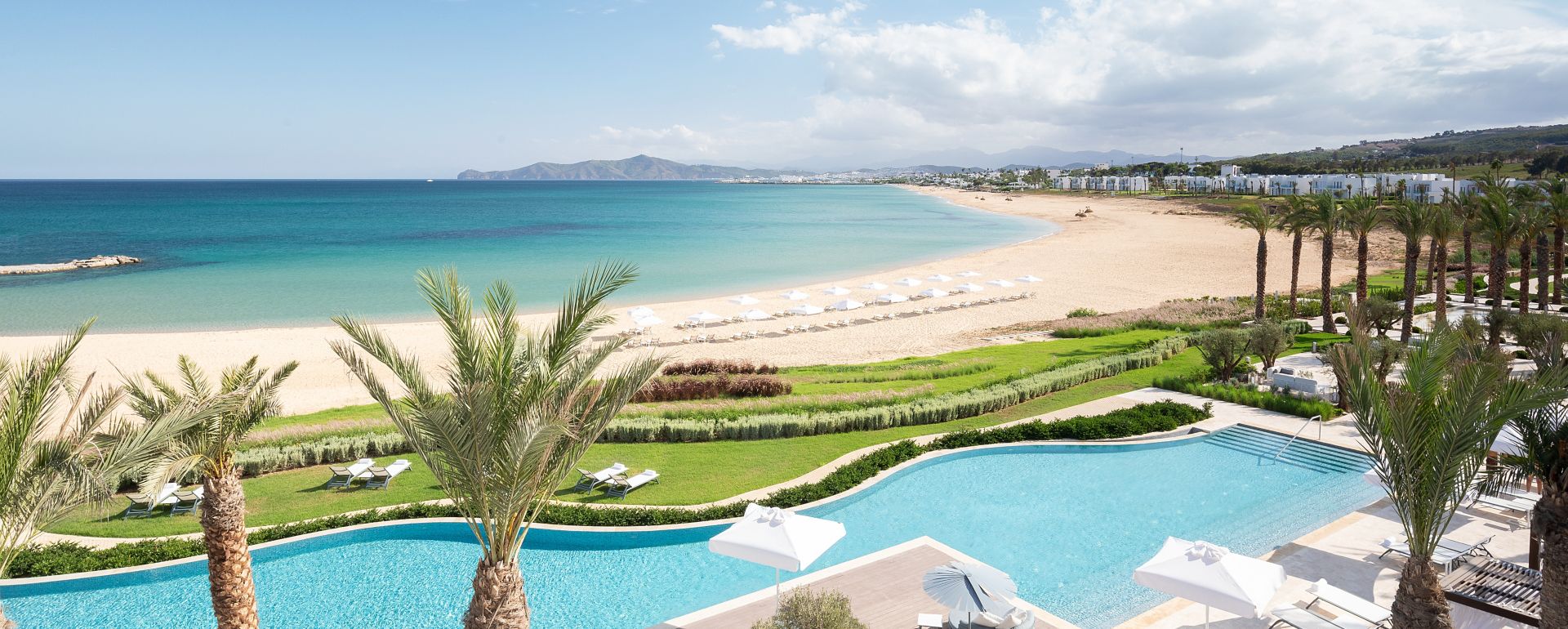
Northern Morocco has a distinct advantage: proximity to Europe.
Tangier and Tamuda Bay sit inside a Europe-facing mobility corridor connected to Tanger Med, Spain, diaspora flows, business travel and premium summer demand. Luxury hotels such as Royal Mansour Tamuda Bay, Sofitel Tamuda Bay and Banyan Tree Tamouda Bay show that the region already has an emerging high-end hospitality base.
Northern waterfront map
Spain proximity ──► diaspora mobility ──► premium hospitality ──► serviced residences ──► rental yield potential
The investment test is seasonality. Northern waterfront assets must convert summer intensity into longer-season demand through conferences, wellness, executive stays, diaspora use and managed rental structures.
Atlantic Coast: The Scale Premium
The Atlantic coast offers a different thesis: scale.
Casablanca, Rabat-Salé, El Jadida, Taghazout, Agadir and Dakhla each sit inside different demand pools: corporate housing, tourism, surf and wellness, family leisure, hospitality investment and future event-driven travel.
The Mohammed VI Tower in Salé adds another signal: waterfront-adjacent mixed-use assets are being used to position Rabat-Salé as a business and tourism zone, with luxury apartments, a Waldorf Astoria hotel, offices and retail inside a $700 million development.
Atlantic waterfront map
Airport access ──► hotel pipeline ──► mixed-use development ──► serviced housing ──► institutional exit value
The Atlantic opportunity is less about exclusivity alone and more about absorption capacity. Assets that can serve tourism, corporate demand and long-stay residents will price better than isolated second-home projects.
The Institutional Test: Yield, Not Views
Institutional capital does not underwrite sunsets. It underwrites cash flow.
Moroccan waterfront projects must now answer five questions before they deserve premium pricing:
Investment underwriting test
Title clarity
Year-round occupancy
Utility and water security
Professional property management
Net yield after service charges and taxes
Exit liquidity
This is where many coastal assets will separate. A beautiful villa with weak management is a lifestyle purchase. A serviced waterfront asset with rental reporting, maintenance reserves and operator discipline is an investment product.
The market will reward assets that turn coastal scarcity into predictable income.
The 2030 Effect: Catalyst, Not Guarantee
The 2030 World Cup creates urgency, but it does not guarantee returns.
Tourism growth, airport expansion and international visibility can push coastal demand higher. But investors must avoid confusing event-driven attention with permanent asset performance.
2030 conversion map
World Cup visibility ──► visitor growth ──► coastal demand ──► rental compression ──► post-event utilisation test
The winners will be assets that remain useful after 2030: hotels, serviced residences, branded apartments, corporate housing and mixed-use coastal districts with real demand beyond tournament traffic.
The losers will be speculative projects priced only on “2030 hype” without operational depth.
Investor Takeaway
Morocco’s waterfront premium is becoming selective.
Investment implications
Tourism growth supports coastal demand, but not all coastlines will outperform.
Tangier and Tamuda Bay carry a mobility premium linked to Europe.
Atlantic assets carry a scale premium linked to tourism, mixed use and business travel.
Managed income matters more than raw land appreciation.
Water, utilities, title and property management are now pricing variables.
2030 will reward operational assets, not speculative land stories.
The investor question is no longer whether Moroccan coastal property is desirable. It is whether it is institutional enough to hold capital.
MMO Strategic Scorecard: Waterfront Premium
Strategic Vector: Tourism Demand
Current Market Signal: 19.8 million tourists in 2025; 26 million target by 2030.
Institutional Execution Test: Converting arrivals into year-round coastal occupancy.
Strategic Vector: Market Liquidity
Current Market Signal: Q3 2025 property transactions rose 14% quarter-on-quarter.
Institutional Execution Test: Separating liquid premium assets from speculative inventory.
Strategic Vector: North Coast
Current Market Signal: Tangier/Tamuda Bay supported by Europe proximity and luxury hospitality.
Institutional Execution Test: Extending demand beyond summer peaks.
Strategic Vector: Atlantic Scale
Current Market Signal: Rabat-Salé, Casablanca, Taghazout, Agadir and Dakhla offer mixed demand pools.
Institutional Execution Test: Building assets with corporate, tourism and long-stay utility.
Strategic Vector: Managed Yield
Current Market Signal: Buyers increasingly demand service, rental reporting and operator discipline.
Institutional Execution Test: Delivering net yield after fees, taxes and maintenance.
Strategic Vector: 2030 Catalyst
Current Market Signal: World Cup visibility is accelerating tourism and infrastructure attention.
Institutional Execution Test: Sustaining utilisation after event-driven demand normalises.
What Investors Must Watch Next
1. Hotel and serviced-residence pipeline
Track whether coastal projects disclose operators, room counts, delivery timelines and management structures.
2. Net-yield transparency
Watch whether developers publish realistic rental assumptions, service charges, maintenance reserves and owner-use rules.
3. Infrastructure delivery
Monitor airport access, water security, roads and utilities across Tangier, Tamuda Bay, Rabat-Salé, Taghazout, Agadir and Dakhla.
Final Outlook
Morocco’s coastline is becoming a capital-allocation map.
The premium will not go to every beachfront asset. It will go to coastal projects that combine location, infrastructure, management, liquidity and post-2030 utility.
Tangier and Tamuda Bay offer mobility and Europe-facing demand. The Atlantic coast offers scale, mixed-use depth and tourism absorption. Both can attract institutional capital, but only if developers turn scarcity into income.
For investors, the next Moroccan waterfront cycle will be priced less by views and more by governance.
Executive Engagement
Are you operating in coastal real estate, hospitality, branded residences, serviced apartments, tourism infrastructure, property management or Morocco-focused investment?
MMO is tracking how Morocco’s strategic coastline is attracting institutional capital.
Share your operational insights with our editorial team or contact us with data on coastal yields, operator agreements, serviced-residence demand, hotel pipelines, water security or post-2030 utilisation.