

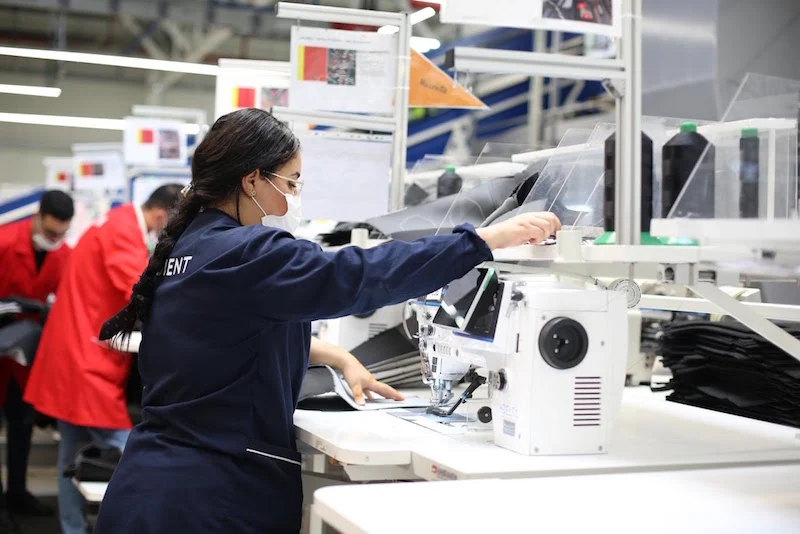
Morocco is not replacing Asia. It is becoming a balance-sheet hedge for Western manufacturers trying to cut transit risk, working-capital drag and tariff exposure without absorbing Western European cost structures.
The latest industrial signals are concrete: Stellantis is investing €1.2 billion to lift its Kenitra capacity toward 535,000 vehicles annually; Safran is building a €200 million LEAP-1A engine assembly line and a €120 million MRO facility near Casablanca; and BTR is developing a 3 billion dirham cathode plant near Tangier with planned annual capacity of 50,000 tonnes.
Morocco Corridor Signal
Stellantis Kenitra expansion: €1.2 billion
Target capacity: 535,000 vehicles annually
Local sourcing target: 75% by 2030, up from 69%
Safran engine assembly: €200 million
Safran MRO facility: €120 million
BTR cathode plant: 3 billion dirhams
BTR target capacity: 50,000 tonnes annually
Tanger Med 2025 container traffic: 11.1 million TEUs
The high-alpha question is not whether Morocco is close to Europe. The market knows that. The question is whether Morocco can compress cash-conversion cycles, clear rules-of-origin thresholds and absorb high-value industrial functions at a cost below Europe and a risk profile below Asia.
The Disruption: Nearshoring Is a Working-Capital Trade
Friend-shoring is not only geopolitics. It is corporate finance.
A sub-assembly shipped from Shanghai to Stuttgart can spend roughly 40 days in ocean and inland transit. A Tangier-to-Stuttgart movement through Tanger Med and European road/short-sea corridors can compress that window toward 4–5 days.
Cash-conversion map
Shanghai sourcing ──► 40-day transit exposure ──► higher safety stock ──► working-capital lock-up ──► lower ROIC
Tangier sourcing ──► 4–5 day corridor ──► lower inventory buffer ──► cash release ──► stronger ROIC
Cutting roughly 35 days from the cash-to-cash cycle can reduce inventory carrying costs by an estimated 12%–15% annually on the affected inventory block. For Tier-1 automotive, aerospace and battery suppliers, that is not a logistics footnote; it is operating cash flow.
Morocco operates as a structural geographical circuit-breaker, enabling Western multinationals to compress transit-risk premiums without absorbing Western European cost structures.
Automotive: The Localisation Gap Is the Investment Map
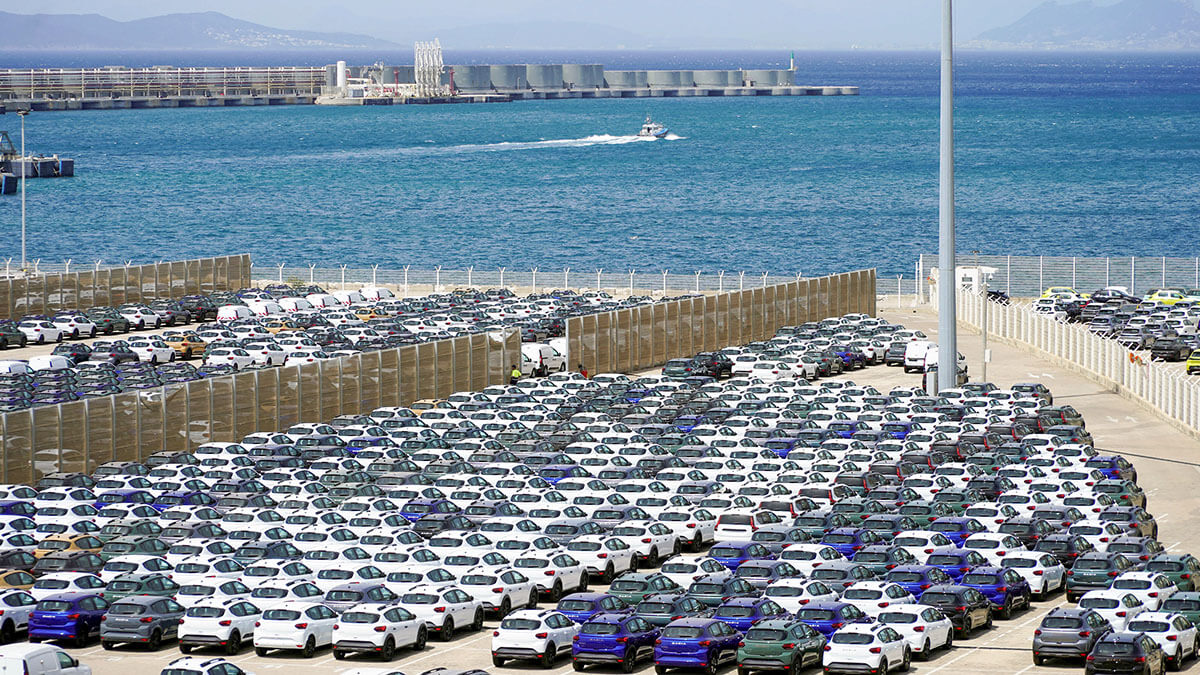
Stellantis’ Kenitra expansion is the anchor. The plant is moving toward 535,000 vehicles annually, with Morocco targeting local sourcing of 75% by 2030, up from 69%.
The obvious story is the 75% target. The investable story is the remaining 25%.
Localisation gap map
Vehicle assembly ──► 69% local sourcing ──► 75% target ──► remaining gap ──► electronics, sensors, semiconductors, specialised steel ──► FDI/JV opportunity
The missing supply-chain pieces are higher-value: engine electronics, advanced sensors, semiconductor-linked modules and deep-drawn specialised steel sheets. Those gaps define where foreign private equity, strategic suppliers and joint-venture capital can enter Morocco’s special economic zones.
The margin thesis is clear. Higher local content reduces import dependency, shortens lead times and improves rules-of-origin credibility. The execution risk is equally clear: quality control, labour training, supplier finance and energy pricing must scale with the OEMs.
Rules of Origin: Why BTR Is Building Cathodes, Not Boxes
Battery materials expose the legal arbitrage behind the Morocco corridor.
Under EU-Morocco trade logic, tariff-free access requires genuine local transformation, not cosmetic assembly. In practice, battery and automotive suppliers must prove substantial chemical or structural processing to clear rules-of-origin tests and avoid being treated as simple re-export platforms.
That is why BTR’s Moroccan investment matters. The company is not only setting up pack assembly; it is building a cathode-material plant near Tangier with planned capacity of 50,000 tonnes annually, with first output of 25,000 tonnesexpected in 2026.
Tariff-arbitrage map
Chinese input base ──► Moroccan cathode synthesis ──► local transformation evidence ──► EU rules-of-origin clearance ──► European OEM access
The investment logic is legal as much as logistical. Morocco gives Chinese and Western capital a platform to reconfigure supply chains around European market access, tariff optimisation and traceability.
The risk is documentation. If local transformation is too thin, the tariff advantage collapses.
Aerospace: MRO Is the Higher-Margin Signal
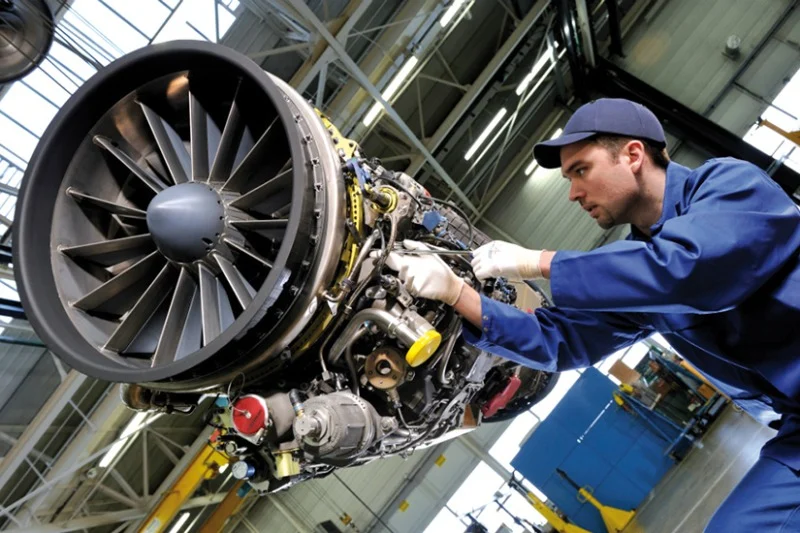
Safran’s Morocco investment should not be read only as another factory announcement.
The company is creating a LEAP-1A engine assembly line expected to produce 350 engines annually by 2028, alongside a €120 million maintenance, repair and overhaul facility near Casablanca expected to open in 2027 with capacity for 150 engines per year.
The MRO layer is the real re-rating signal. In aerospace consulting, MRO margins can reach roughly 15%–20%, compared with 5%–8% for lower-value OEM component manufacturing.
Aerospace upgrade map
Component manufacturing ──► engine assembly ──► LEAP-1A capability ──► MRO services ──► higher-margin engineering labour
Morocco is moving from metal-bashing into engineering services. That matters because engine overhaul requires certified technicians, process discipline, quality systems and long-term customer trust.
If Safran’s MRO hub performs, Morocco’s labour index is no longer priced only as low-cost manufacturing. It begins to price as specialised industrial talent.
Tanger Med: The Transshipment Moat
Tanger Med functions as a macro transshipment moat, converting oceanic volume into high-velocity supply-chain liquidity.
In 2025, Tanger Med handled 11,106,164 TEUs, up 8.4% year-on-year, driven partly by the latest TC4 terminal extension operated by APM Terminals.
Factory-to-Europe map
Supplier park ──► customs clearance ──► Tanger Med ──► short-sea crossing ──► EU distribution ──► lower transit-risk premium
Tanger Med gives Morocco the physical liquidity behind the corridor. Without port velocity, the nearshoring thesis becomes a factory story. With port velocity, it becomes a balance-sheet story.
Investor Takeaway
Morocco is becoming a hedging instrument for Western industrial capital.
Investment implications
Working-capital arbitrage is the core nearshoring math.
Localisation gaps define the highest-alpha FDI opportunities.
Rules-of-origin compliance decides tariff value.
MRO upgrades re-rate Morocco’s labour base.
Tanger Med converts proximity into supply-chain liquidity.
Energy, skills and documentation remain the execution gates.
The investor question is no longer whether Morocco can attract factories. It can.
The question is whether Morocco can convert proximity into ROIC improvement.
MMO Strategic Scorecard: Morocco Corridor
Strategic Vector: Cash Cycle
Current Market Signal: Tangier-to-Europe transit can compress Asia-linked lead times by about 35 days.
Institutional Execution Test: Converting shorter transit into lower inventory carrying costs.
Strategic Vector: Auto Gap
Current Market Signal: Local sourcing target: 75% by 2030, up from 69%.
Institutional Execution Test: Filling electronics, sensors and specialised steel gaps.
Strategic Vector: RoO Gate
Current Market Signal: BTR cathode plant targets 50,000 tonnes annually.
Institutional Execution Test: Proving substantial local transformation for EU access.
Strategic Vector: MRO Yield
Current Market Signal: Safran MRO facility targets 150 engines yearly from 2027.
Institutional Execution Test: Capturing high-margin certified engineering work.
Strategic Vector: Port Moat
Current Market Signal: Tanger Med handled 11.1 million TEUs in 2025.
Institutional Execution Test: Preserving customs speed under higher industrial flows.
Strategic Vector: WACC Hedge
Current Market Signal: Western firms are diversifying away from single-region Asian exposure.
Institutional Execution Test: Reducing supply risk without importing European cost structures.
What Investors Must Watch Next
1. Localisation gap closure
Track whether Morocco attracts Tier-2 and Tier-3 suppliers in electronics, sensors, semiconductors and specialised steel.
2. Rules-of-origin execution
Watch whether BTR and other battery-material projects prove enough local transformation to secure European market access.
3. Safran MRO ramp-up
Monitor whether the Casablanca MRO facility opens on schedule and reaches certified engine-overhaul capacity without talent bottlenecks.
Final Outlook
Morocco is not a standalone manufacturing story. It is becoming a de-risking instrument inside Western industrial strategy.
The corridor compresses transit time, reduces inventory exposure, supports tariff optimisation and offers proximity to Europe without full EU cost absorption. Automotive provides scale, aerospace provides value-add, batteries provide regulatory arbitrage and Tanger Med provides logistics liquidity.
The opportunity is real, but not automatic. Morocco must close supplier gaps, prove rules-of-origin compliance, retain skilled aerospace labour and protect port velocity.
If those conditions hold, the Morocco corridor becomes more than nearshoring.
It becomes a permanent balance-sheet hedge against Asia-linked volatility.
Executive Engagement
Are you operating in automotive, aerospace, EV batteries, logistics, industrial real estate, customs, manufacturing, private equity or Morocco-focused investment?
MMO is tracking how Morocco is becoming a Western supply-chain hedge against Asia.
Share your operational insights with our editorial team or contact us with data on supplier localisation, inventory costs, rules-of-origin compliance, MRO margins, port velocity or FDI execution.