

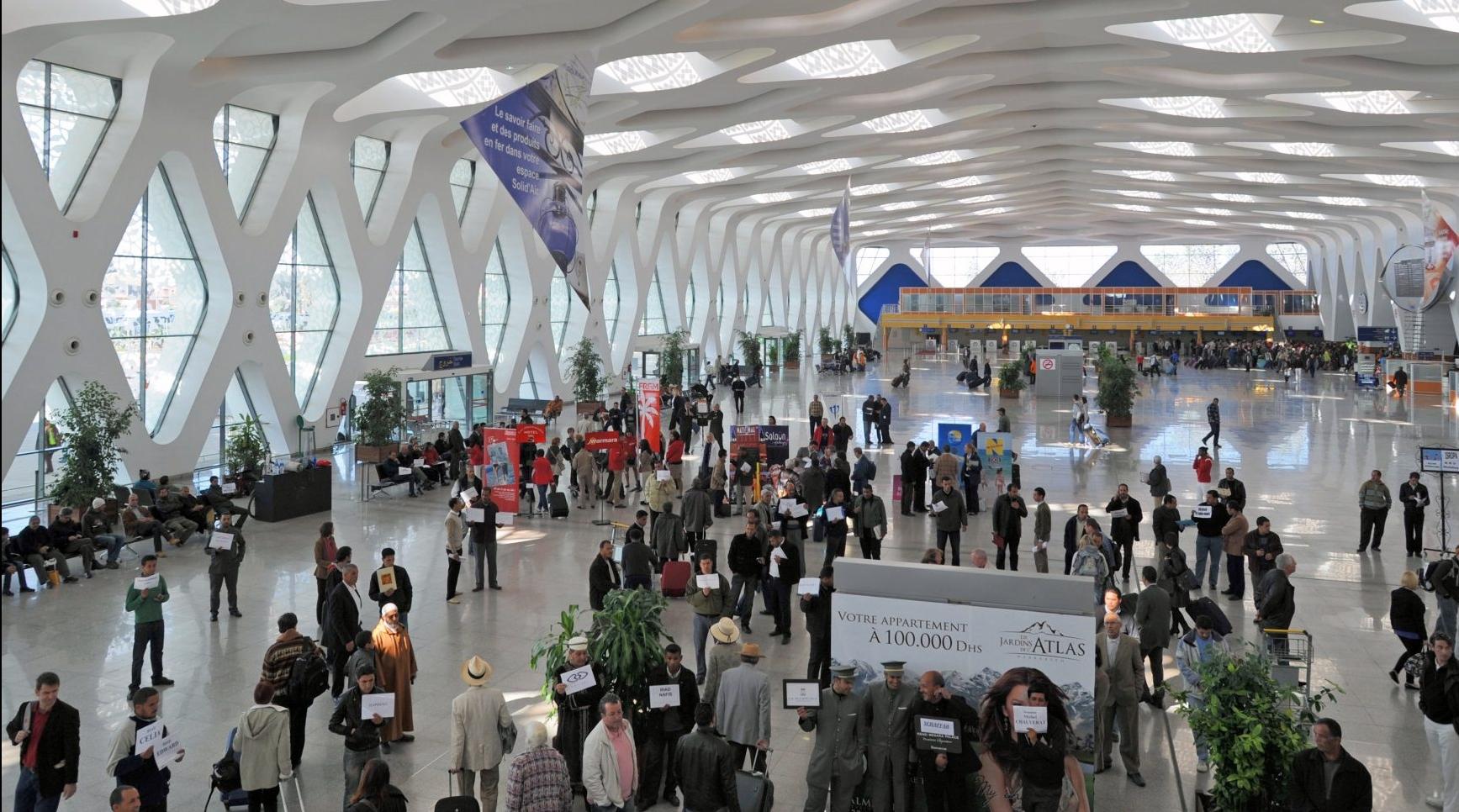
Morocco is not simply expanding airports for the 2030 FIFA World Cup. It is rebuilding national aviation capacity into a business-infrastructure platform for tourism, diaspora mobility, conference demand, Royal Air Maroc’s hub strategy and post-2030 capital flows.
The government signed a 2025–2030 agreement with ONDA, Morocco’s airport authority, covering MAD 38 billion, or roughly $4.2 billion, in airport investment. Reuters reported that MAD 25 billion is allocated to airport expansion and MAD 13 billion to maintenance and land acquisition, with national airport capacity targeted to rise from 38 millionpassengers to 80 million by 2030.
ONDA 2030 CapEx Signal
Total programme: MAD 38 billion
Expansion allocation: MAD 25 billion
Maintenance and land acquisition: MAD 13 billion
Current national capacity: 38 million passengers
2030 target capacity: 80 million passengers
AfDB financing: €270 million / $316 million
The African Development Bank approved €270 million, approximately $316 million, to support Morocco’s airport upgrades ahead of 2030, with financing directed toward terminal expansion and equipment modernisation at key destinations including Marrakech, Agadir, Tangier and Fez.
The investment thesis is not passenger growth alone. Morocco’s aviation blitz is a capacity-stress trade: ONDA must double national throughput before 2030 while ensuring the assets remain commercially productive after the tournament cycle ends.
The Disruption: Tourism Demand Is Outrunning Airport Capacity

Morocco’s aviation system is being pushed by two simultaneous demand shocks: tourism growth and World Cup preparation. Visitor traffic is rising before the tournament infrastructure is complete, forcing airports to process higher volumes while construction, terminal upgrades and capacity expansions accelerate in parallel.
Reuters reported that Morocco welcomed a record 19.8 million tourists in 2025, up 14% year-on-year, and targets 26 million visitors by 2030. That trajectory makes airport infrastructure the first operational bottleneck in the country’s tourism-conversion model. A visitor cannot become a repeat traveller, property buyer, conference delegate or long-stay resident if the first experience is congestion, poor processing or limited route access.
Demand-pressure map
Tourism surge: 19.8 million visitors in 2025
Capacity target: 80 million passengers by 2030
Operational bottleneck: terminals, baggage, border processing, aircraft stands
Corporate response: ONDA capex + AfDB financing + RAM fleet expansion
Investor test: throughput growth without service-quality degradation
The market implication is direct. Airport capacity is no longer a transport detail; it is a conversion mechanism for Morocco’s 2030 investment cycle.
Casablanca: The Hub Constraint
Casablanca Mohammed V is the centre of Morocco’s aviation strategy because it anchors Royal Air Maroc’s hub ambition and connects Morocco to Africa, Europe, the Americas and the Gulf. ONDA has launched a major terminal expansion intended to raise Casablanca airport capacity to 35 million passengers by 2029, from a Reuters-reported baseline of 10.5 million, with the new terminal expected to cost around $1.6 billion.
That expansion is the aviation equivalent of a balance-sheet recapitalisation. Casablanca cannot function as a serious intercontinental hub if terminal capacity, transfer flows, baggage systems, runway operations and border processing remain sized for an older demand curve.
Casablanca hub signal
Current capacity baseline: 10.5 million passengers
2029 target: 35 million passengers
Estimated terminal cost: $1.6 billion
Strategic function: RAM hub growth, transfer traffic, African connectivity
Execution test: terminal delivery before peak 2030 demand
The downstream impact is significant. A larger Casablanca hub improves Morocco’s ability to capture connecting traffic, business travel, diaspora flows and conference demand while increasing route density for Royal Air Maroc.
Royal Air Maroc: Fleet Growth Must Match Airport CapEx
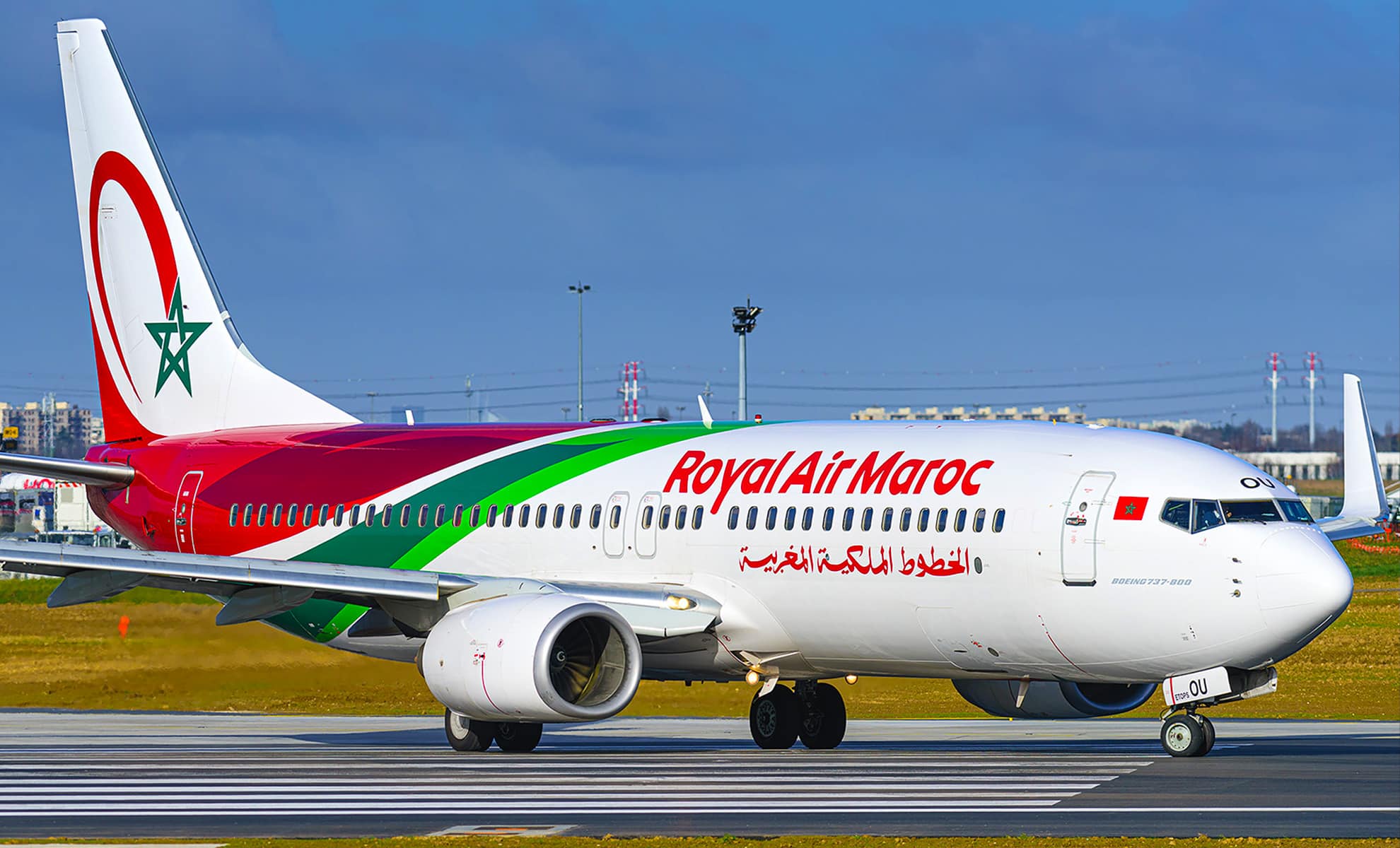
Airport expansion only creates value if airline capacity grows with it. Royal Air Maroc plans to acquire up to 200 aircraft by 2037, with first deliveries expected from 2028. Reuters reported that roughly 25% of the new aircraft will be wide-body jets, while the rest will be narrow-body aircraft, supporting both long-haul and regional connectivity.
RAM fleet signal
Fleet target: up to 200 aircraft by 2037
First deliveries: from 2028
Planned delivery pace: about 15 aircraft annually from 2028
Wide-body share: around 25%
Strategic function: Casablanca hub depth and Africa-Europe-Americas connectivity
The risk is sequencing. If ONDA expands terminals faster than RAM and foreign carriers add routes, capacity utilisation may lag. If RAM grows faster than airport systems can absorb, passengers face congestion, missed connections and service deterioration.
The 2030 aviation thesis depends on synchronisation: terminals, aircraft, routes, ground handling, baggage systems, air traffic control and border staffing must scale as one operating system.
Regional Airports: Tourism Yield Beyond Casablanca
The AfDB financing targets airports serving several of Morocco’s highest-value tourism and regional-growth markets, including Marrakech, Agadir, Tangier and Fez.
These cities are not interchangeable. Each airport supports a different demand thesis.
Regional capacity map
Marrakech: premium leisure, conferences, luxury hospitality, high international recognition
Agadir: beach tourism, family travel, hotel expansion, southern leisure demand
Tangier: diaspora mobility, business travel, northern industrial corridor, Spain proximity
Fez: cultural tourism, heritage travel, regional access, city-break demand
The investment logic is not only to move more passengers. It is to raise the value of every arrival by improving route frequency, processing reliability, luggage performance and onward connectivity.
Morocco’s post-2030 tourism yield will depend on whether these airports convert visitor volume into higher hotel occupancy, longer stays, serviced-residence demand, private transport, retail spending and repeat travel.
The CapEx Structure: Expansion Versus Maintenance
The MAD 38 billion ONDA programme separates expansion from maintenance and land acquisition. That distinction matters because investors often focus on new terminals while underestimating lifecycle infrastructure risk.
CapEx allocation
Expansion: MAD 25 billion
Maintenance and land acquisition: MAD 13 billion
Strategic value: new throughput capacity
Risk control: asset upkeep, land readiness, operational resilience
New terminal capacity creates headlines. Maintenance and land acquisition create operational durability. Airports fail commercially when terminals expand but access roads, equipment, baggage systems, safety assets, land buffers and maintenance cycles lag behind demand.
ONDA’s institutional test is therefore not simply construction delivery. It is whole-system resilience: terminals, equipment, runways, taxiways, parking, security, customs, utilities, digital systems and ground handling must remain reliable under peak-load pressure.
Financing: AfDB as Credibility Anchor
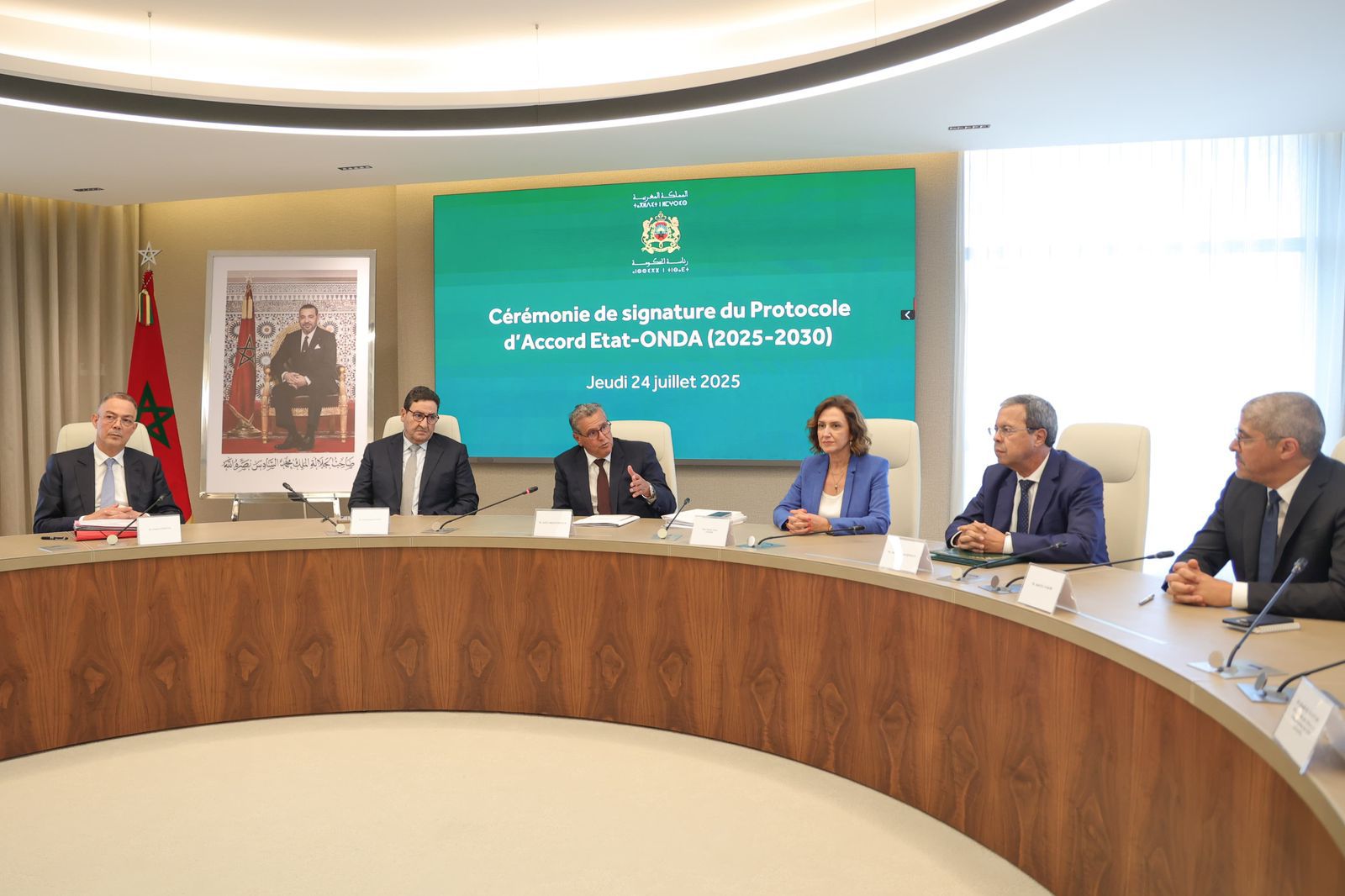
The AfDB loan gives the programme multilateral validation. Development-bank financing lowers execution risk by attaching external review, project discipline and institutional credibility to Morocco’s aviation upgrades.
For fixed-income investors and infrastructure operators, the AfDB commitment signals that airport expansion is not a loose political promise. It is being financed inside a broader development framework tied to World Cup readiness, tourism capacity and national connectivity.
Financing impact
AfDB loan: €270 million / $316 million
Programme scale: about $4 billion
Target assets: terminal expansion and airport equipment
Institutional value: execution discipline and multilateral validation
The financing does not remove delivery risk. It narrows the credibility gap between policy announcement and bankable execution.
The ROI Problem: What Happens After 2030?
Morocco’s airport blitz will be judged after the tournament, not during it.
World Cup traffic can justify urgency, but not permanent overcapacity. The assets must remain commercially productive through tourism growth, RAM hub expansion, business travel, diaspora flows, conferences, cargo-adjacent activity and regional development.
Post-2030 utilisation test
Temporary demand: tournament arrivals and event-related traffic
Durable demand: tourism, diaspora travel, business routes, conferences, long-stay residents
Revenue channels: airport fees, retail, parking, lounges, concessions, ground services
Risk: underused capacity if route growth or tourism conversion slows
The strongest investment case is not that Morocco needs airports for 2030. It is that 2030 accelerates aviation assets the country can use for the next decade.
If passenger growth holds, the capex becomes a productivity upgrade. If traffic peaks and fades, the programme becomes a utilisation problem.
Private-Sector Conversion Layer
Airport capacity creates downstream markets beyond aviation.
Hotels gain stronger underwriting when route frequency improves. Serviced apartments benefit from business travellers, diaspora families and long-stay professionals. Private transport operators gain from predictable arrival volumes. Retail, lounges, food service, parking, ground handling, security and maintenance all become recurring revenue categories.
Conversion chain
Airport capacity
Route frequency
Passenger throughput
Hotel occupancy
Serviced-residence demand
Private transport and retail spend
Repeat travel and investor access
The private-sector opportunity sits where airport capacity converts into repeat revenue. The strongest operators will not wait for 2030 traffic; they will build products around recurring flows before the peak cycle arrives.
Operational Friction: The Bottlenecks That Decide Success
Airports are systems, not buildings. A new terminal can fail if the invisible operating layers remain underbuilt.
Critical bottlenecks
Border-processing speed
Baggage-system reliability
Ground-handling capacity
Aircraft stand availability
Runway and taxiway throughput
Security screening lanes
Road access and parking
Digital check-in and biometric systems
Staffing and training
Peak-hour passenger flow
The institutional execution test is peak-load performance. Morocco must show that new capacity can process passengers at speed without degrading experience during holiday peaks, tournament windows and major conference cycles.
For investors, passenger capacity is only the headline number. Processing velocity is the operational metric.
MMO Strategic Scorecard: ONDA Aviation Blitz
Strategic Vector: CapEx scale
Current Market Signal: MAD 38 billion airport programme through 2030.
Institutional Execution Test: Delivering capacity without cost overruns or fragmented sequencing.
Strategic Vector: Capacity jump
Current Market Signal: 38 million passengers today; 80 million target by 2030.
Institutional Execution Test: Doubling throughput while maintaining processing quality.
Strategic Vector: Casablanca hub
Current Market Signal: Mohammed V target of 35 million passengers by 2029.
Institutional Execution Test: Synchronising terminal delivery with RAM fleet and route growth.
Strategic Vector: RAM expansion
Current Market Signal: Up to 200 aircraft by 2037; first deliveries from 2028.
Institutional Execution Test: Matching fleet growth with airport systems and hub operations.
Strategic Vector: AfDB funding
Current Market Signal: €270 million loan for airport upgrades.
Institutional Execution Test: Converting multilateral financing into on-time infrastructure delivery.
Strategic Vector: Regional yield
Current Market Signal: Marrakech, Agadir, Tangier and Fez targeted for upgrades.
Institutional Execution Test: Turning arrivals into occupancy, spend, repeat travel and regional investment.
Strategic Vector: Post-2030 ROI
Current Market Signal: World Cup deadline accelerates aviation capex.
Institutional Execution Test: Sustaining utilisation after tournament demand normalises.
What Investors Must Watch Next
1. Casablanca terminal delivery timeline
Track whether the Mohammed V expansion remains on schedule for 2029 and whether operational testing begins early enough before 2030 peak demand.
2. RAM aircraft procurement and delivery schedule
Watch whether fleet expansion from 2028 aligns with ONDA’s capacity rollout, especially wide-body aircraft needed for long-haul hub economics.
3. Passenger-processing velocity
Monitor border processing, baggage performance, ground handling and peak-hour throughput at Marrakech, Casablanca, Agadir, Tangier and Fez during 2026–2028 traffic growth.
Final Outlook
Morocco’s airport expansion race is one of the country’s most important 2030 infrastructure tests.
The capex is large, the deadline is fixed and the operational burden is complex. ONDA must double national capacity, modernise regional airports, support Casablanca’s hub function and absorb tourism growth without creating bottlenecks that weaken the visitor experience.
The upside is substantial. If executed properly, Morocco’s aviation system becomes a long-term platform for tourism yield, diaspora mobility, business travel, conference demand, private-sector investment and Royal Air Maroc’s hub strategy.
The risk is sequencing. Terminals, aircraft, routes, baggage, border processing, ground handling and road access must scale together.
The 2030 World Cup provides the deadline.
Post-2030 utilisation will decide the return.
Executive Engagement
Are you operating in aviation, airport infrastructure, tourism, hospitality, ground handling, transport, retail, real estate, private services or Morocco-focused investment?
MMO is tracking how ONDA’s 2030 aviation programme is reshaping Morocco’s airport capacity, tourism infrastructure and regional investment map.
Share your operational insights with our editorial team or contact us with data on passenger flows, airport bottlenecks, hotel demand, route expansion, ground-handling capacity or post-2030 utilisation.