

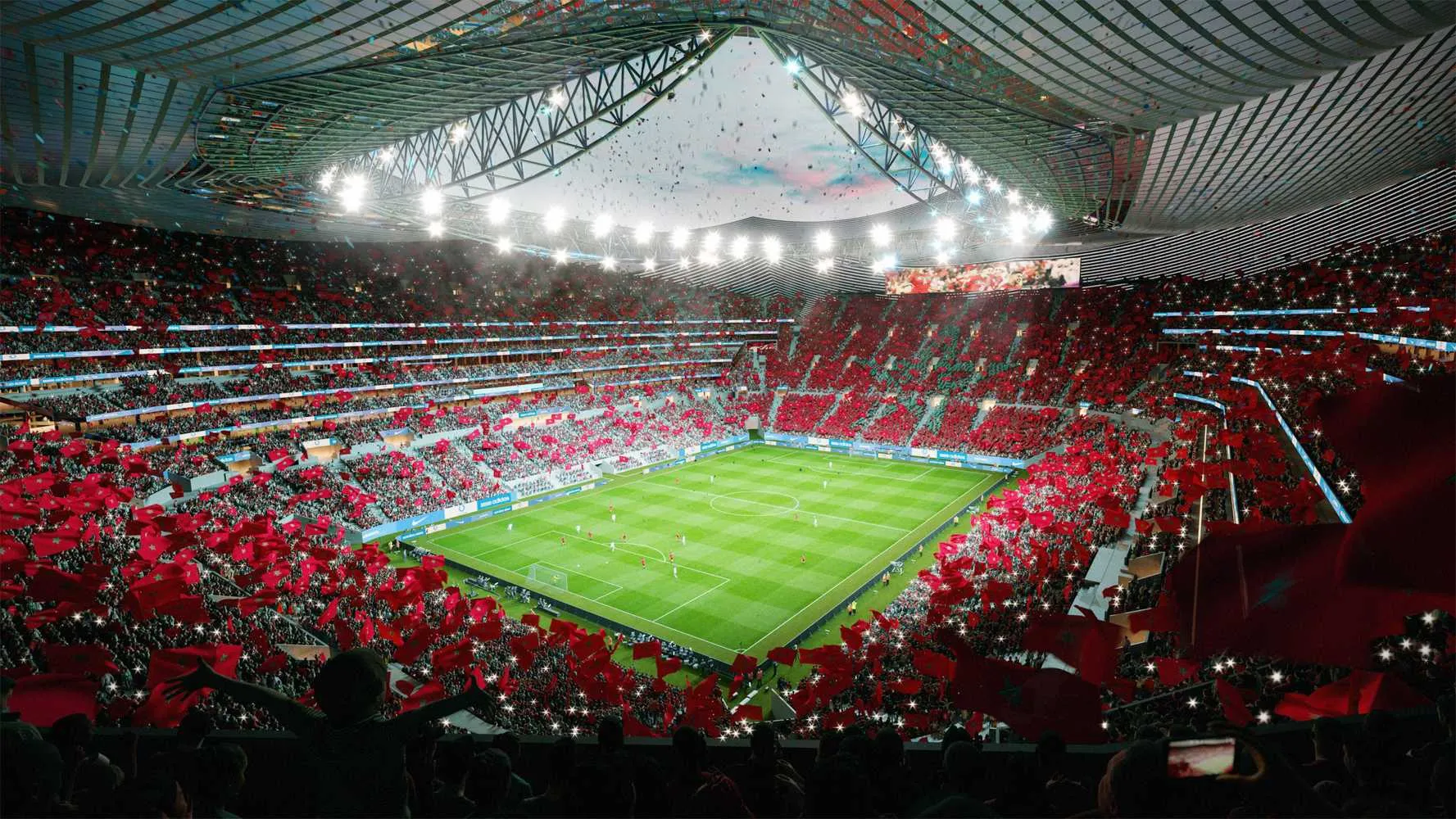
Morocco’s bid to host the 2030 FIFA World Cup final is no longer merely a question of football prestige; it has evolved into a high-stakes test of infrastructure finance, domestic construction capacity and metropolitan planning.
Near Benslimane, strategically positioned between Casablanca and Rabat, Morocco is building the 115,000-seat Grand Stade Hassan II, a project designed to become the world’s largest dedicated football stadium and the most visible physical symbol of the country’s 2030 ambitions.
The execution timeline is aggressive. A Reuters site report in May 2026 said the stadium is targeted for completion by the end of 2027, is around 30% complete nine months after construction began, and already has around 40% of the tribunes built.
The same report placed the project cost at approximately $1 billion, with construction led by Moroccan groups TGCC and SGTM. The site, covering about 150 hectares of farmland and forest near Benslimane, is expected to be linked to both Casablanca and Rabat by new highways and a railway station.
For international investors, infrastructure planners and corporate operators, the significance of the Grand Stade extends beyond the tournament.
The real test is whether Morocco can convert World Cup urgency into long-term urban value, transport-led development, domestic contractor credibility and recurring event-economy revenue after 2030.
The Strategic Geography: Creating a Casablanca-Rabat Mega-Region
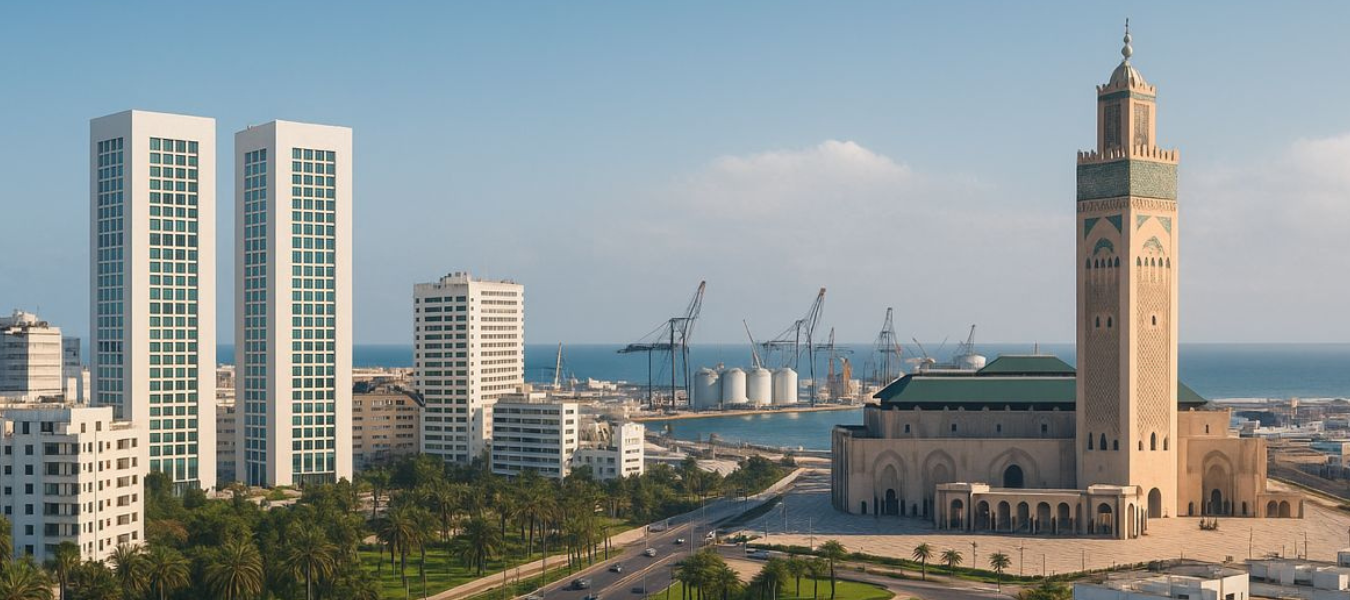
Unlike traditional stadium builds retrofitted into dense city centres, the Grand Stade is being developed as a greenfield metropolitan asset between Morocco’s economic capital and administrative capital.
This location changes the economics of the project: the stadium is not only a venue, but a catalyst for a wider Casablanca-Rabat corridor that already concentrates a large share of Morocco’s corporate, administrative, logistics and residential demand.
By anchoring a 115,000-seat event asset between Casablanca and Rabat, Morocco is effectively reinforcing the integration of a broader metropolitan mega-region.
The site creates potential spillover into transport infrastructure, hotels, serviced apartments, retail, conference facilities, training centres, security services and event logistics.
The opportunity is substantial, but the underwriting test is equally strict: without synchronized highway access, rail frequency, station capacity, parking, bus staging and post-event crowd dispersal, the stadium risks functioning as a landmark asset rather than a fully integrated economic node.
Corridor logic:
Rabat: administrative capital
Benslimane: Grand Stade Hassan II
Casablanca: economic capital
The strategic value sits in the middle. If executed properly, the stadium could become a shared event anchor for Morocco’s two most important urban poles.
If transport delivery lags, its greenfield location becomes a constraint rather than an advantage.
The Final Bid: Competing With Madrid and Barcelona
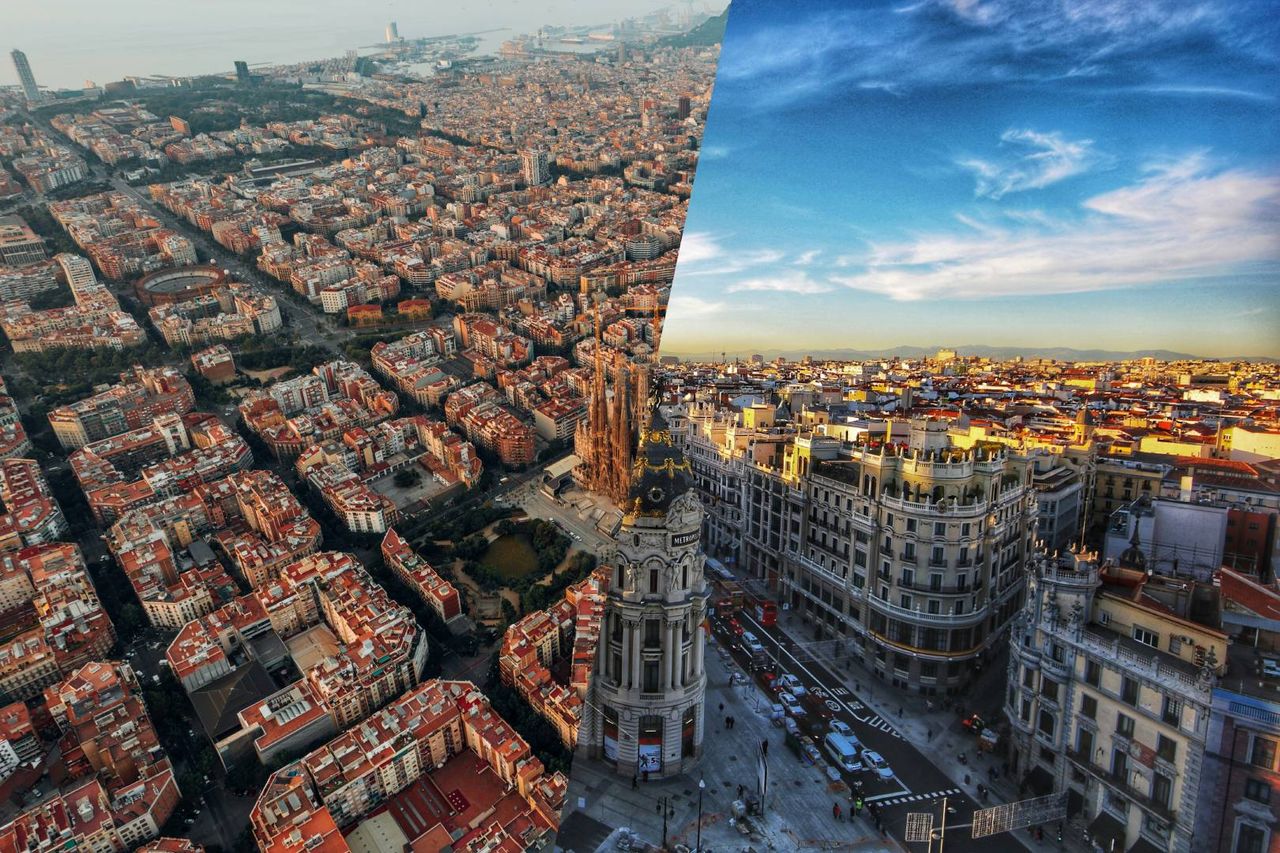
The race for the 2030 World Cup final places the Grand Stade Hassan II in direct comparison with Spain’s most powerful football venues.
Real Madrid’s renovated Santiago Bernabéu is commonly cited around the 80,000–85,000-seat range, while Barcelona’s renovated Spotify Camp Nou is expected to move toward approximately 105,000 seats.
By comparison, Casablanca’s planned 115,000-seat baseline gives Morocco a clear scale advantage over both Spanish candidates.
Spain’s venues retain powerful advantages: football heritage, mature hospitality markets, global club brands, existing urban transport networks and established corporate-event ecosystems.
Morocco’s counter-proposal is different. It combines new-build scale, symbolic geography, African hosting history and a stadium designed specifically around the 2030 cycle.
For FIFA, the final decision will not be based on capacity alone.
The venue will be assessed through operational variables including airport throughput, fan mobility, broadcast infrastructure, security planning, premium hospitality, VIP access, media logistics and post-event legacy.
Morocco’s 115,000-seat offer creates a strong headline, but the final-bid case will depend on whether the full operating system around the stadium can match its physical scale.
Design as National Branding Infrastructure
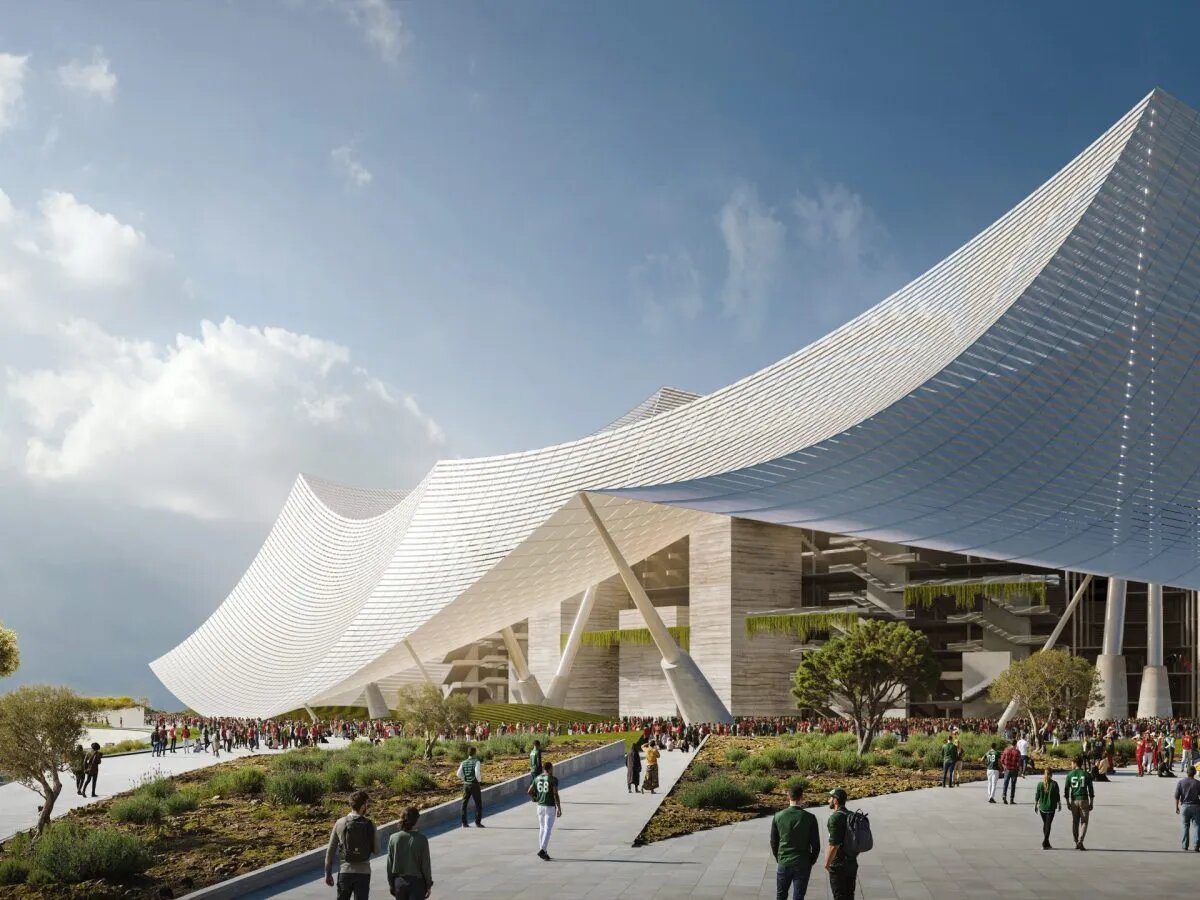
The Grand Stade Hassan II is not being designed as a generic concrete bowl.
Populous describes the stadium, designed with Oualalou + Choi, as a projected 115,000-capacity venue and the largest football stadium in the world. The architectural concept includes a tent-inspired structure that draws on Moroccan cultural forms.
Reuters also described the design as featuring a tent-inspired roof and enclosed botanical gardens intended to reflect Moroccan culture and landscapes.
That design language matters because modern stadiums operate as national branding infrastructure.
For Morocco, the Grand Stade is intended to communicate scale, execution capacity and cultural identity in one asset.
But design symbolism carries a financial test: the stadium must generate recurring use, hospitality revenue and event programming beyond the World Cup cycle.
A stadium can win attention through architecture; it creates lasting economic value only through utilisation.
The Domestic Contractor Multiplier: TGCC and SGTM
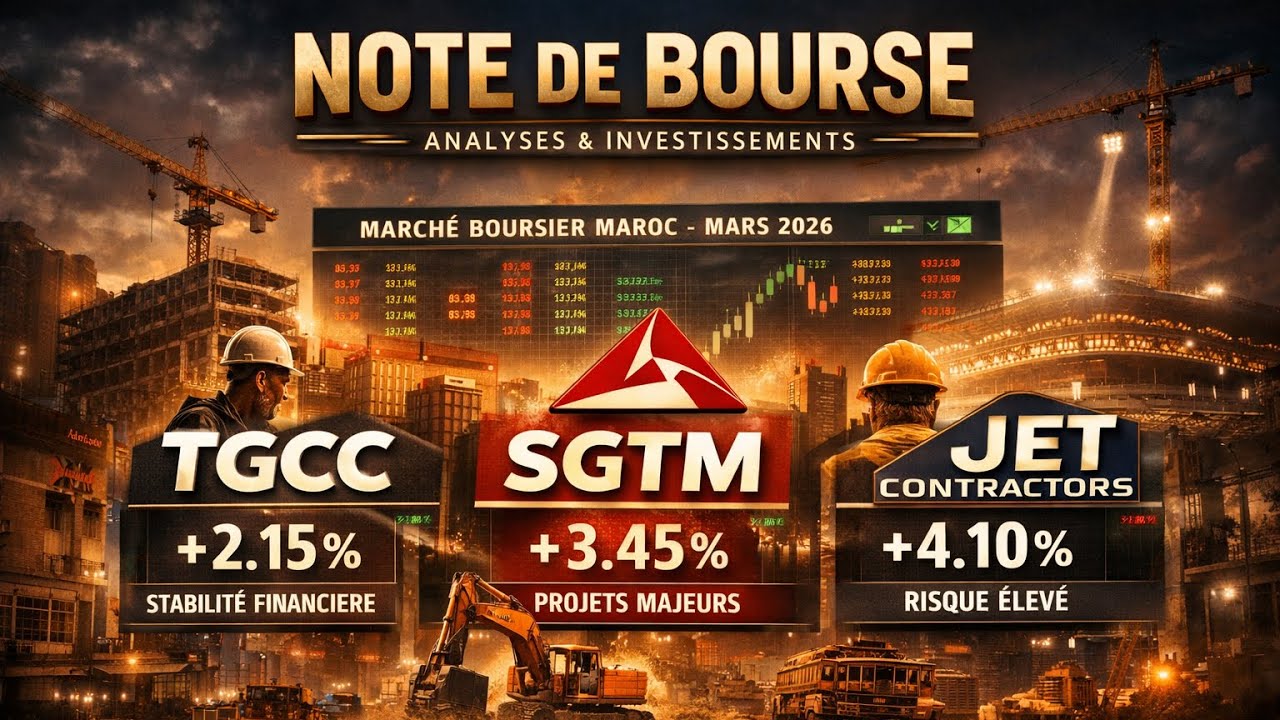
From a corporate-finance perspective, one of the project’s most important signals is the use of domestic construction leaders.
Reuters identified TGCC and SGTM as the Moroccan companies leading construction of the Grand Stade project.
Large public works in emerging markets can leak value abroad when foreign engineering groups dominate procurement, design execution and technical delivery.
The Grand Stade creates a different structure: international design expertise is present, but core construction execution is being carried by Moroccan groups.
That helps keep a larger share of capex inside the domestic ecosystem through subcontracting, labour, materials procurement, equipment rental, engineering management, site logistics and local banking exposure.
If TGCC and SGTM deliver a roughly $1 billion stadium on a compressed timeline, the project becomes more than a national sports asset.
It becomes a balance-sheet credential for Moroccan contractors seeking future airports, rail stations, hospitals, stadiums, industrial zones and African infrastructure contracts.
The stadium is therefore a construction-sector credibility test as much as a World Cup asset.
The Transport Layer: Capacity Is Only Valuable If It Moves People
A 115,000-seat stadium creates a mobility problem before it creates a matchday spectacle.
Reuters reported that the Benslimane site is expected to be linked to Casablanca and Rabat by new highways and a railway station.
That transport layer is decisive.
A final venue must process fans, VIPs, media, sponsors, security teams, service staff and emergency vehicles within compressed time windows.
The core variables are rail frequency, station capacity, park-and-ride design, highway access, bus staging, ride-hailing zones, pedestrian flows, security perimeters and post-event dispersal time.
For institutional planners, the question is not simply whether transport links exist.
It is whether they are delivered, tested and stress-modelled before 2030.
A stadium that reaches 115,000 seats on paper but cannot move crowds efficiently loses operational credibility.
The Grand Stade should therefore be evaluated as a mobility asset as much as a construction asset.
The Hospitality and Event-Economy Layer
Modern stadium economics depend heavily on premium seating, hospitality, sponsorship inventory, non-matchday events and recurring programming.
A 115,000-seat venue creates ticketing scale, but the higher-margin layer usually comes from VIP boxes, corporate lounges, naming rights, concerts, food and beverage, retail, conferences and major event packages.
For Morocco, this revenue layer is essential because a stadium of this scale cannot rely solely on World Cup matches.
The post-2030 model must include national-team fixtures, Raja and Wydad integration, CAF finals, international friendlies, concerts, corporate events, conferences, sponsorships and premium hospitality.
The key question is not whether Morocco can fill the stadium once for a major match.
The key question is whether Morocco can operate it profitably enough across the calendar to justify maintenance, security, utilities, staffing and facility-management costs.
A $1 billion venue requires an operating strategy, not only a construction strategy.
The Legacy Risk: Post-2030 Utilisation Test
Every major-event stadium carries a post-event utilisation risk.
Morocco’s case is stronger than many previous host markets because Casablanca has deep football demand through Raja and Wydad, while the national team has become one of Africa’s most visible sporting brands.
But scale still matters.
A 115,000-seat stadium is not easy to fill regularly, even in a football-passionate market.
The operating model must therefore be flexible, with segmented capacity, premium zones, strong event programming and non-football use built into the commercial plan.
The legacy test is not whether the stadium looks impressive in 2030.
It is whether it remains active, maintained, accessible and commercially relevant in 2031, 2035 and beyond.
The Stadium Zone: Land-Use Spillover Between Casablanca and Rabat
The Grand Stade is likely to affect the surrounding land market because it sits on a large strategic site between Morocco’s two most important urban poles.
The 150-hectare footprint and planned transport links can support demand for hotels, serviced apartments, retail, conference venues, sports academies, training facilities, restaurants, parking infrastructure, security services and event logistics.
But land repricing is not automatic.
It depends on zoning clarity, utilities, access roads, rail delivery, urban planning discipline and long-term event volume.
Speculative land buying ahead of infrastructure can create pricing distortions if planning frameworks remain unclear.
For developers, the question is whether the stadium zone becomes a structured sports-and-events district or a fragmented speculative belt around a mega-venue.
The strongest outcome is planned mixed-use development tied to transport and event demand.
The weaker outcome is uncoordinated land appreciation without operational depth.
The Fiscal Efficiency Question
The Grand Stade’s reported $1 billion cost places it among Morocco’s most visible 2030-linked capital projects.
The fiscal question is not whether the stadium is large enough, but whether the project produces durable economic value through transport infrastructure, tourism visibility, event revenue, contractor capacity, urban development and Morocco’s final-bid positioning.
The public-value case becomes stronger if the project uses domestic contractors, improves mobility between Casablanca and Rabat, supports club and national-team football, attracts major international events, creates hospitality revenue and anchors a planned district.
It becomes weaker if the venue is underused, expensive to maintain or disconnected from surrounding urban systems.
That is the efficiency test.
The stadium must become more than a tournament monument; it must operate as a long-term national event asset.
The 2030 Signal: Morocco’s Central Co-Host Ambition
The Grand Stade sends a clear strategic signal: Morocco is positioning itself as a central and highly visible co-host in the 2030 tournament architecture.
Hosting the final would mark a historic milestone, giving Morocco the most symbolic match of a cross-continental World Cup shared with Spain and Portugal.
But prestige must be backed by operational performance.
FIFA and global stakeholders will evaluate stadium readiness, fan experience, broadcast capability, security, transport, VIP hospitality, accommodation, international access and coordination across the three host countries.
The Grand Stade gives Morocco a powerful asset.
The remaining challenge is converting that asset into a final-ready operating system.
Investment Risk-Reward Matrix: Grand Stade Hassan II
Strategic Vector: Capacity and timeline
2026 Market Signal: Planned 115,000-seat stadium; around 30% complete in May 2026; 40% of tribunes built; completion targeted for late 2027.
Institutional Execution Test: Construction pace, commissioning, FIFA compliance, cost control and operational testing before 2030.
Strategic Vector: Domestic value retention
2026 Market Signal: Construction led by Moroccan contractors TGCC and SGTM.
Institutional Execution Test: Domestic subcontractor depth, materials supply, balance-sheet capacity and delivery discipline.
Strategic Vector: Transport integration
2026 Market Signal: Benslimane site expected to be linked to Casablanca and Rabat by new highways and a railway station.
Institutional Execution Test: Rail frequency, station capacity, highway throughput, fan dispersal and emergency-access planning.
Strategic Vector: Final-bid competitiveness
2026 Market Signal: 115,000 seats versus Spanish benchmarks around 80,000–85,000 for Bernabéu and about 105,000 for Camp Nou.
Institutional Execution Test: Whether FIFA prioritises new-build scale and symbolism over established European stadium brands and mature hospitality ecosystems.
Strategic Vector: Legacy utilisation
2026 Market Signal: Potential use by national team, major Casablanca clubs and international events.
Institutional Execution Test: Club integration, event programming, flexible capacity management, hospitality revenue and facility-maintenance cost.
Strategic Vector: Land-use spillover
2026 Market Signal: 150-hectare strategic perimeter between Casablanca and Rabat.
Institutional Execution Test: Zoning clarity, hotel and retail absorption, serviced-apartment demand, utilities and avoidance of speculative fragmentation.
What Investors Should Watch Next
Investors should monitor five signals.
First, whether construction remains on schedule through 2026 and 2027 without major cost escalation.
Second, whether rail and highway links are delivered in parallel with the stadium rather than after completion.
Third, whether Morocco defines a credible post-2030 operating model involving clubs, national-team matches, concerts and corporate events.
Fourth, investors should watch whether the stadium zone is planned through disciplined zoning rather than speculative sprawl.
Fifth, the final-bid process should be monitored closely to see whether FIFA gives greater weight to new-build scale, African symbolism and Casablanca-Rabat integration or to established European stadium brands.
These indicators will determine whether the Grand Stade becomes a national event asset or remains primarily a tournament monument.
Final Outlook
The Grand Stade Hassan II is one of Morocco’s most visible 2030 infrastructure bets: 115,000 seats, a reported $1 billion cost, construction led by TGCC and SGTM, and a late-2027 completion target designed to support Morocco’s bid for the World Cup final.
But its real importance goes beyond football.
The project is a test of Morocco’s ability to deliver large infrastructure on a compressed timeline, keep construction value inside the domestic economy, integrate transport and create long-term event revenue.
A completed, operational and well-connected Grand Stade would strengthen Morocco’s global image, support the country’s 2030 positioning and create a new event anchor between Casablanca and Rabat.
Capacity alone will not decide the legacy.
Transport, programming, hospitality, cost control, zoning and post-2030 utilisation will determine whether the stadium becomes a lasting economic asset.
For Morocco, the Grand Stade is not only a final bid.
It is an infrastructure credibility test.
Executive Engagement
Are you operating in construction, stadium technology, hospitality, transport planning, facility management, sports infrastructure, real estate or World Cup 2030 investment?
MMO is tracking how Morocco’s Grand Stade Hassan II moves from landmark construction project to long-term economic asset.
Share your operational insights with our editorial team or contact us with data on project delivery, event infrastructure, stadium-zone development or 2030 investment execution.