

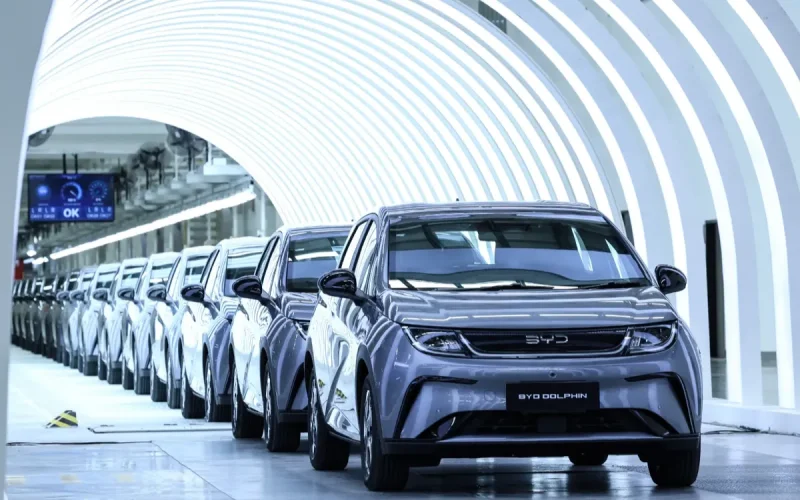
Morocco’s EV battery corridor is becoming one of the most important industrial tests in North Africa: whether the country can move from automotive assembly into battery cells, cathodes, anodes, copper components, recycling and low-carbon industrial supply chains.
The anchor is Gotion High-Tech’s Kenitra gigafactory. The first phase carries a $1.3 billion investment, with initial capacity of 20 GWh and potential long-term expansion toward 100 GWh and $6.5 billion in total investment. Production is expected to begin in 2026.
The second layer is the materials ecosystem forming around Tangier, Jorf Lasfar and other industrial platforms. BTR New Material Group is building a cathode plant near Tangier with 50,000 tons of planned annual capacity. Hailiang is investing $450 million in a copper plant in Tanger Tech, while Shinzoom is investing $460 million in an anode plant. CNGR Advanced Material has also been linked to a cathode project in Jorf Lasfar.
For investors, the signal is clear.
Morocco is not only trying to attract EV assembly.
It is positioning itself as a battery-chain bridge between Chinese industrial capital, European automotive demand, Atlantic trade access and Morocco’s existing vehicle-export platform.
The question is whether Morocco can convert announced capex into a fully operational corridor with enough power, water, skilled labour, raw-material logistics, environmental controls and regulatory compliance to serve Europe’s electric mobility transition.
That is the real test.
The Corridor Thesis: Batteries Follow Cars
Chinese battery firms are not choosing Morocco at random.
They are following the automotive base.
Morocco already hosts Renault and Stellantis production ecosystems, with combined capacity of around 700,000 vehiclesannually. Reuters has reported that Morocco’s automotive exports reached around $14 billion in 2023, making the sector the country’s leading industrial export engine.
Battery manufacturers do not build in isolation.
They need nearby automotive demand, export logistics, industrial zones, technical labour, renewable power options, customs systems and market access.
Morocco offers that combination.
Kenitra provides automotive depth through Stellantis and future battery-cell production. Tangier provides port access, supplier density, industrial land and proximity to Europe. Jorf Lasfar brings chemical-processing logic, energy access and port-linked industrial depth.
This is the corridor logic.
EV battery investment is clustering where Morocco already has industrial proof.
Kenitra: The Gigafactory Anchor
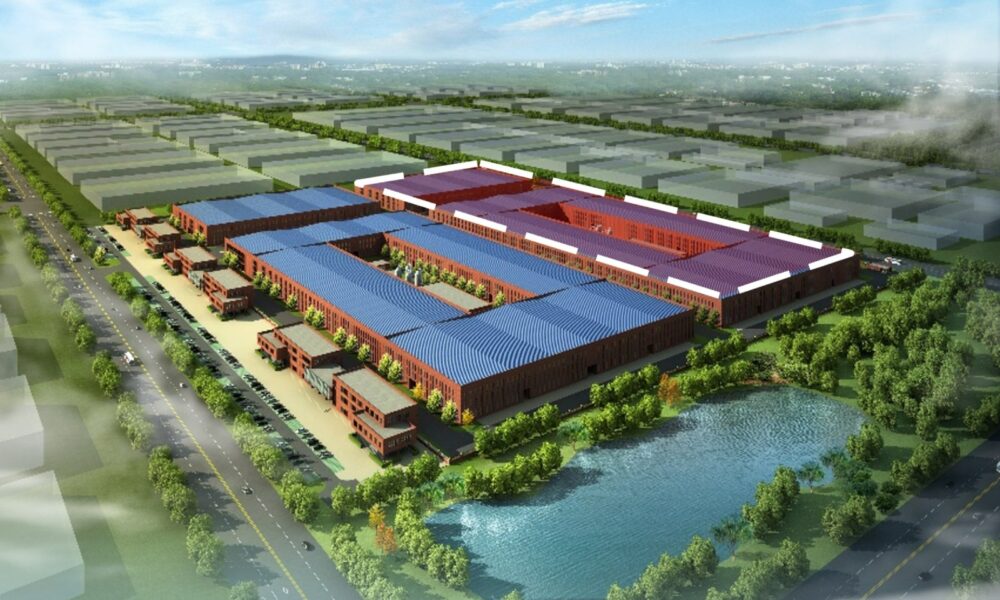
Kenitra is the most important single point in Morocco’s EV battery map.
Gotion High-Tech signed an investment agreement with the Moroccan government to establish Morocco’s first EV battery gigafactory. The initial phase is planned at 20 GWh, with future expansion potential toward 100 GWh. Reuters reported that the project is expected to begin production in 2026 and that the investment could eventually rise toward $6.5 billion.
For Morocco, the industrial meaning is significant.
A gigafactory changes the country’s role in the automotive value chain.
It moves Morocco beyond vehicle assembly and component exports toward energy-storage manufacturing, battery cells, cathodes, anodes and deeper EV supply-chain integration.
For Gotion and its customers, the logic is equally clear.
Morocco offers proximity to Europe, a functioning automotive base, free-trade access to major markets and a lower-cost production environment than most European alternatives.
But the execution burden is high.
Battery manufacturing requires stable power, technical labour, environmental controls, clean-room standards, water management, chemical safety, quality certification and long-term offtake.
Kenitra is not only a factory site.
It is a test of whether Morocco can absorb a new industrial category.
Tangier: The Materials Platform
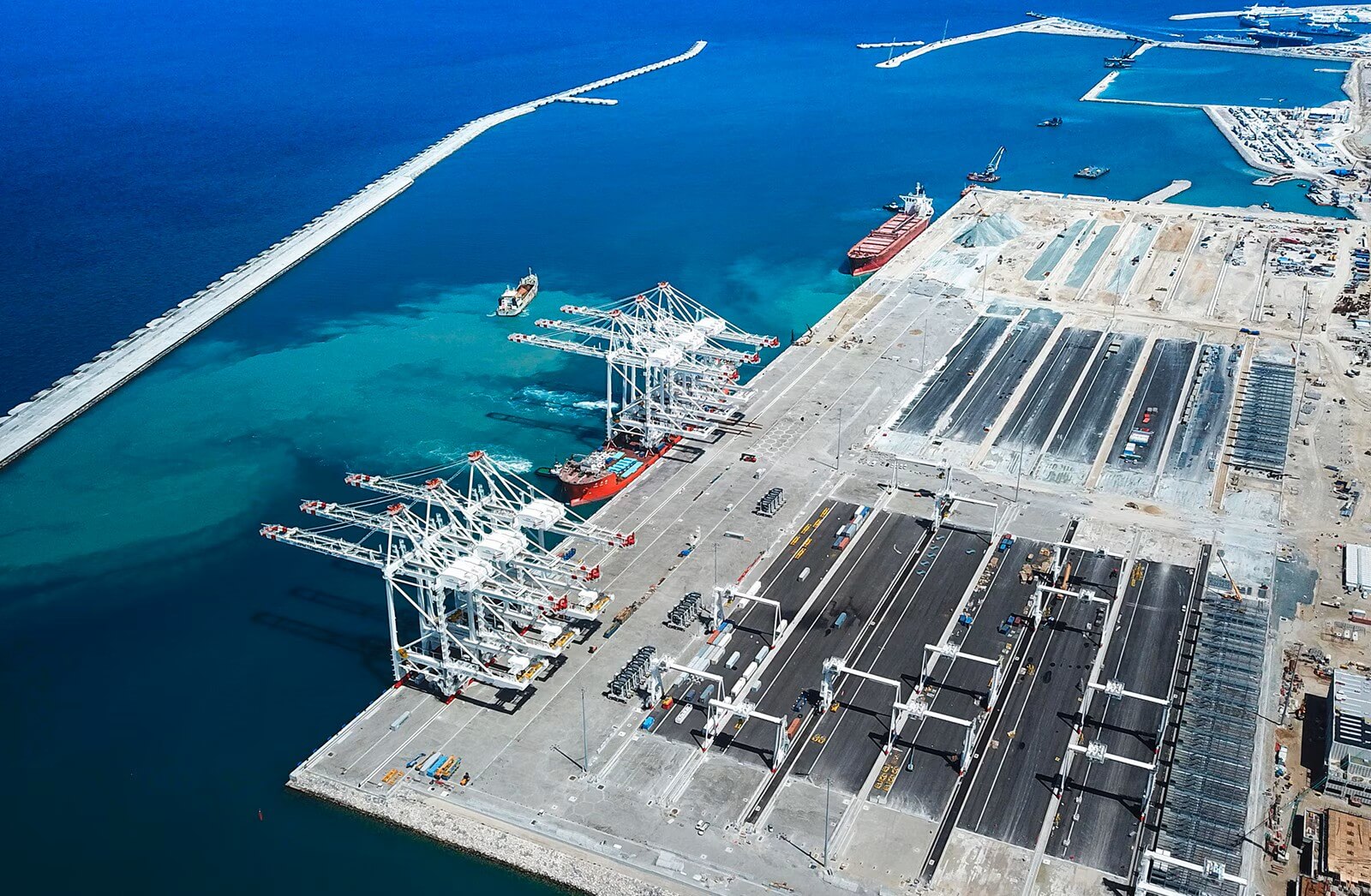
Tangier is becoming the materials side of Morocco’s EV corridor.
BTR New Material Group’s cathode project near Tangier has planned production capacity of 50,000 tons per year, strengthening Morocco’s position in upstream battery materials.
Hailiang and Shinzoom add further depth.
Hailiang is investing $450 million in a copper plant in Tanger Tech, while Shinzoom is investing $460 million in an anode plant.
This is the industrial sequence that matters.
Cathodes, anodes and copper components are not side projects.
They are core battery inputs.
If these projects move into production and integrate with cell manufacturing, Morocco can become more than a destination for final assembly.
It can become a battery-materials platform serving European and Atlantic markets.
Jorf Lasfar and the Chemical-Processing Layer
Jorf Lasfar adds another layer to the battery corridor.
CNGR Advanced Material has been linked to a cathode project in Jorf Lasfar, reinforcing the logic that Morocco’s battery chain will not be limited to Tangier and Kenitra.
Jorf Lasfar is strategically relevant because battery materials require more than automotive clustering.
They require chemical-processing capacity, energy access, port logistics and industrial land capable of handling heavy inputs.
That gives Jorf Lasfar a different role from Kenitra.
Kenitra is the gigafactory anchor.
Tangier is the export and materials corridor.
Jorf Lasfar can become a chemical and industrial-processing node.
For investors, this geography matters.
The EV battery story is not a single-site story.
It is a multi-node industrial system.
The Grid Load Test: Batteries Are an Energy Problem Before They Are an Export Product
Battery manufacturing is electricity-intensive.
A 20 GWh battery-cell production line can require substantial continuous power depending on plant design, process chemistry, dry-room load, formation cycling, HVAC requirements and operating model.
That makes the grid one of the corridor’s most important underwriting variables.
For manufacturers, the question is not only whether Morocco has renewable energy ambitions.
The question is whether a plant can secure stable, bankable and documented electricity supply.
Morocco’s renewable-energy framework is relevant here. Law 13-09 opened the renewable energy sector to private actors, allowing renewable electricity generation from sources such as solar, wind and hydropower and enabling sales to large consumers through network access structures.
Independent power producers can structure power purchase agreements, though grid access, authorisation and implementation remain technical issues. Policy Center analysis notes that Law 13-09 introduced the possibility for IPPs to develop renewable projects and sell electricity via PPAs, while also identifying grid-permitting and access transparency as practical constraints.
For battery producers, this matters because European customers increasingly need plant-level emissions documentation.
A battery plant cannot rely on vague green branding.
It needs auditable electricity sourcing, metering, carbon-footprint reporting and stable supply.
This turns Morocco’s renewable-energy framework into a corporate compliance tool.
The strongest battery producers will not simply ask whether renewable power exists.
They will ask whether the PPA is bankable, whether grid access is guaranteed, whether emissions data can be verified and whether electricity supply is stable enough for continuous manufacturing.
EU Battery Regulation: Carbon Accounting Becomes a Market-Access Gate
Europe is not only demanding more EVs.
It is demanding cleaner, traceable batteries.
Regulation (EU) 2023/1542 aims to ensure batteries have a lower carbon footprint, use fewer harmful substances, require fewer critical raw materials from outside the EU, and are collected, reused and recycled more extensively.
For Moroccan battery producers, this changes the investment case.
The corridor must deliver not only production volume.
It must deliver documented carbon performance, raw-material traceability, recycling pathways and compliance-ready data.
That is why renewable PPAs, cobalt traceability, recycling assets, plant-level emissions controls and water-management systems matter.
They are not ESG decoration.
They are market-access infrastructure.
If Morocco can combine battery production with verifiable low-carbon electricity and traceable materials, the corridor becomes more attractive for European automakers.
If documentation is weak, the cost advantage narrows.
The Trade-Wall Problem: Morocco Helps, But Does Not Automatically Solve Chinese Exposure
Morocco’s trade architecture is a major draw for Chinese battery companies.
The country has a free trade area with the European Union and the only U.S. free trade agreement on the African continent.
But Western market access is technically difficult.
Chinese firms cannot assume that producing in Morocco automatically neutralises trade restrictions.
For Europe, producers must satisfy rules of origin, product standards, carbon-footprint declarations, traceability requirements and battery-specific regulation.
For the United States, the investment calculus is more complicated because of the Inflation Reduction Act and Foreign Entity of Concern restrictions. The U.S. framework can penalise battery components and critical minerals linked to certain foreign control structures, creating serious compliance risk for Chinese-owned assets seeking U.S.-linked incentives.
For Morocco, this means the corridor may initially be more Europe-facing than U.S.-facing.
That is not a weakness.
It is a realistic commercial reading.
Chinese battery-materials firms can use Morocco to serve European supply chains, shorten logistics, reduce tariff exposure where applicable and position production closer to European automakers.
But CFOs and legal teams must underwrite ownership structures, offtake agreements, origin rules, traceability systems and customer eligibility.
Morocco creates a platform.
Compliance determines whether the platform can be monetised.
The Raw-Material Layer: Managem, Cobalt and Battery Recycling
A battery corridor is only as strong as its inputs.
Morocco’s advantage is not limited to imported Chinese capital.
It also has domestic mining and processing assets that matter to the battery chain.
Managem Group is Morocco’s national mining champion and has battery-relevant capabilities in cobalt and recycling. Renault Group and Managem signed an agreement in 2022 for the sustainable supply of Moroccan cobalt sulphate, with the companies describing the partnership as a way to secure low-carbon cobalt and guarantee traceability in the battery supply chain.
Managem also partnered with Glencore to produce recycled cobalt from lithium-ion battery materials at the CTT hydrometallurgical refinery in Guemassa, using recycling technology developed and tested at Managem’s REMINEX R&D Centre.
This matters because battery supply chains are increasingly judged by origin, emissions and circularity.
If Morocco can integrate cobalt sulphate production, recycling, black-mass processing and cathode or precursor production, it strengthens its industrial moat.
The corridor becomes less dependent on long-distance upstream flows.
It also becomes more credible for European customers that need traceable and lower-carbon inputs.
The Managem layer does not make Morocco fully self-sufficient in critical minerals.
But it gives the country a domestic anchor in a part of the battery chain where traceability and circularity are becoming more valuable.
The Water Underwriting Test
Battery materials processing requires water.
Cathode active material washing, chemical processing, cooling systems, cleaning operations and environmental controls all depend on reliable industrial water supply.
For institutional investors, this is a key North Africa risk.
A battery plant cannot rely on fragile local water tables or uncertain municipal supply.
It needs industrial water planning.
Morocco is already investing heavily in desalination and water infrastructure across multiple regions, but battery investors will need project-level clarity.
The underwriting questions are specific:
Will the plant use desalinated water, recycled industrial water or municipal supply?
Is the water allocation contractually secured?
Can purification requirements be met at scale?
Are wastewater treatment systems permitted and financed?
Can the plant operate during drought stress?
Will water costs change the project’s margin profile?
For Tangier, Kenitra and Jorf Lasfar, water security will determine whether battery-materials manufacturing can scale without creating local resource stress.
For Chief Sustainability Officers, this is one of the most important operating variables.
For CFOs, it affects uptime, capex, permitting and reputational risk.
The Automotive Transition Risk
Morocco’s battery push is also defensive.
Europe is moving toward an electric mobility future, even as the pace and policy details remain debated.
Morocco’s automotive sector was built around internal-combustion supply chains, parts exports and assembly. To protect that base, the country must adapt to EV requirements.
Reuters has reported that Moroccan officials want up to 60% of exported cars to be electric by 2030.
That target explains the urgency.
If Morocco fails to move into EV components, batteries and electrification, parts of its automotive export base could lose relevance over time.
If it succeeds, the country can preserve and upgrade one of its most important industrial sectors.
For investors, this is the strategic hinge.
The EV corridor is not only an upside opportunity.
It is a hedge against automotive obsolescence.
The China-Morocco Industrial Signal
Chinese President Xi Jinping’s brief visit to Morocco in November 2024 underscored the growing strategic weight of Sino-Moroccan economic ties.
Reuters noted that China has increased investment interest in Morocco, with the country’s location, free trade agreements and automotive base making it attractive to Chinese EV battery manufacturers.
The visit itself was short.
The industrial signal is longer.
Chinese battery firms are using Morocco to position themselves closer to Europe, diversify manufacturing geography and reduce exposure to trade friction.
For Morocco, the opportunity is to capture industrial capital without becoming only a low-cost offshore platform.
The objective should be deeper: technology transfer, skilled jobs, supplier localisation, renewable power integration and export value added.
That is where Morocco’s bargaining power will be tested.
Investor Monetization Logic
For investors, Morocco’s EV battery corridor creates opportunities across several layers.
The first is industrial real estate.
Battery and materials producers require large, utility-ready sites with road, port and power access.
The second is renewable energy.
Industrial PPAs, solar and wind supply, grid services and energy-management systems can become critical to battery compliance.
The third is water infrastructure.
Desalination, wastewater treatment, industrial water recycling and purification systems may become essential enabling assets.
The fourth is logistics.
Battery materials require specialised transport, customs handling, hazardous-material procedures and safety-compliant storage.
The fifth is supplier localisation.
Packaging, chemicals, maintenance, automation, testing, safety equipment and industrial services can become attractive secondary markets.
The sixth is training and workforce development.
Technical institutes, engineering programmes and corporate training providers will become part of the corridor’s operating system.
The seventh is recycling and circular economy.
As battery production scales, black-mass processing, materials recovery and end-of-life compliance become increasingly important.
The most attractive opportunities may sit around the enabling infrastructure, not only the headline factories.
The Regulatory and Operational Friction
The EV corridor faces several operational risks.
The first is execution timing.
Announced projects must move from agreements to construction, commissioning, certification and commercial production.
The second is utility readiness.
Battery plants need reliable electricity, water and industrial waste systems.
The third is compliance.
European buyers will require traceability, emissions data, lifecycle carbon-footprint declarations and quality certification.
The fourth is supplier depth.
If Morocco cannot build local input ecosystems, origin and value-added benefits may weaken.
The fifth is offtake.
Battery and materials plants need long-term customers, especially European automakers.
The sixth is geopolitical exposure.
Chinese-owned assets serving Western markets may face scrutiny depending on future EU and U.S. rules, trade tensions and battery-sourcing policies.
For CFOs, these risks are not theoretical.
They affect capex schedules, working capital, certification timelines, customer eligibility and revenue visibility.
MMO EV Battery Corridor Matrix: 2026
Kenitra gigafactory
2026 market signal: Gotion High-Tech’s first phase carries $1.3 billion investment and 20 GWh capacity, with production expected in 2026 and long-term expansion potential toward 100 GWh.
Investor value: anchors Morocco’s transition from automotive assembly to battery-cell production.
Execution test: commissioning, skilled labour, offtake agreements, grid reliability and environmental compliance.
Tangier battery materials
2026 market signal: BTR plans 50,000 tons of cathode capacity near Tangier; Hailiang and Shinzoom are investing $450 million and $460 million respectively in copper and anode plants.
Investor value: builds upstream battery-materials depth near port and industrial infrastructure.
Execution test: materials sourcing, quality certification, industrial utilities and Europe-facing compliance.
Power and carbon accounting
2026 market signal: Law 13-09 enables private renewable generation and power-sales frameworks, while EU battery rules increase carbon-footprint and traceability requirements.
Investor value: renewable PPAs can help EU-bound battery products reduce carbon exposure.
Execution test: bankable PPAs, grid access, metering, emissions documentation and certification.
Raw materials and recycling
2026 market signal: Managem has cobalt and recycling capabilities, including a Renault cobalt supply agreement and a Glencore recycling partnership at Guemassa.
Investor value: strengthens traceability, circularity and upstream resilience.
Execution test: scaling cobalt sulphate, black-mass processing and battery-material recovery into industrial volumes.
Water and environmental systems
2026 market signal: battery-materials manufacturing requires reliable industrial water, wastewater treatment and chemical-handling infrastructure.
Investor value: water-secure industrial platforms reduce operational and reputational risk.
Execution test: desalination access, recycling systems, permits and drought-resilience planning.
What Investors Should Watch Next
Investors should monitor five signals.
First, whether Gotion’s Kenitra gigafactory begins production on schedule and secures credible European offtake.
Second, whether BTR, Hailiang, Shinzoom and CNGR move from announced projects to operational output.
Third, whether Morocco can provide enough reliable electricity, renewable PPAs, industrial water and environmental infrastructure for battery manufacturing.
Fourth, whether battery producers can document local value added, material traceability and carbon performance for European customers.
Fifth, whether Morocco develops secondary supplier ecosystems around chemicals, packaging, logistics, maintenance, testing, training and recycling.
These signals will determine whether Morocco’s EV battery corridor becomes a real industrial cluster or remains a collection of anchor investments.
Final Outlook
Morocco’s EV battery corridor is one of the most important tests of the country’s industrial transition.
The country already has automotive scale, port infrastructure, trade access and proximity to Europe.
Chinese manufacturers are now adding battery cells, cathodes, anodes, copper components and chemical-processing capacity to that base.
The upside is substantial.
If Morocco can integrate these projects into a functioning corridor, it can protect its automotive export engine, attract higher-value manufacturing and position itself inside Europe’s electric mobility supply chain.
But the execution burden is technical.
Grid reliability, renewable PPAs, water management, environmental compliance, skilled labour, raw-material traceability, offtake agreements and carbon documentation will determine the outcome.
For Morocco, EV batteries are not just another industrial sector.
They are the bridge between the automotive model that made the country successful and the electric mobility economy that will define the next decade.
Executive Engagement
Are you operating in EV batteries, automotive supply chains, renewable power, industrial logistics, compliance, mining, recycling or Morocco-Europe manufacturing?
MMO is tracking how Morocco’s EV battery corridor moves from announced capex to operational production.
Share your operational insights with our editorial team or contact us with data on supply-chain bottlenecks, investment execution or compliance challenges.